
Aerospace component finishing is a controlled sequence of deburring, edge breaking, smoothing, and final surface treatment. For flight parts, the objective is not only a low roughness reading but repeatable surfaces that support downstream processes such as coating, shot peening, welding, or nondestructive testing. The right route depends on part geometry, material, batch size, edge condition, and documentation requirements. A precision finishing process should therefore be specified like any other production operation, with named inputs, measurable outputs, and a qualified process window. This guide explains how to evaluate those factors before selecting vibratory, centrifugal, drag, or magnetic finishing equipment. It supports process planning and supplier discussions rather than replacing part-specific qualification or customer approval.
What Precision Surface Treatment Means for Aerospace Components
In aerospace work, precision surface treatment usually means removing burrs and sharp edges, refining the surface to a controlled roughness value, and maintaining dimensional integrity on critical features. It is not the same as decorative polishing. A turbine blade, compressor disc, fuel nozzle, or structural fitting may need a specific edge radius, a defined Ra range, or a surface clean enough for later inspection. The process must also avoid changing form on thin walls, sealing surfaces, or threads. For that reason, the acceptable route depends on the drawing, the material, and the required measurement method. Mass finishing can support many of these steps, but only when the energy, media, compound, and handling method are selected together.
| Stage | Primary purpose | Typical aerospace concern |
|---|---|---|
| Deburring | Remove raised material from machining | Avoid changing a controlled edge |
| Edge breaking | Create a repeatable radius | Keep radius consistent across the batch |
| Surface smoothing | Reduce roughness | Protect critical dimensions |
| Final treatment | Prepare the surface for downstream work | Avoid contamination or embedded media |
Requirements to Lock Before Choosing Equipment
Record the part material, geometry, current surface condition, target finish, and any features that cannot be altered. Aerospace alloys such as titanium and nickel superalloys are often harder to cut than aluminum and more sensitive to media embedding or unintended surface change. Thin edges, internal passages, blind holes, and mating surfaces may need fixtures, dividers, or a different machine class. The drawing may also control residual stress, surface contamination, or edge break radius. These requirements change the equipment decision more than machine price alone.
| Input | What to record | Why it affects equipment choice |
|---|---|---|
| Material and heat treat | Alloy, hardness, condition | Determines media type and energy |
| Part geometry | Thin walls, holes, threads | Selects dividers, fixtures, or magnetic finishing |
| Current surface condition | Machined, cast, forged | Sets the initial cut stage |
| Target requirement | Ra range, edge radius | Determines the final polishing step |
| Sensitive features | Sealing faces, threads, thin edges | Excludes high part-on-part impact |
| Batch size | Low, medium, high | Manual drag versus automated high energy |
Finishing Method Options for Aerospace Components
Mass finishing covers a wide range of energy levels. Vibratory finishing is often the first choice for general deburring in volume. Centrifugal disc and centrifugal barrel machines apply higher energy to reduce cycle time and refine surfaces on small-to-medium precision parts. Drag finishing clamps parts and moves them through media, which protects part-to-part contact and suits delicate or expensive components. Magnetic finishing drives small stainless steel pins into internal holes, dead corners, and small gaps, useful where line-of-sight abrasive cannot reach.
Vibratory finishing remains the most accessible starting point for general aerospace deburring, but it has clear force and contact limits. <Vibratory Finishing Machine the Ultimate Guide to Industrial Surface Excellence> covers vibratory finishing machines and industrial surface applications.
| Method | Typical fit | Supplied machine examples | Main control concern |
|---|---|---|---|
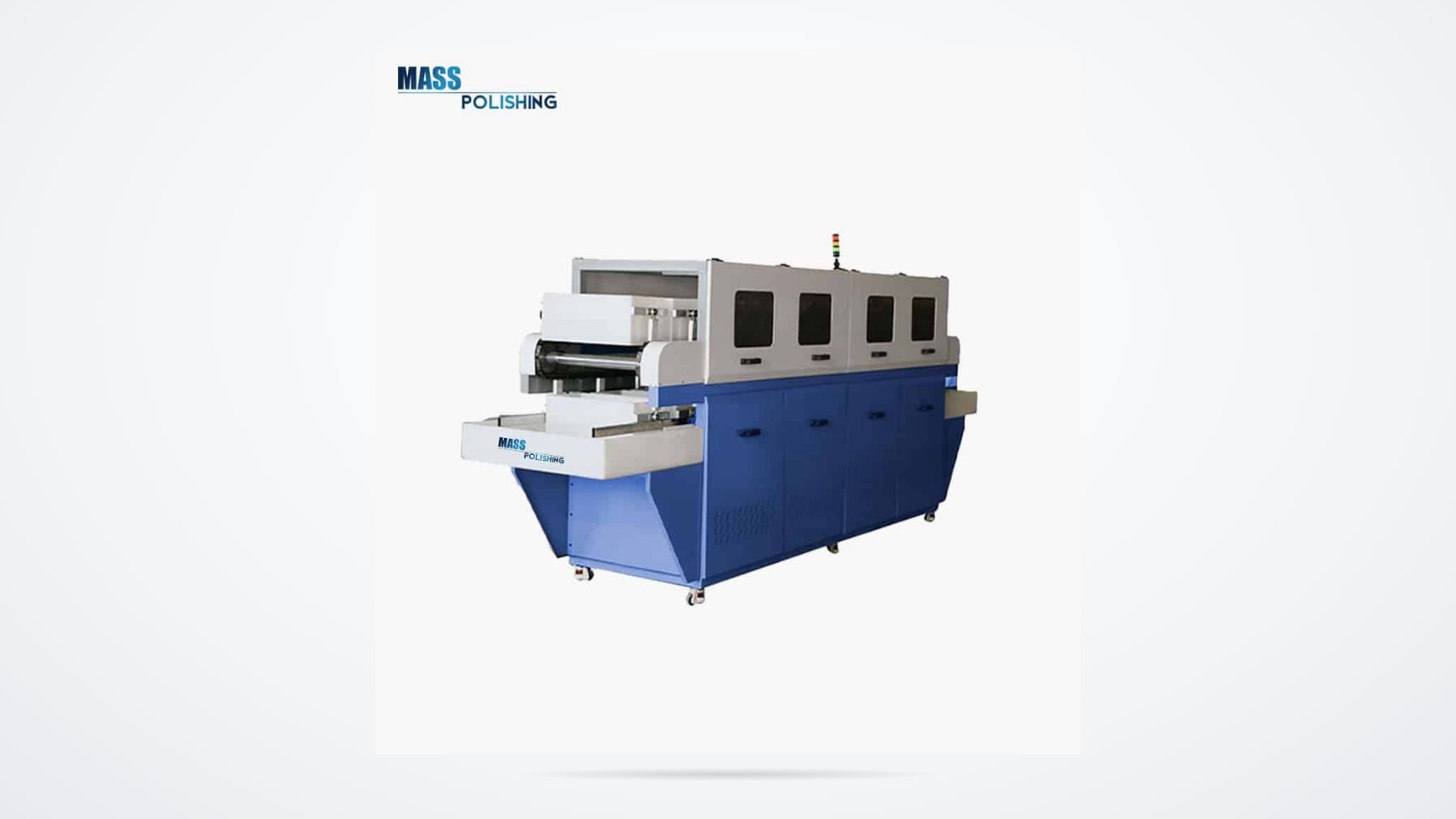
| Vibratory | General deburring, mixed production | SW and CW bowl machines | Part-on-part contact and lower energy |
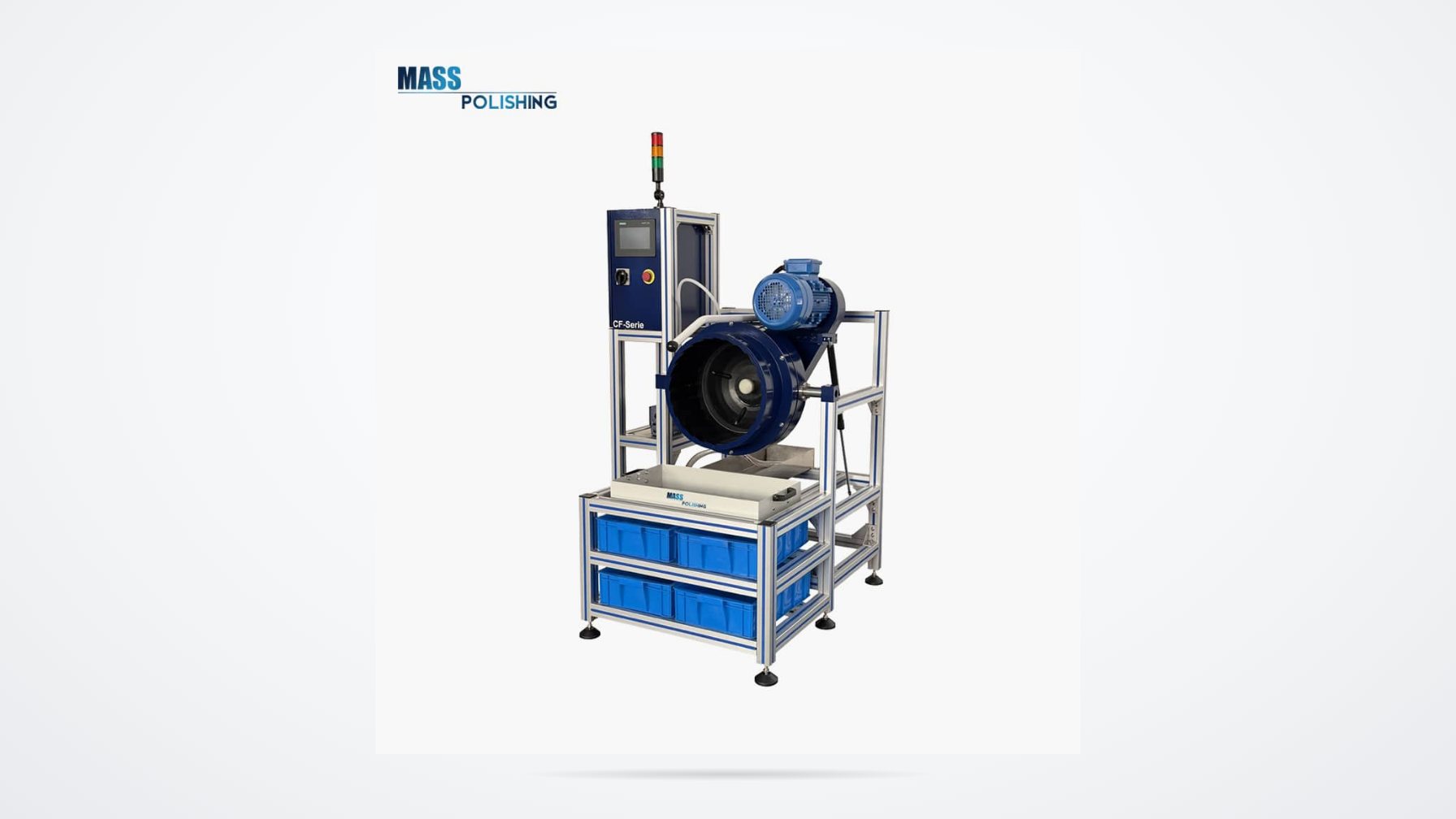
| Centrifugal disc | Small to medium stamped, cast, machined parts | ED, CF, PD series | Cycle control and disc gap |
| Centrifugal barrel | Small precision components needing high energy | EB series | Loading method and batch size |
| Drag | Delicate, high-value parts with edge control | DF series | Fixture design and throughput |
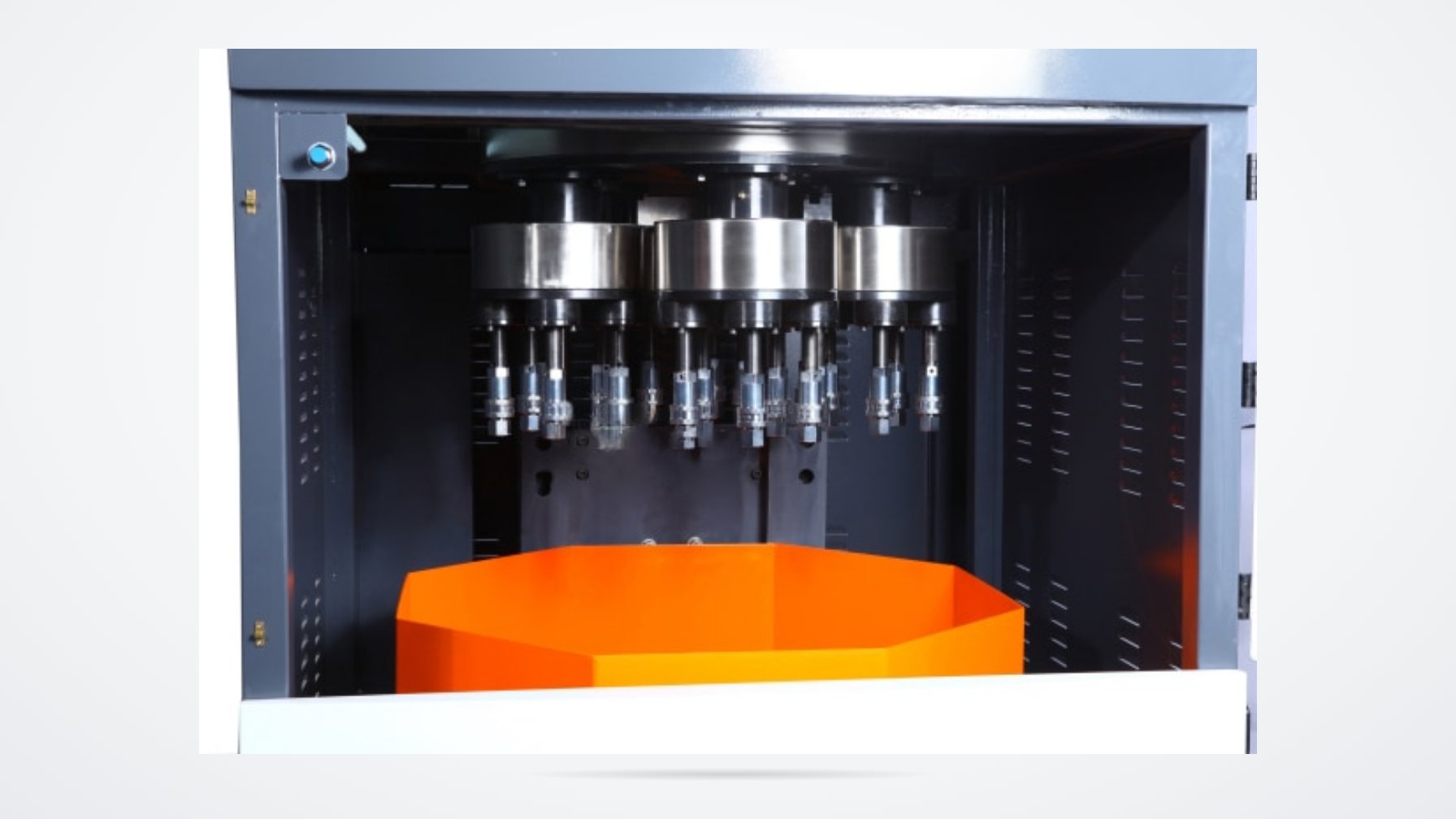
| Magnetic | Internal holes and micro burrs | MF series | Pin size and cycle strength |
The ED Series specification states a force of 10 to 15 times that of conventional vibratory systems, which is useful when a machining burr is too heavy for a bowl but the part is too small or too valuable for uncontrolled hand work. Higher energy does not by itself mean a better aerospace result. The media gap, cycle time, and part orientation still decide whether the process removes the intended material or changes a critical edge.
Machine – Precision Deburring)
Choosing Media and Compounds for Aerospace Alloys
Media is not a minor consumable. Ceramic media provides cutting and edge rounding for stainless steel, titanium, and other hard alloys. Plastic media cuts gently and is often used for softer nonferrous materials or pre-plate work. Stainless steel media burnishes and brightens, while high-density zirconia or porcelain shapes can produce fine mirror finishes on precision parts. The compound carries away metal, prevents corrosion, and controls foam or residue. A process that uses the correct energy but the wrong media size may not enter a recess or may lodge in a hole. Media size should be selected so the shape cannot become trapped in the smallest feature.
Titanium and nickel alloys respond to abrasive contact differently from aluminum and steel, so a cycle developed on one material should not be copied without testing. <How to Polish Titanium Parts a Step By Step Guide> covers material-specific process steps for titanium parts.
| Media family | Main role | Common aerospace consideration |
|---|---|---|
| Ceramic | Cutting, edge rounding, smoothing | Hard alloys and controlled edge break |
| Plastic | Gentle deburring, pre-plate preparation | Soft nonferrous or delicate surfaces |
| Stainless steel | Burnishing and brightening | Nonabrasive final surface work |
| Zirconia or porcelain | Fine mirror polishing | High-precision small parts |
The same machine can produce very different results when the media size, shape, or compound changes. That is why media selection should be treated as part of the process recipe rather than a separate purchasing decision.
Media choice affects cut rate, edge condition, and final roughness more than machine model alone. <Vibratory Tumbling Media Is Indispensable> covers tumbling media selection for finishing results.
Edge Breaking and Deburring Sequence for Critical Parts
Aerospace parts often need controlled edge breaking rather than aggressive rounding. A practical sequence keeps each stage measurable.
- Inspect the incoming parts and record the burr type, machining direction, and edge condition.
- Protect critical features with dividers, fixtures, or a clamping method before the first trial.
- Run a cut stage with enough energy to remove the burrs without overshooting the edge radius.
- Run a smoothing or polishing stage with finer media to bring the surface into the required range.
- Verify edge radius, surface roughness, and dimensions on representative pieces before processing the full batch.
Part-on-part contact is one of the most common causes of nonconforming aerospace finishes. When the part cannot tolerate contact, the process should use a divider, dedicated fixture, drag holder, or magnetic approach rather than simply extending cycle time in a bowl.

Process Qualification and Verification
Once a trial works, freeze the recipe. Record the machine model, speed if adjustable, media type and lot, compound and concentration, water flow, load weight, process time, and any fixture. Run a qualification batch and measure the outputs the drawing controls. For aerospace work, the process record is as important as the surface result because it lets the same outcome be reproduced when a machine or media lot changes. If a customer requires AS9100 or Nadcap-related process controls, the qualification may also need first article evidence, operator training records, and a defined revalidation interval. A single successful sample run should not be treated as production approval. The trial shows feasibility; the qualification shows repeatability.
| Record | Why it matters |
|---|---|
| Machine speed and time | Reproduces the energy level |
| Media size, shape, and lot | Avoids cut or finish drift |
| Compound concentration | Maintains cleaning and corrosion control |
| Load weight and ratio | Prevents contact damage |
| Measurement method | Compares results on the same basis |
Keep the trial conclusion limited to the part number, material, and checks actually completed. Before a changed supply, new machine, or new alloy is used, rerun the relevant qualification rather than assuming the old result still applies.
Plan an Aerospace Finishing Trial
A clear trial request reduces the time spent comparing equipment. Send the part drawing, material grade, current surface condition, target roughness or edge radius, annual volume, and any features that cannot be altered. Also note downstream processes such as plating, coating, penetrant inspection, or shot peening, because they influence media and compound selection. Mass Polishing can use that input to recommend a machine, media, and trial plan for evaluation. Contact Mass Polishing through the website inquiry page with those details.
FAQ
What surface finish can aerospace mass finishing achieve?
Mass finishing can remove burrs, break edges, and reduce roughness, but the final Ra depends on the starting condition, material, media, compound, and process time. A trial on representative parts is the reliable way to know what the selected equipment will produce. Do not accept a universal Ra claim for a machine. Ask for sample processing and a measurement report before committing to production.
Is vibratory finishing acceptable for aerospace components?
Vibratory finishing can be acceptable for general deburring or lower-risk surfaces, especially when cost and batch size matter. For thin edges, precise radii, or delicate features, centrifugal disc, centrifugal barrel, drag, or magnetic finishing may be more appropriate. The decision should come from the part drawing and the required edge condition, not from the equipment name alone.
How do you prevent part-on-part contact damage?
Use chamber dividers, dedicated fixtures, reduced load ratios, or a clamping method such as drag finishing. Magnetic finishing can also reach internal holes without tumbling large workpieces together. The correct choice depends on geometry and the location of the critical surface.
Does every aerospace component require Nadcap or AS9100 control?
No. The applicable quality requirements come from the customer, the part classification, and the purchase order. Some parts need full process qualification, first article data, and a controlled recipe. Others need only a repeatable deburring operation. Confirm the exact requirement before finalizing machine or media selection.
What information should I provide for a finishing trial?
Send the part drawing, material grade, current surface condition, target Ra or edge radius, annual volume, and any features that cannot be altered. Also note downstream processes such as plating, coating, penetrant inspection, or shot peening, because they can influence media and compound selection.
If you’re interested, check out these related articles:
What Abrasives Are Generally Used in Vibrating Grinders
How to Maintain the Dry High Speed Grinding and Smoothing Machine
Polishing Copper and Brass Parts with Ease a Step By Step Guide to Vibratory Finishing