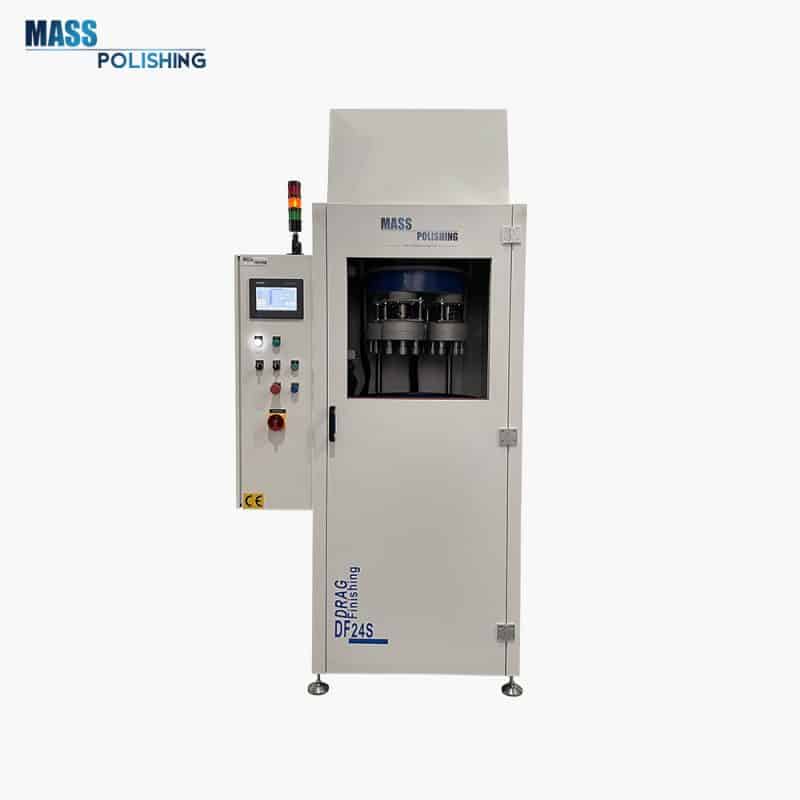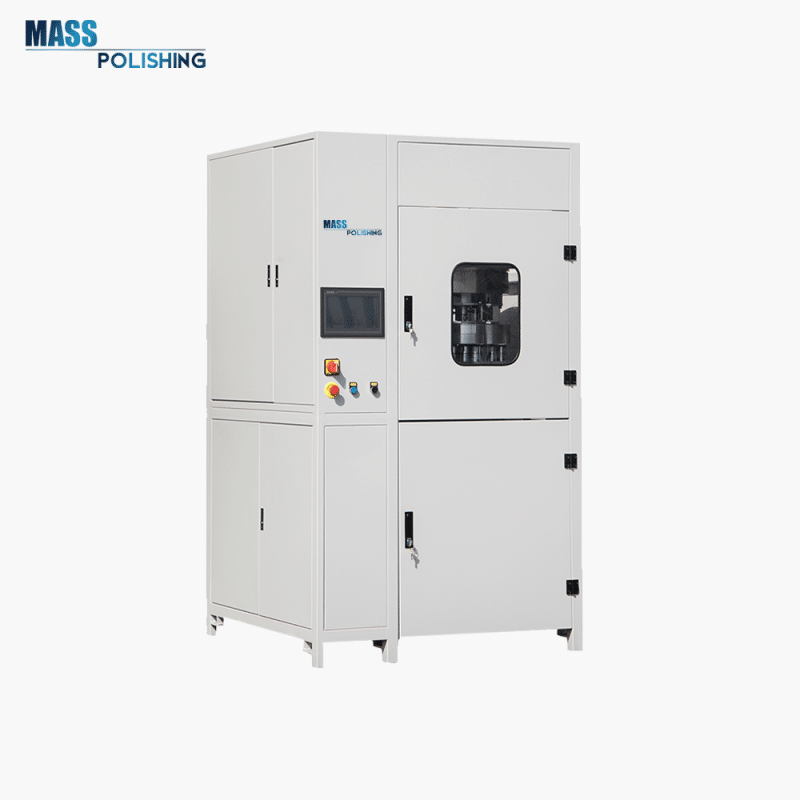
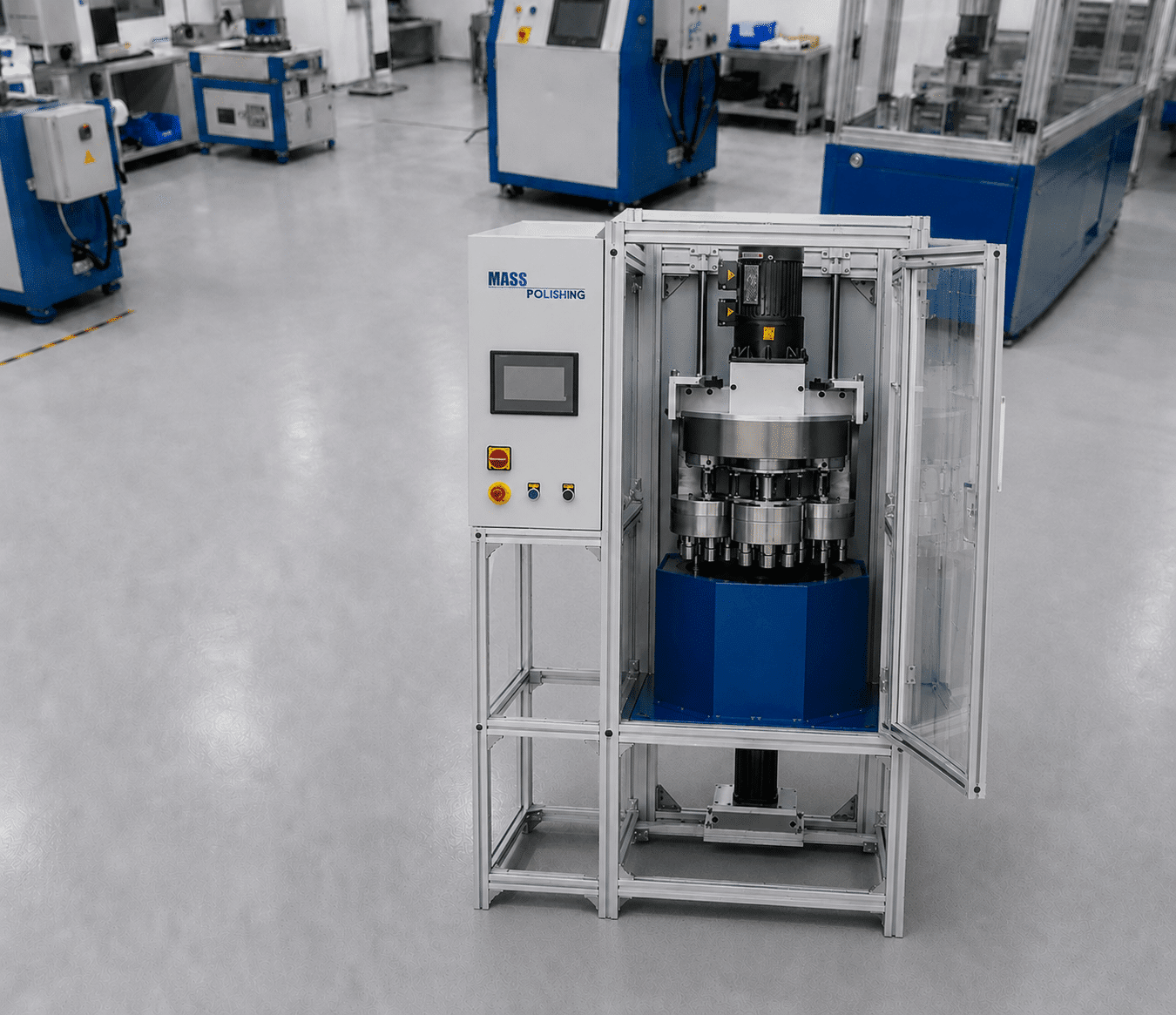
drag finishing machines
Precision Edge Rounding. Mirror-Quality Finish. No Part-to-Part Contact.
Mass Polishing’s drag finishing machines deliver consistent, high-precision surface treatment on your most complex or delicate parts — cutting tools, medical implants, turbine blades, and precision stampings. By clamping each workpiece individually and dragging it through a media-filled drum, the process generates intense, controlled contact pressure — achieving results equivalent to manual polishing in a fraction of the time.
- ISO 9001:2015 & CE Certified
- Custom Configurations for Any Production Requirement
- Ideal for Metal, Plastic & Ceramic Components
Expert Manufacture
Competitive Factory price
Global Reliable Logistics
free sample processing
drag finishing machines overview
-
How Drag Finishing Works
-
Why Engineers Choose Drag Finishing
- Key Features of Drag Finishing Equipment
- Drag Finishing Machine vs Other Surface Finishing Systems
Unlike vibratory or barrel finishing — where parts tumble freely and contact is random — drag finishing gives you total control over the process.
Each part is individually clamped into a spindle-mounted fixture. The spindles then rotate, dragging the parts through a stationary drum filled with ceramic, plastic, or polishing granulate. This high-speed, high-pressure motion removes material precisely where needed — with zero risk of part-to-part impingement.
The result: repeatable, uniform surface quality across every single piece in the batch, every single time.
Finishing Steps
- Step 1: Clamp — Parts are individually mounted on spindle fixtures, secured to prevent any movement.
- Step 2: Drag — Spindles rotate and drag workpieces through abrasive or polishing media at controlled speed and depth.
- Step 3: Finish — Parts emerge with consistent edge rounding, deburring, or mirror finish — ready for inspection or next-stage processing.
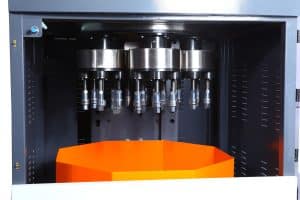
| No Part-to-Part Contact | Each workpiece is held individually throughout the entire process. Delicate edges, fine features, and high-value parts stay protected — zero collision damage. |
| Faster Cycle Times | Drag finishing generates significantly higher contact pressure than vibratory methods. What takes hours in a tumbler takes minutes on a drag finisher. |
| Precise, Repeatable Results | Process parameters — speed, depth, time, media type — are fully programmable. Once dialed in, every batch delivers the same surface result. |
| Suitable for Complex Geometries | Custom-designed fixtures accommodate parts of nearly any shape, including internal features, thin walls, and asymmetric profiles. |
| Dry & Wet Processing Capable | All DF Series models support both wet processing (with compounds) and dry processing — adapting to your specific material and finish requirement. |
| Stores Multiple Process Programs | Advanced models store up to 500 process configurations, enabling rapid job changeover in mixed-production environments. |
1.Precise Motion Control
The rotation and dragging speed are fully adjustable, ensuring uniform results on every part.
2.Customizable Fixtures
Workholding systems can be designed to fit specific parts, preventing any movement or collision during the finishing cycle.
3.Programmable Finishing Parameters
Advanced control systems allow users to set and save multiple finishing programs for consistent performance.
4.Media Versatility
Compatible with a wide range of ceramic, plastic, or high-density polishing media to achieve desired surface roughness.
5.Energy-Efficient Operation
The design of the system reduces media wear and lowers energy consumption, making it an eco-friendly finishing solution.
Compared with other surface finishing systems, the drag finishing machine offers distinct advantages in both precision and safety. Vibratory finishing and centrifugal finishing are good for general metal polishing. However, drag finishing is better for delicate, high-value, and complex parts. It processes these parts without causing any damage.
In terms of part safety, drag finishing provides excellent protection since each workpiece is securely fixed during rotation. The precision it achieves is much higher than that of vibratory systems. It produces mirror-like results with consistent uniformity.
Its cycle time is moderate. It is shorter than vibratory finishing but longer than centrifugal methods. This method offers the best balance between speed and accuracy.
When handling small or fragile parts, drag finishing is the best option. It works better than other methods that might cause damage or scratches. Additionally, you can fully automate drag finishing systems, whereas vibratory and centrifugal machines typically provide only semi-automatic operation.
Overall, these advantages make drag finishing ideal for industries where precision, surface quality, and safety are critical—such as aerospace, automotive, and medical manufacturing.
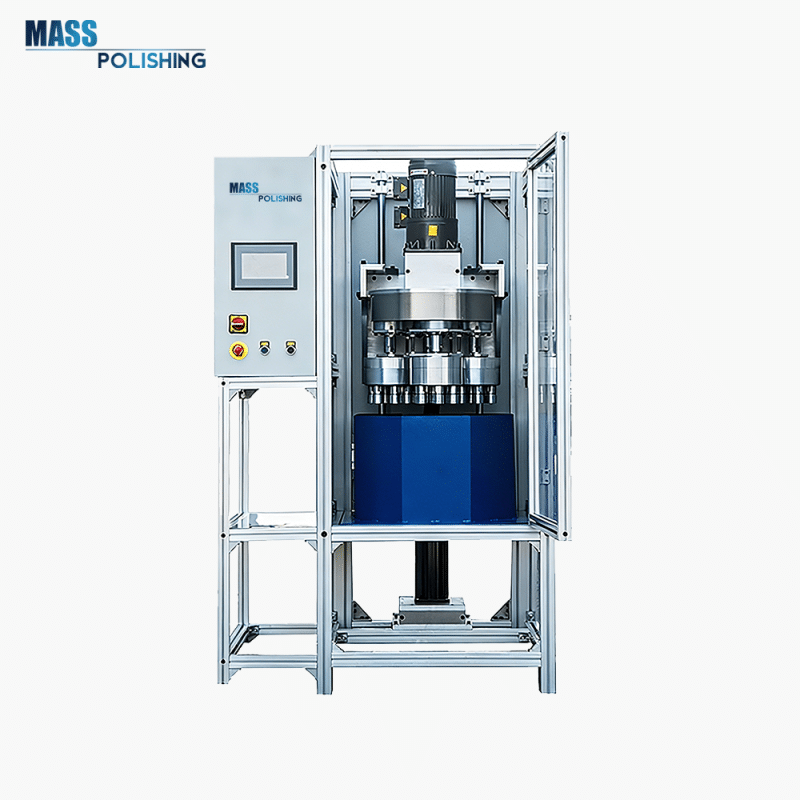
DF Series — Drag Finishing
From benchtop R&D systems to full-scale industrial production lines — Mass Polishing offers drag finishing solutions for every output requirement.
Application
Automotive industry
engine parts, gear components, and molds
Aerospace components
turbine blades, precision gears, and landing gear parts
Medical devices
dental implants, surgical instruments, and orthopedic parts
Cutting tools
carbide drills, end mills, reamers, and inserts
Additive manufacturing
post-processing of 3D printed metal parts
A look at frequently asked questions.
What is drag finishing used for?
Drag finishing is used for precision deburring, edge rounding, smoothing, and mirror polishing of individual parts — particularly those that are too delicate, complex, or high-value to process in bulk vibratory or barrel equipment. Common applications include cutting tools, medical implants, turbine blades, and precision stamping dies.
How long does a drag finishing cycle take?
Typical drag finishing cycles range from 5 to 30 minutes, depending on the material, starting surface condition, and target finish. This is significantly faster than vibratory finishing for equivalent surface results, due to the higher contact pressure generated by the drag motion.
Can drag finishing achieve a mirror finish?
Yes. Using fine polishing media — such as porcelain, zirconia, or plastic polishing granulate — drag finishing can consistently achieve Ra values below 0.1 µm, equivalent to manual mirror polishing. The DF32 Isotropic Drag Polishing Machine is specifically engineered for this application.
What materials can be processed in a drag finisher?
Drag finishing is suitable for hardened steel, carbide, stainless steel, titanium, aluminum, brass, copper, nickel alloys (including Inconel), and most engineering plastics. Media and process parameters are adjusted to match the material properties and required finish.
What is the difference between drag finishing and vibratory finishing?
In vibratory finishing, parts tumble freely in a mass of media — which means parts contact each other and the process is less controllable. In drag finishing, each part is clamped individually and dragged through media at a controlled speed and immersion depth. This eliminates part-to-part collision, enables much faster cycle times, and delivers more consistent, higher-quality surface results — but at lower batch throughput per cycle.
What is impingement-free drag finishing?
Impingement-free drag finishing refers to a process design — available on the DF24S and DF25 models — where the machine and fixture geometry is engineered to prevent any possibility of parts contacting each other during the cycle. This is critical for parts with tight tolerances, polished reference surfaces, or fragile features where even minor surface contact would cause rejection.
Do you offer custom fixtures for unusual part geometries?
Yes. Our engineering team designs custom spindle-mounted fixtures for parts that cannot be accommodated by our 100+ standard fixture designs. Send us your part drawings and we’ll develop a fixture proposal as part of the sample processing evaluation.
Why Choose a Drag Finishing Machine?
For manufacturers where consistency is non-negotiable — on cutting tools, medical implants, or aerospace components — drag finishing delivers process control that manual polishing simply cannot match.
Each part is individually fixtured and dragged through media at a precisely controlled speed, depth, and cycle time. Once a program is set, it runs identically every cycle — no operator variation, no shift-to-shift inconsistency.
At Mass Polishing, every DF Series machine is built for continuous industrial use, with precision motion control and intuitive operation. Whether your application requires micro-deburring, edge rounding, or mirror-quality polishing, we configure the right machine, fixture, and media for your exact requirements — and back it up with free sample processing before you commit.
Request Free Sample Processing →