
ISF isotropic superfinishing is a controlled mass-finishing process that changes the surface texture of a machined part, not its geometry by design. The goal is a fine, non-directional surface with reduced asperity peaks, produced by combining suitable media, chemistry, machine energy, and part orientation. A low Ra number alone does not prove ISF. If the original grinding lay remains, or if the process has rounded a critical edge beyond tolerance, the part has been smoothed, not isotropically superfinished. Achieving ISF therefore starts with a functional surface specification, then a process window that can repeat it without damaging edges, dimensions, or material condition.
How ISF Isotropic Superfinishing Changes a Surface
ISF is used here as the common shorthand for isotropic superfinishing. Isotropic means the surface texture has no strong direction. The finishing marks are random rather than aligned with a grinding wheel or a machining pass. The process is not a coating. It does not deposit a layer, and it does not hide a subsurface defect under a bright surface. It is a controlled removal process at the asperity level, followed by a surface that can carry a more uniform contact pattern.
Most ISF routes are chemically accelerated mass finishing processes. The compound conditions the surface while the media applies mechanical energy and carries the chemistry across the part. The chemistry is not a polishing slurry additive that only cleans the media. It is part of the removal mechanism. The media is not a simple abrasive that scratches the part finer. It transfers energy into the surface and reaches areas that a fixed tool cannot follow.
A true ISF surface is therefore a system result: chemistry, media, machine, fixture, and time. Change one and the surface changes. That is why a supplier cannot quote an ISF result from a machine model alone, and why a buyer should ask for the full process sequence, not just the final Ra.
Gears, bearings, and similar components are often discussed because their function depends on contact texture, not appearance alone. A gear tooth can show a low Ra on a report while the flank still carries a grinding lay. The edge and root may also see a different media exposure than the pitch line.

Why Surface Texture Matters More Than a Single Ra Number
Ra is useful because it is familiar and comparable, but it is an average. Two surfaces can share the same Ra and behave differently. One may have shallow, evenly distributed texture. Another may have a few deep valleys and a strong lay. For a functional surface, the average is a starting point, not a release criterion.
| Parameter | What it helps reveal | Limit when used alone |
|---|---|---|
| Ra | Average profile roughness over the evaluation length | Two surfaces with the same Ra can have different peak heights and valley depths |
| Rz | Maximum profile height within the sampling length | Sensitive to isolated scratches and measurement location |
| Rsk | Balance of peaks and valleys around the mean line | Needs a defined evaluation length and filter |
| Rku | Sharpness of the profile distribution | Does not show directionality |
| Texture direction | Whether a grinding lay remains | A low Ra can still carry a strong directional pattern |
Profile parameters and areal parameters answer different questions. Profile Ra and Rz are measured along a trace. Areal parameters such as Sa and Sz describe a surface area. The inspection plan should state which system is used, the cutoff and filter, the evaluation length, and the location on the part. A number without that context is hard to reproduce and easy to misread.
The functional question is what the surface must do. A sealing surface may need a plateau with controlled valleys to retain a film. A rolling contact may need peaks removed without creating a new stress concentration at an edge. A coating or plating line may need a clean, uniform texture before deposition. In each case, the acceptance criteria should reflect the function, not a single gloss level.
Media, Chemistry, and Machine Energy in the ISF Process
Media and chemistry are coupled. A fine, high-density media can carry energy into a tooth root, but if the compound is too aggressive the same media can attack grain boundaries or produce a smeared, stained surface. A mild compound with coarse media may only move the surface around without removing the peaks. The useful question is not which media is best in isolation. It is which combination produces the specified texture at an acceptable edge condition and cycle time.
Media selection is not a catalog exercise: shape, size, density, and compound all change the cut at the asperity level. <The Importance of Selection and Coordination Between Grinders Abrasives and Workpieces> covers how abrasive choice and workpiece requirements must be coordinated.
| Control variable | What to record | Effect if it drifts |
|---|---|---|
| Media charge, size, and wear | Media type, size mix, bulk volume, wear condition | Cut rate falls or edge rounding changes |
| Compound concentration and pH | Product, dose, pH, temperature | Chemistry attacks the surface or the cycle stalls |
| Water flow and filtration | Flow rate, filter condition, make-up water | Debris redeposits and surface defects rise |
| Machine energy | Speed, amplitude, load, part orientation | Peaks remain or edges round too far |
| Cycle time | Start, stop, actual run time | Result becomes time-dependent, not specification-dependent |
| Rinse and dry | Water quality, rinse time, drying temperature | Staining, corrosion, or residue hides the true finish |
Machine energy is the third variable. A high-energy platform can shorten the cycle, but it also raises the risk of edge rounding, media lodging, and part-on-part contact. A gentle platform can protect a thin wall or a polished feature, but it may not move the asperity peaks within a practical cycle. The useful setting is the lowest energy that reaches the specification with a stable cycle, not the highest energy the machine can deliver.
Matching the Finishing Platform to the Part
ISF is a process, not a machine category. The same chemistry and media can produce different results in a bowl, a barrel, a disc, or a drag cell because the media motion and part exposure are different.
| Platform | Media action | Good fit for ISF development | Main constraint |
|---|---|---|---|
| Vibratory bowl or tub | Bulk media circulates against parts | General parts, mixed batches, moderate volumes | Line-of-sight surfaces and part-on-part contact |
| Centrifugal barrel | Barrels rotate around a turret at high energy | Small precision parts, short cycles, high energy | Fixture volume and edge control |
| Centrifugal disc | Spinning disc drives a media bed | Fast refinement of small to medium parts | Gap and part size limits |
| Drag finishing | Clamped parts are dragged through media | Controlled edges and complex geometry | Fixtures and cycle time |
| Magnetic finishing | Magnetic field drives pins | Internal holes and micro features | Small features only, not broad surfaces |
| Automated finishing line | Handling, dosing, and transfer are integrated | Repeatable high-volume production | Validation and material handling complexity |
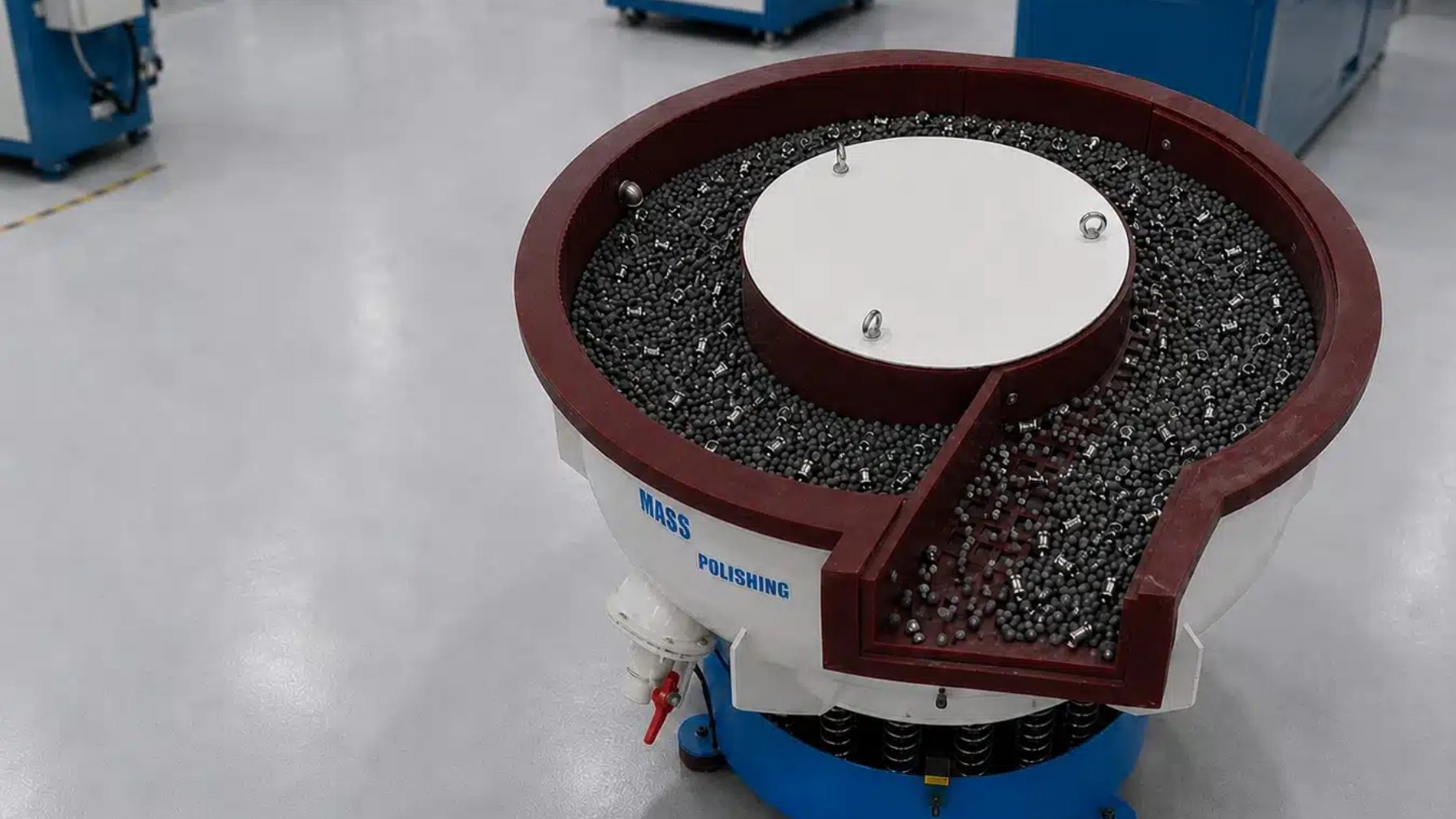
A vibratory bowl or tub is often the first platform because it is accessible and can run mixed batches. Media circulates through the bowl and against the parts, so the surface sees many random contacts. The limitation is coverage. Recessed features, deep holes, and part-on-part contact can leave the surface non-uniform. A vibratory result that looks good on the outside of a part may not repeat in a blind pocket.
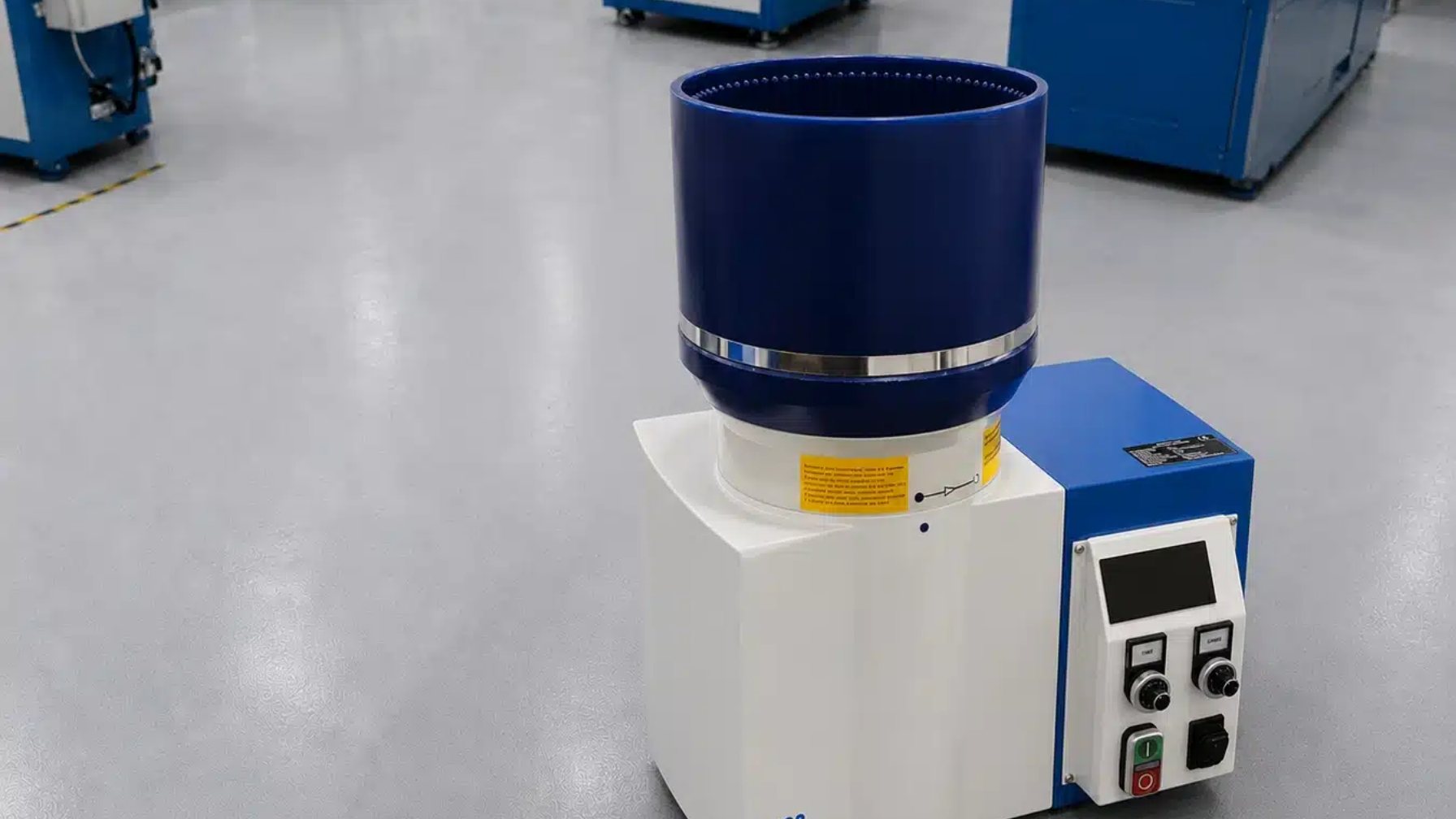
Centrifugal barrel machines use barrels mounted on a turret. The barrels rotate around the turret center while also rotating on their own axes, so the media charge repeatedly changes direction. That high-energy action can reach small precision parts quickly, but it also makes fixture volume and edge control more important. A barrel that is too full, or a part that can move inside the barrel, can produce inconsistent coverage.
A high-energy barrel changes the force available at the part surface, but the result still depends on media, compound, and fixture design. <What Are the Characteristics of a Centrifugal Barrel Finishing Machine> covers the characteristics that matter when comparing barrel finishing equipment.
Drag finishing clamps each part in a holder and moves it through a media bed. The clamp controls the angle and depth of engagement, which is useful when a gear tooth, blade edge, or surgical instrument needs a controlled edge form rather than a batch tumbled surface. The tradeoff is fixture cost and cycle time. A drag cell is not the first choice for a low-volume mixed batch.
Fixtured drag finishing is often chosen when edge form and surface finish must be controlled at the same time. <What Is a Drag Finishing Machine> covers the machine type and its precision finishing role.
Magnetic finishing uses a rotating magnetic field to drive small stainless steel pins. It can reach internal holes and narrow features that a bulk media bed cannot enter. The limit is scale. The pins refine small areas, not a broad gear flank, and the process needs a compatibility check for the part material and geometry.
A Practical ISF Process Development Sequence
-
Define the functional surface and the non-negotiable limits. Write acceptance in Ra, Rz, texture direction, edge radius, allowable material removal, and inspection location. A target of mirror finish is not a specification.
-
Characterize the incoming part. Record alloy, heat treatment, hardness, prior machining or grinding direction, burr condition, residual stress history if available, and cleaning condition. The same alloy from two suppliers can behave differently if heat treatment or surface condition differs.
-
Select the platform by geometry, not by habit. Use the platform table above. For internal features, magnetic finishing may be the only way to reach the area, but it will not refine a broad flank. For edge-critical parts, drag finishing gives more control than an open bowl.
-
Set media and compound as one system. Choose media size and shape for access, density for energy, and compound for chemistry. Run a small trial that measures both cut rate and edge change. A fast cut that rounds a critical edge is not a process win.
-
Control the machine energy and load. Record speed, amplitude, load ratio, and part orientation. Higher energy can shorten the cycle, but it also increases the risk of edge rounding, part-on-part contact, and media lodging.
-
Establish the rinse, dry, and corrosion protection. Residual compound can stain or corrode a fresh surface. The rinse and dry step is part of the surface result, not a housekeeping detail.
-
Run a designed trial and measure before and after. Use coupons and worst-case production parts. Measure the same locations before and after, inspect edges, check dimensions, and photograph the surface at the same magnification. Do not compare a coupon to a different part geometry.
-
Scale up with process control. Lock the media charge, compound dose, water flow, cycle time, and maintenance schedule. Re-qualify after a media change, chemistry change, or machine overhaul.
At Mass Polishing, process development starts from the part material, geometry, and final requirement, then matches machine, media, and compound to that combination. The first trial is a measurement exercise. The result has to be judged on surface, edge, and dimension together.
How to Qualify ISF Without Overclaiming the Result
Qualification is not a single test report. Start with an inspection plan that names the instrument, cutoff, filter, evaluation length, number of traces, and location on the part. If the drawing calls for Ra, measure Ra. If the function depends on peak height, also measure Rz or an areal height parameter. If the edge is critical, measure the edge radius and inspect it visually at the same magnification before and after.
Run the trial on the worst-case geometry, not only on a flat coupon. A coupon can show that the chemistry and media can refine a surface. It does not show that the same media reaches a tooth root, a cross hole, or a masking boundary. Coverage is a separate acceptance item.
Check repeatability across the media or bath life. A process that works with fresh media and fresh compound but drifts at the end of the charge is not a production process. Record the start and end condition, then set a media change or recharge rule that keeps the result inside the window.
Keep the boundary clear. Supplier data supports a trial, but it does not transfer automatically to a different alloy, heat treatment, or part geometry. A coupon result does not authorize a complex production part. For regulated work, the part owner and its approvals remain responsible. The finishing process must fit the approved drawing and quality system, not replace them.
If the surface looks better but the edge is outside tolerance, the process is not qualified. If the edge is correct but the surface still carries a directional lay, the process is not ISF. Both conditions have to pass.
Where ISF Fits in Production and Where It Does Not
ISF fits where surface texture is part of the function. Gear flanks, bearing surfaces, shafts, valve seats, and precision mechanical components are common candidates because contact, friction, sealing, or coating adhesion depends on the surface. Appearance-driven parts can also benefit, but a cosmetic gloss is a weaker justification than a functional requirement.
ISF does not fit every part. Deep blind holes and internal channels may not receive uniform media exposure. Thin edges that cannot be rounded may be outside the process window. Large parts may exceed the platform. Low-volume parts with complex fixtures may carry more fixture cost than the surface benefit justifies. Reactive alloys and assemblies with masked surfaces need a chemistry and masking review before a trial.
Cost has several drivers: cycle time, media consumption, compound, fixtures, inspection, and wastewater treatment. A fast, aggressive cycle can look efficient until edge rework or sorting erases the gain. A slower, controlled cycle can be the lower-cost route when the part is expensive and the edge is critical.
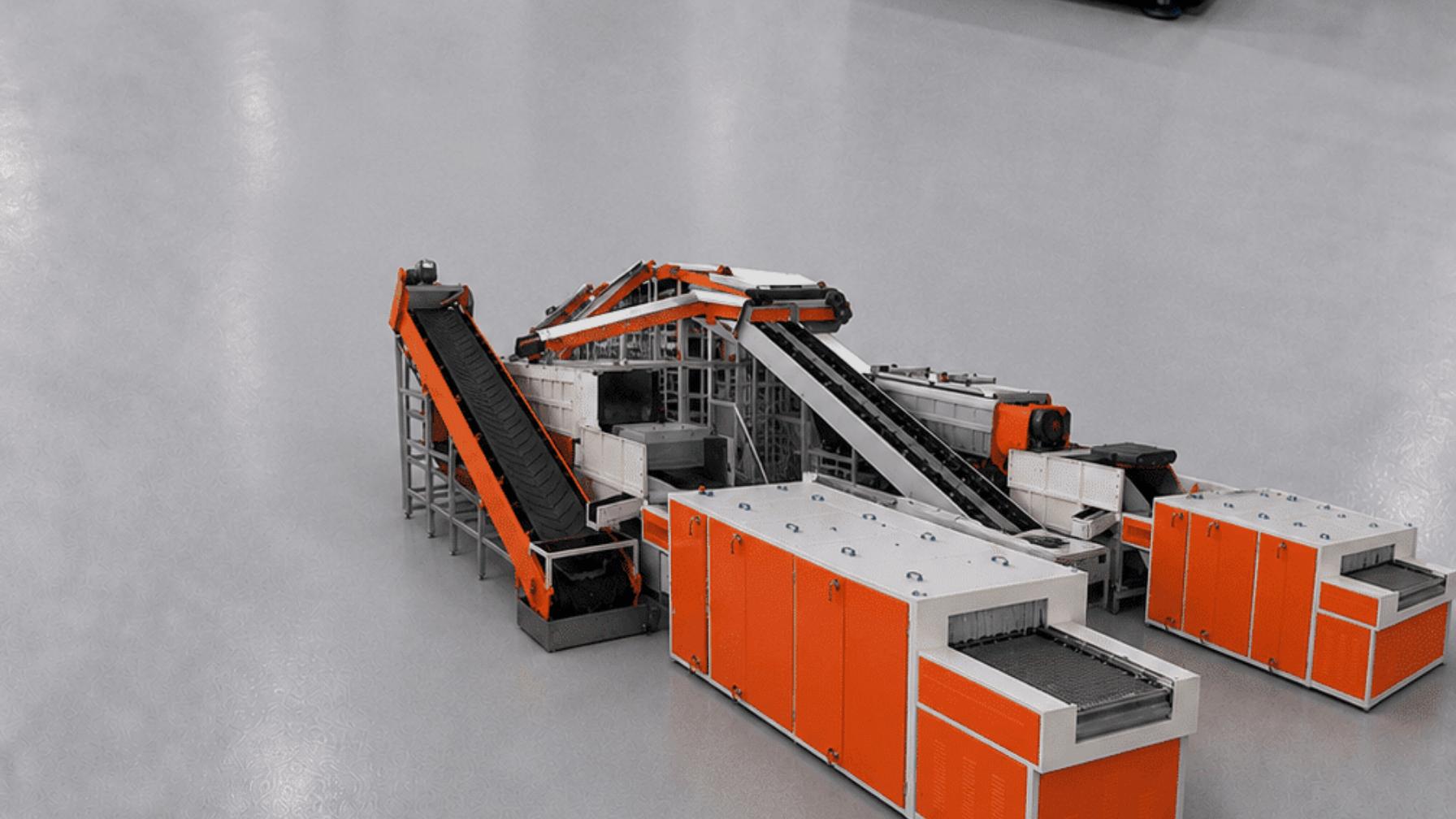
Production integration adds another layer. Manual loading and unloading can make a stable process unstable because part orientation and load change from cycle to cycle. An automated line can reduce that variation, but it also requires a clear handling plan, a media management plan, and a validation plan.
Send the Part and Target Surface for Review
Send the part drawing, alloy and heat treatment, incoming Ra and Rz, target functional surface, critical edges, allowable material removal, masking requirements, and the inspection method you will use. The team at Mass Polishing can review the part, propose a trial sequence, and report the measured result against those criteria. Use the email or phone number published on masspolishing.com so the first reply can be technical rather than a request for basic information.
FAQ
Is ISF the same as polishing?
No. Polishing is a broad appearance-driven operation. ISF is a controlled texture change with a functional target. A polished part can still have a directional lay. A superfinished part has a fine, non-directional texture and a controlled edge condition, verified by measurement. If a supplier shows only a glossy photo, ask for the surface parameters, the inspection location, and the before-and-after data.
Does ISF remove enough material to change dimensions?
ISF removes material at the asperity level, so the nominal dimension is not the target. But edge rounding, surface removal, and local dimensional change can occur, especially with high energy or long cycles. The drawing should state allowable material removal and critical edges. Inspect before and after at the same locations. If the process cannot hold those limits, it is not qualified for that part, even if the surface looks better.
Which parts are suitable for ISF?
Parts with accessible functional surfaces and a texture-driven requirement are the usual candidates: gear flanks, bearing surfaces, shafts, valve components, and precision mechanical parts. Parts with deep blind holes, internal channels, fragile edges, or masking requirements need a platform and fixture review first. Soft alloys and reactive chemistries also need compatibility testing. Suitability is a coverage and tolerance question, not a material name alone.
How do you validate an ISF process?
Write an inspection plan before the trial: instrument, cutoff, filter, evaluation length, number of traces, locations, edge measurement, and allowable material removal. Run coupons and worst-case parts, compare before and after, and repeat across the media or bath life. Keep supplier data as supporting evidence, not as a substitute for part-specific approval. A process is validated only when it meets the drawing and the functional requirement across the production window.
If you’re interested, check out these related articles:
What Kind of Functional Characteristics Does the Three Dimensional Vibration Grinder Have
Take You to See the Three Dimensional Vibration Polishing Machine
Operation Mode of Drum Grinder