丹尼斯

Precision Deburring and Edge Breaking for Aerospace Parts

Precision deburring and edge breaking for aerospace parts covers two requirements that are usually written as one: removing the burr a cutting tool left at the edge, and producing the edge condition the drawing actually specifies. The first is a cleanliness check. The second is a dimensional and surface requirement, measured like any other callout, […]

Precision Deburring and Edge Breaking for Aerospace Parts Read More »
ISF Isotropic Superfinishing: Process, Control and Results

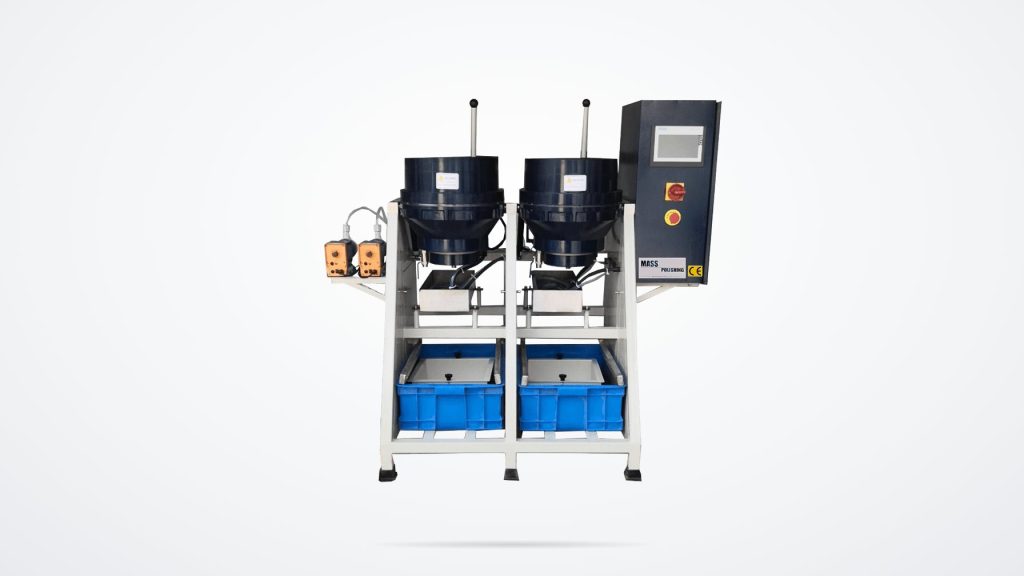
ISF isotropic superfinishing is a controlled mass-finishing process that changes the surface texture of a machined part, not its geometry by design. The goal is a fine, non-directional surface with reduced asperity peaks, produced by combining suitable media, chemistry, machine energy, and part orientation. A low Ra number alone does not prove ISF. If the

ISF Isotropic Superfinishing: Process, Control and Results Read More »

ISF Isotropic Superfinishing: Process, Chemistry and Control

ISF isotropic superfinishing is a chemically accelerated mass finishing process, not an ultra-fine abrasive polish. An active compound softens a very thin layer of the metal surface, and a non-abrasive media wipes that layer away on the asperity peaks only, so the surface flattens into a plateau with no organised direction. The result is a

ISF Isotropic Superfinishing: Process, Chemistry and Control Read More »

How Jet Engine Component Surface Treatment Is Specified

Jet engine component surface treatment is not one process. A compressor blade, a turbine disc and a fan casing reach the finishing stage with different geometry, different allowable stock removal and different functional requirements, and a process that suits one can ruin another. What decides the result is the sequence: media, compound, contact pressure, and

How Jet Engine Component Surface Treatment Is Specified Read More »

High Energy Turbine Blade Polishing for Aero Engines

Turbine blade polishing is not a cosmetic step. For aero engine blades, the surface condition influences aerodynamic loss, stress concentration, and the way a blade survives repeated thermal and mechanical loads. High energy finishing offers a controlled route to remove burrs, break sharp edges, and smooth the surface while preserving the airfoil shape. The practical

High Energy Turbine Blade Polishing for Aero Engines Read More »

Aerospace Component Finishing: Precision Process Guide

Aerospace component finishing is a controlled sequence of deburring, edge breaking, smoothing, and final surface treatment. For flight parts, the objective is not only a low roughness reading but repeatable surfaces that support downstream processes such as coating, shot peening, welding, or nondestructive testing. The right route depends on part geometry, material, batch size, edge

Aerospace Component Finishing: Precision Process Guide Read More »

How to Remove Rust from Metal Parts Before Finishing

Rust removal from metal parts before finishing works best when the process matches the rust type, the base metal, and the final surface requirement. The goal is not only to strip visible rust but to leave a clean, oil-free, mechanically sound surface that plating, coating, passivation, or polishing can bond to. In most production environments,

How to Remove Rust from Metal Parts Before Finishing Read More »

Stamped Part Edge Rounding: Efficient Sharp Edge Removal

Stamped part edge rounding is more than removing a burr. It creates a controlled radius that protects downstream operators, improves plating and coating adhesion, reduces stress concentration, and keeps mating parts from hanging up. The most efficient process depends on material, sheet thickness, part geometry, required edge radius, surface finish, and batch size. Manufacturers should

Stamped Part Edge Rounding: Efficient Sharp Edge Removal Read More »

Job Shop Vibratory Finishing Equipment for Mixed Parts

A job shop rarely runs one part all day. The right vibratory finishing setup must switch among stamped, machined, cast, and hardware parts without expensive retooling. Job shop vibratory finishing equipment earns its floor space when bowl geometry, speed control, media, and separation can be changed together. This guide covers the configurations that support mixed

Job Shop Vibratory Finishing Equipment for Mixed Parts Read More »

Scroll to Top