
Pendant surface finishing fails most often when a workshop treats an intricate pendant like a simple casting. The mixed cross-sections, recessed settings, open filigree, and soft stone seats react differently to abrasive flow than flat or cylindrical parts. The practical starting point is to stop looking for one universal machine cycle and instead match the finishing method and media contact pattern to the pendant’s geometry before the first trial load. Getting this right protects fine edges and preserves the design intent while still cutting enough material to remove casting skin, burrs, and tool marks.
Why Complex Pendant Geometry Defeats Standard Finishing Setups
Most generic jewelry finishing advice assumes small, dense parts with similar dimensions in all directions. Pendants break that assumption quickly. A pierced cross or an open filigree oval has thin sections and through-openings. A hollow pendant has an internal cavity. A pendant with a bezel-set stone has a protected surface that must not see aggressive cutting. If the part is loaded loose into a standard vibratory bowl, the same feature that creates visual interest also creates a trap. Media packs into undercuts, wedges in openwork, and misses the recessed base of a setting while overworking the outer rim.
The failure pattern is not random. It follows the ratio between the media particle and the smallest feature clearance. When a cone or a cylinder cannot pass freely through an opening, it either lodges or bridges across the gap. When it can pass, it may still impinge unevenly on the inside corner. The first separation check after a trial load should therefore happen before the parts look bright. Inspect for trapped media, edge rounding beyond spec, and dull patches around the prongs or gallery. These are geometry problems first and surface finish problems second.
Pendant Surface Finishing Equipment Options for Delicate and Intricate Parts
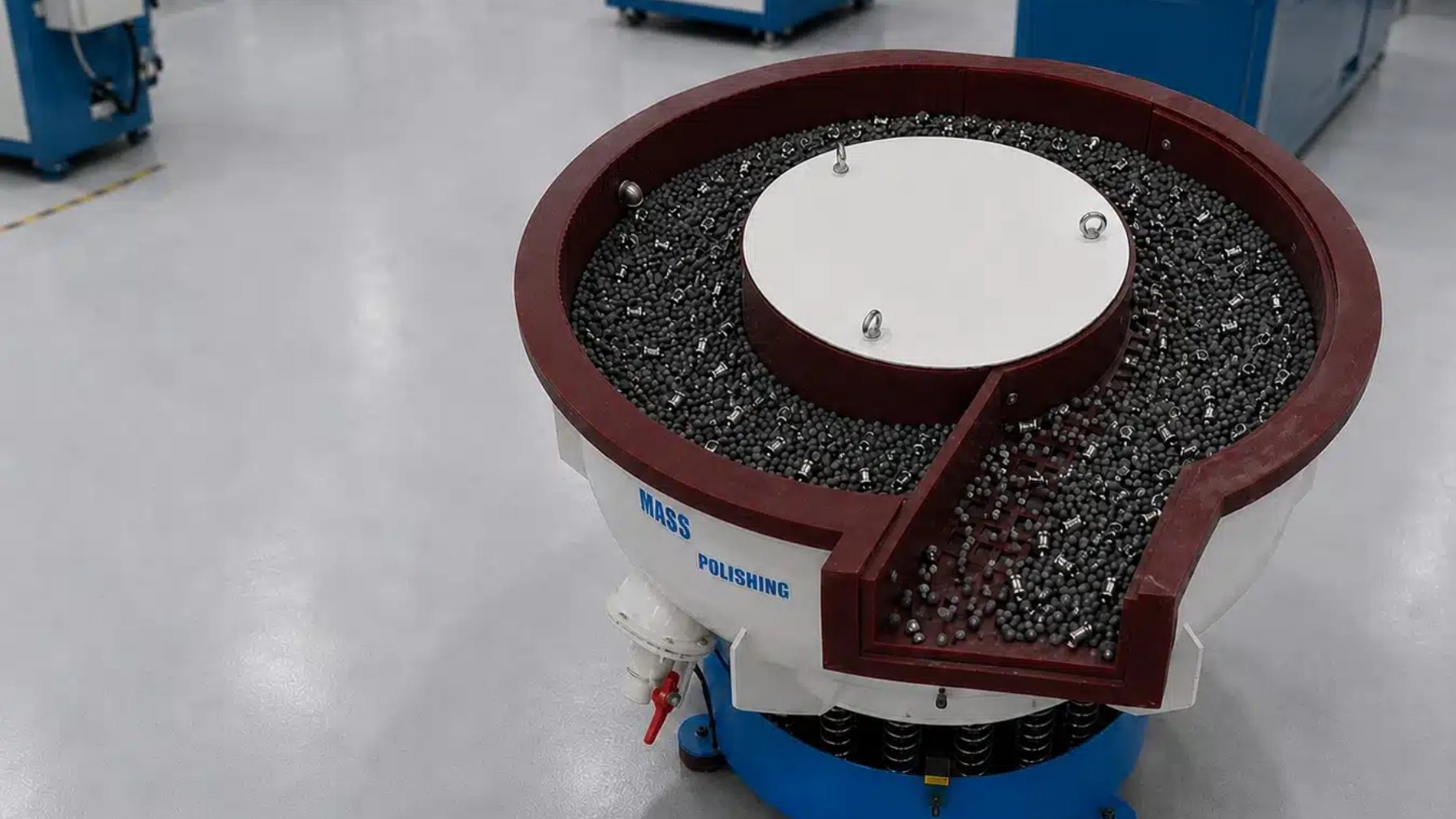
Machine choice has to match the contact pattern the pendant needs. A loose vibratory bowl is fine for strong cast pendants without set stones. A centrifugal disc or high-energy barrel reaches deep recesses quickly, but it raises the risk of part-on-part contact. Drag finishing and magnetic finishing are usually safer where the priority is controlled finishing around fragile details.
| Finishing method | Suitable pendant types | Main advantage | Key limitation |
|---|---|---|---|
| Vibratory bowl | Solid cast pendants, light deburring | Low part-on-part force | Limited access in deep undercuts |
| Centrifugal disc | Filigree and dense settings | High energy reach into recesses | Needs strict media-to-part control |
| Drag finishing | Fine prongs, filigree, set stones with fixtures | Controlled part orientation | Lower batch volume per cycle |
| Magnetic finishing | Openwork and blind holes | Pins enter micro gaps | Not ideal for large flat surfaces |
| Rotary barrel | Simple shapes and burnishing | Gentle long-duration cycle | Poor access on complex geometry |
For high-detail pendants that must keep crisp edges while still reaching recessed areas, drag finishing is often the safest starting point. The part is clamped and moved through media under controlled contact, so the media cannot freely tumble against the setting or stone.
For a closer comparison of loose tumbling and clamped processing, <What Is a Drag Finishing Machine> covers how fixed holders and controlled speed change the contact pattern on delicate parts, and why that reduces some of the geometry-related damage common in barrel finishing.
Machine – Precision Deburring)
If the pendant line includes openwork or a mixed stone layout, it is worth confirming the media-to-gap clearance before locking the media specification. Send the smallest gap dimension and a part photo to [email protected]. We can check whether the selected shape will pass through without lodging.
Media and Compound Choices That Keep Pendant Detail Intact
Media selection for a pendant is not about hardness alone. Shape and size determine where the abrasive can reach, and where it cannot. A 10 mm cone may deburr the outer profile quickly, but it cannot clear a 2 mm gallery between stones. A 3 mm straight-cut cylinder may enter that gap, but it can also wedge tightly in a tapered seat. The correct sequence is to measure the smallest feature clearance, select media small enough to pass through it with clearance to spare, then confirm that the media still has enough mass to do the work.
Because the media is doing most of the shaping work, <Vibratory Tumbling Media Is Indispensable> covers how media geometry and fill level govern impingement, and why skipping media qualification to save time usually creates more rework later.
For fine silver or gold pendants with high surface detail, porcelain fine polish pins and jewelry microbrite beads are usually safer than large ceramic triangles. Plastic media can work for pre-plate surface preparation on softer metals, but the selected shape must still pass through the filigree or setting gap. Anti-adhesion beads are useful when small pendants nest or stick together, because they keep individual pieces apart without doing aggressive cutting.
A Repeatable Pendant Finishing Process That Protects Fragile Features
A trial process that ignores fragile features will fail at full production. We handle this with a fixed sequence.
- Sort the batch by alloy, size, presence of stones, and minimum opening. Do not mix solid cast pendants with prong-set or openwork pendants.
- Choose the machine path. Loose vibratory suits solid castings, high-energy disc suits closed cast surfaces, and drag or magnetic finishing suits stone-set and filigree work.
- Set the media size and fill level. The media particle needs to pass through the smallest gap with at least 30 percent clearance. Add anti-adhesion beads when small parts tend to nest.
- Run a short trial cycle. Inspect for trapped media, edge rounding, stone movement, and recess dullness before extending the time.
- Add compound dosing and water flow after the mechanical movement is confirmed. This avoids chemistry masking a mechanical access problem.
- Record the final load weight, cycle time, media charge, and inspection result. Use that as the production recipe.
For prong-set stones, we avoid loose vibratory processing unless the stone seats are protected and the prongs are heavy enough to resist media flow. In many cases, a drag fixture or a divided chamber keeps the part in a fixed orientation and shields the setting from direct impact. Thin-walled pendants can also be processed wet with lower energy and smaller media to reduce deformation.
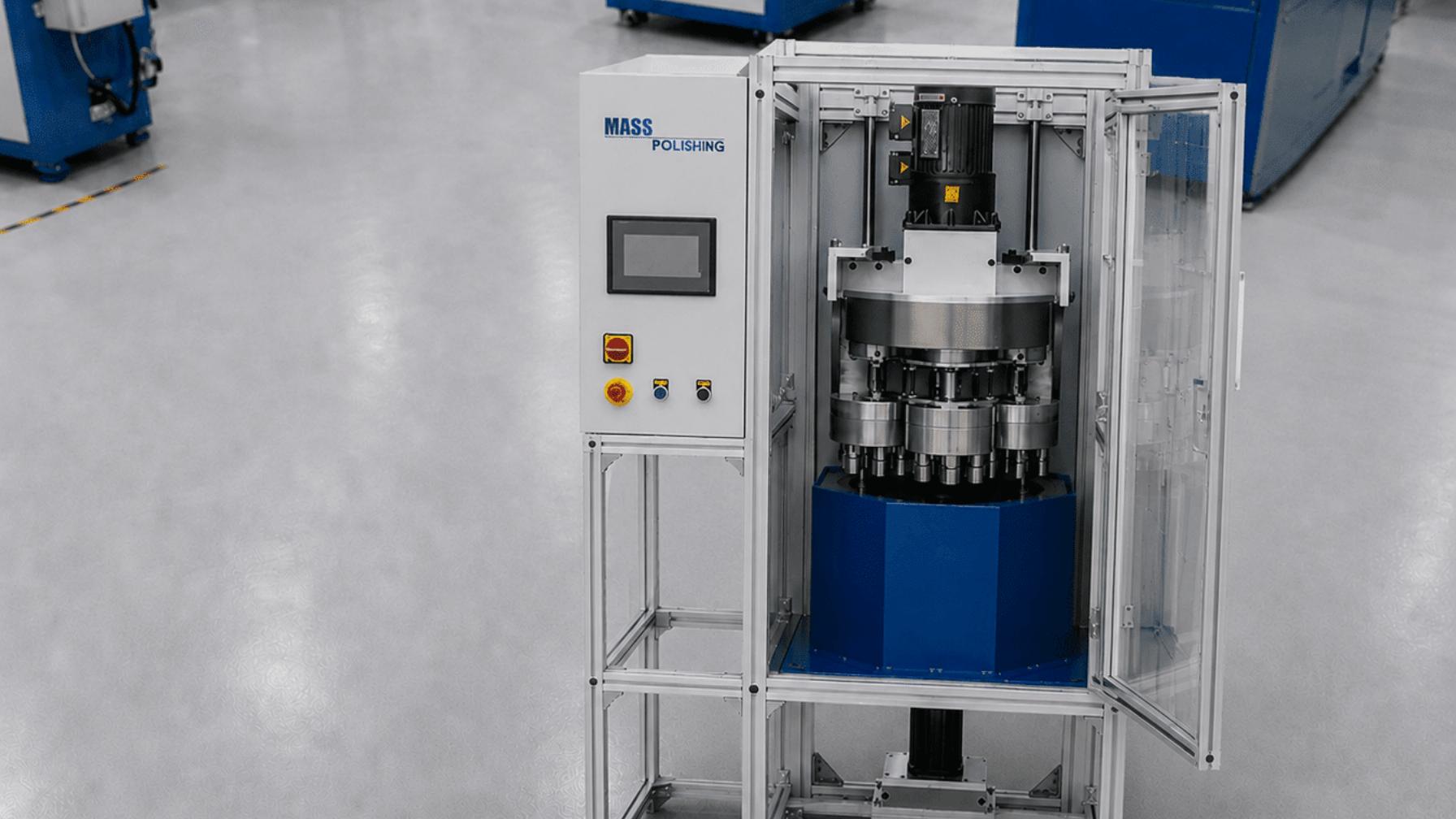
When a single machine must handle both cutting and refinement on small batches, <Centrifugal Disc Finishing Machine Can Be Adjusted to Different Abrasive Media> covers how changing the abrasive charge and speed shifts the same disc machine from aggressive deburring to finer surface work, a useful pattern when pendant geometry changes from one job to the next.

Pendant Surface Finishing Support for Difficult Geometry
Pendants are among the most difficult jewelry parts to finish because the same features that make the design attractive also create access and protection problems. If you are launching a new pendant range, or if the current line has excessive rework from edge rounding, stone damage, or trapped media, the fastest path is to qualify the process on your actual part before committing to tooling.
Send the part number, material, minimum opening, stone or setting detail, and monthly output to [email protected], or call +86 572 257 0918. We will run the geometry check and recommend a machine, media size, and cycle that matches the smallest clearance on the part.
Common Questions About Pendant Surface Finishing
Can stone-set pendants be processed in a vibratory bowl?
Yes, but only after the stone seat and prong geometry are checked. Loose vibratory finishing works for some bezel-set pendants if the setting is solid and the stone seat is not exposed to direct media pressure. With channel-set or micro-pave styles, the risk shifts quickly. Small media can enter the gaps and loosen stones while the surrounding metal is being worked. In those cases, a drag fixture or a divided chamber is safer. The decision should be based on the smallest gap and the security of the setting, not on how hard the stone is.
How do you stop media from lodging in filigree or openwork?
It depends on the opening size and media shape. If the opening is larger than roughly three times the media diameter, most particles will pass through without bridging. If the opening is closer to the media size, the gap becomes a trap. We reduce the media size, shorten the cycle, and check for lodged pieces immediately after unloading. A compressed air or ultrasonic cleaning step is not a substitute for the right media clearance. In process reviews, we measure the narrowest opening first and choose media no larger than half that width.
Is dry polishing safer than wet finishing for complex pendants?
Many workshops assume dry polishing is always gentler, but that is not the main issue. Dry media can still pack into recesses and generate localized heat through friction. Wet finishing usually gives better flow and washes loosened abrasive away, but it requires more careful drying and rust prevention on steel findings. The safety difference comes from energy and fixturing, not from wet or dry alone. A low-energy wet cycle with small porcelain media is often the best starting point for fine silver or gold pendants with high detail.
What should we inspect before moving from sample to full production?
In trials we run, the first inspection is not the surface finish. We check that no media has lodged in the openwork, that stone seats show no movement, that the prongs still cover the stone, and that the outer profile has not lost its original shape. We then compare the recessed areas against the outer surfaces. If the recess is dull while the rim is bright, the media access is wrong even when the rest of the part looks acceptable. That condition will repeat across the batch, so the recipe must change before production starts. Share the sample drawing and your visual acceptance standard, and we will confirm the process window before you commit to a production run.
If you’re interested, check out these related articles:
Tool Industry
Choosing a Vibratory Tumbler
The Working Principle of Centrifugal Barrel Finishing Machine