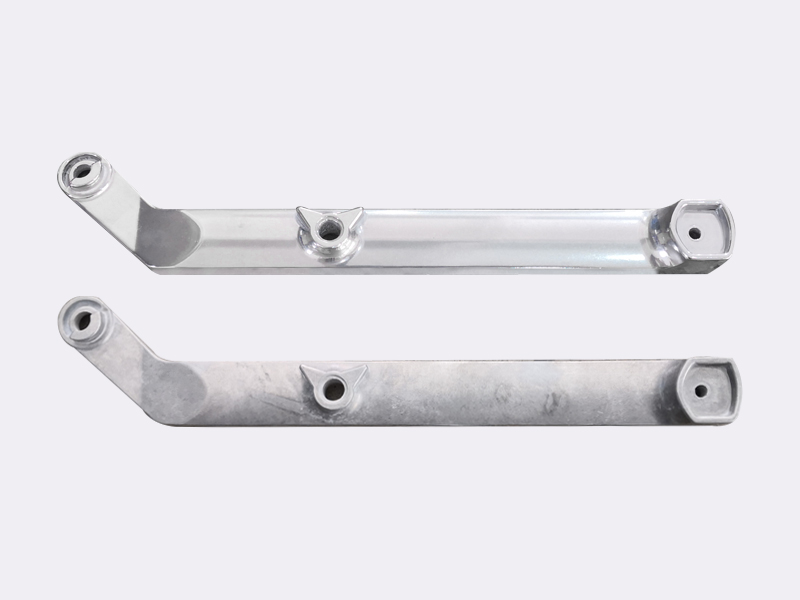
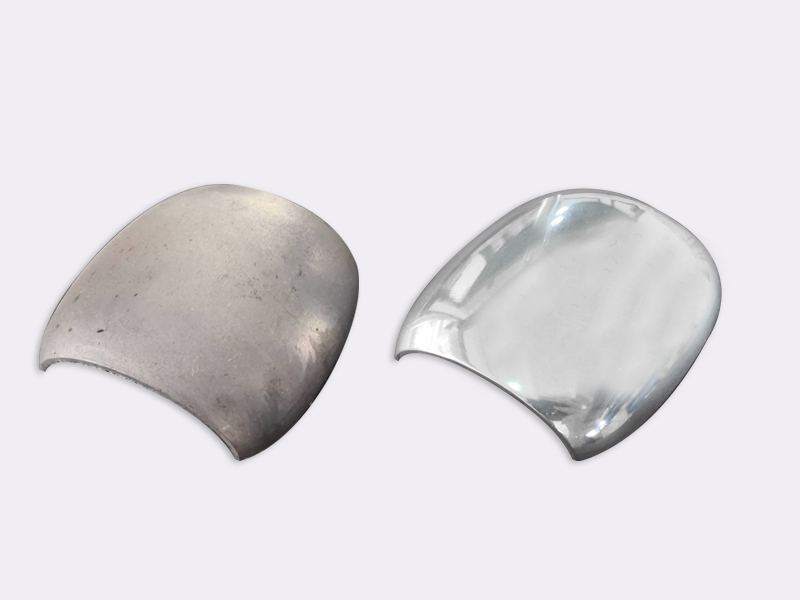
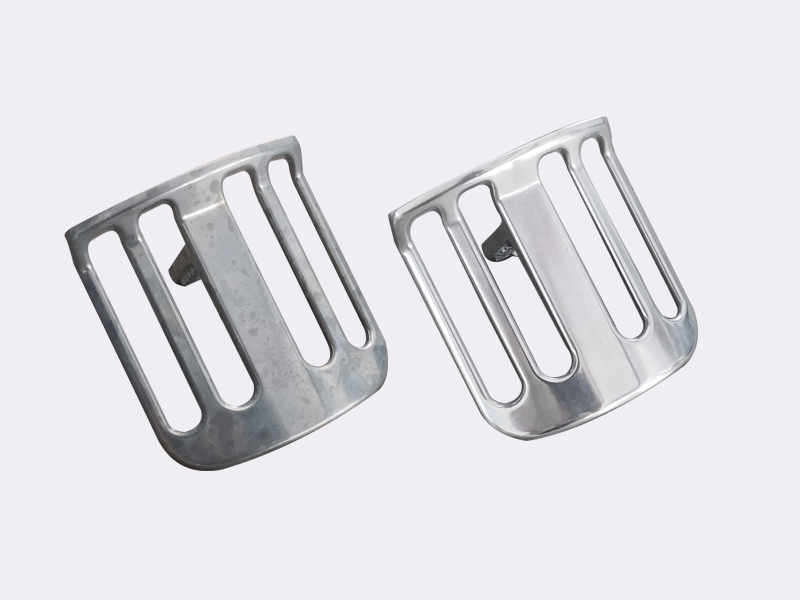
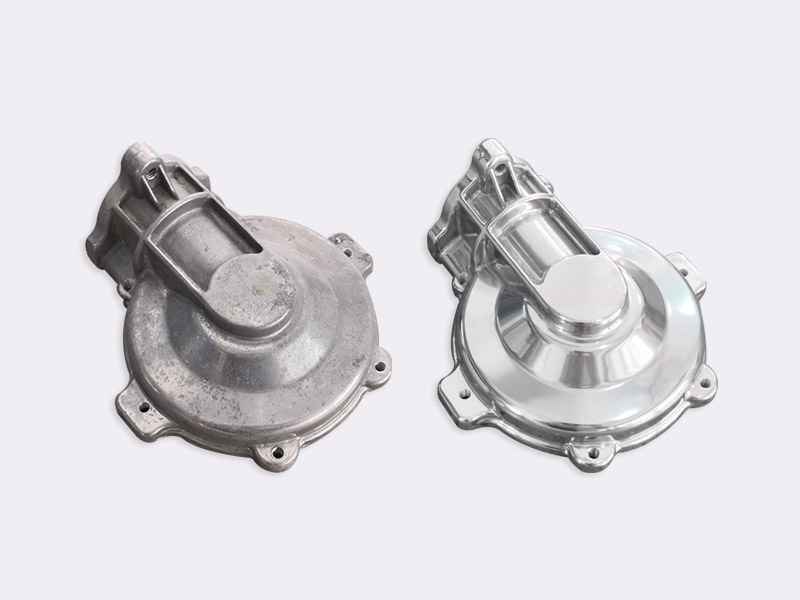
A drag finishing machine is a high-precision, high-intensity surface finishing system that clamps workpieces onto rotating spindles and drags them through a stationary bowl filled with abrasive or polishing media — delivering consistent deburring, edge rounding, surface smoothing, and mirror polishing results in a fraction of the time required by conventional methods.
How a Drag Finishing Machine Works
The fundamental operating principle of a drag finisher centers on relative motion between the workpiece and the media. Workpieces are individually mounted onto specially designed fixtures attached to a rotating carousel equipped with 2 to 12 working spindles. These spindles immerse the parts into a stationary process bowl filled with grinding or polishing granulate, and the high-speed circular dragging motion generates intense contact pressure between the component surfaces and the media.
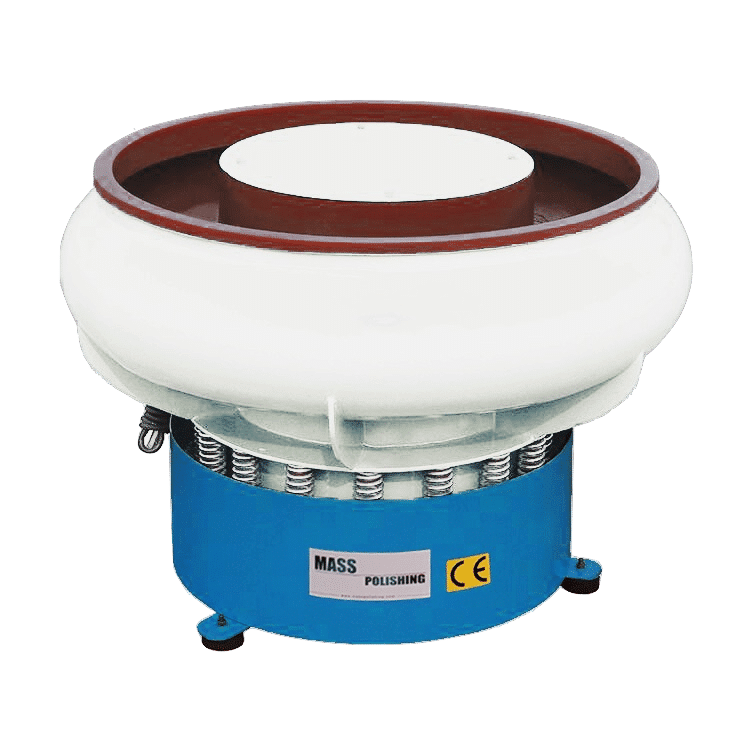
CW300 vibratory finishing machine
This controlled motion produces three key interactions simultaneously:
- Mechanical abrasion – media particles remove burrs, scale, and surface irregularities through repeated high-pressure contact
- Edge rounding – sharp edges are precisely radiused without changing part geometry
- Surface refinement – progressive finishing stages smooth micro-roughness down to mirror-quality Ra values
Drag finishing operates in both wet and dry modes. Wet processing uses a liquid compound that lubricates, cleans, and facilitates mild chemical action to enhance process efficiency, while dry processing with organic media (such as walnut shell or corn cob) is used for final high-gloss polishing stages.
Key Performance Advantages
Drag finishing is widely recognized as one of the most intensive mass finishing technologies available. Because of the high speed at which parts are dragged through the media, drag finishing works up to 40× faster than vibratory finishing systems and 4–5× faster than high-energy centrifugal systems.
The critical performance differentiators include:
- Zero part-on-part contact — each workpiece is individually fixtured, eliminating nicking, scratching, or dimensional damage between parts
- Homogeneous all-around finish — the rotating spindle ensures every surface area receives equal media exposure, with no “dead zones”
- Reproducible, batch-to-batch consistency — intelligent process control systems maintain identical finishing parameters across every production run
- Combinable process steps — pre-grinding, fine grinding, and polishing can be integrated into a single automated workflow
- Minimal material removal — unlike abrasive grinding or blasting, drag finishing achieves desired surface improvements while preserving tight dimensional tolerances
Drag Finishing vs. Other Mass Finishing Methods
Understanding where drag finishing fits in the broader mass finishing technology landscape is essential for equipment selection:
| Feature | Drag Finishing | Vibratory Finishing | Centrifugal Barrel |
|---|---|---|---|
| Processing Speed | Fastest (40× vibratory) | Baseline | 4–5× vibratory |
| Part-on-Part Contact | None (individually fixtured) | Present (managed with dividers) | Present |
| Ideal Part Type | Delicate, high-value, complex geometries | Robust or batch-volume parts | Small-to-medium batch parts |
| Finish Quality | Mirror finish achievable | High-quality polish | Isotropic / uniform finish |
| Automation Capability | Full robotic integration possible | Modular automation available | Standard automation |
| Investment Cost | Higher initial investment | Lower | Moderate |
Machine Structure & Core Components
A drag finishing machine is engineered around several interdependent systems that together govern finish quality and process reliability:
- Rotating carousel with spindles — holds 2 to 12 independently driven work stations; separate carousel and spindle drives enable precise independent speed control of both rotation and immersion depth
- Stationary process bowl — typically ranging from 600 mm to 1,000+ mm in diameter, filled with grinding or polishing media
- Work piece fixtures / clamping devices — custom-engineered for each part geometry to ensure secure, repeatable positioning and targeted surface area exposure
- Automatic water filtration system — continuously removes swarf and debris from the compound mixture, keeping media and parts clean throughout the process
- Compound dosing pump & flow meter — precisely controls the concentration and flow rate of the liquid finishing compound to maintain optimal process chemistry
- Process control unit — programmable logic controller (PLC) that governs spindle speed (RPM), carousel rotation, immersion depth, cycle time, and compound dosing for reproducible results
Finishing Media for Drag Finishing
Selecting the correct tumbling media is the single most critical variable in achieving the desired surface finish. Drag finishing uses several distinct media categories, often applied in sequential stages:
- Ceramic media — high-density, highly abrasive; used for aggressive deburring, edge radiusing, and pre-grinding on hard metals including stainless steel, titanium, and Inconel
- Plastic media — lower density, less aggressive; used for intermediate smoothing and pre-polishing stages, particularly on aluminum, brass, and softer alloys
- Organic media (walnut shell, corn cob) — non-abrasive dry polishing agents; used in final dry polishing stages to produce high-gloss and mirror finishes
- Pre-treated / specialty media — formulated for specific applications such as pre-polish from “as-cast” condition or surface treatment of additive-manufactured (3D-printed) components
Media selection is governed by factors including bond type, abrasive grain size, media shape, and the hardness and geometry of the workpiece. Larger media generate higher impact forces and are more effective at reducing surface roughness (Ra), while the angle of media-to-surface contact — optimally between 30° and 60° — determines whether plastic deformation or cutting mechanisms dominate the finishing action.
Industry Applications
Drag finishing machines are deployed across demanding manufacturing sectors where surface integrity, dimensional accuracy, and regulatory compliance are non-negotiable:
Aerospace
Jet engine components, turbine blades, and structural parts made from titanium and high-alloy steels require precisely controlled edge rounding and surface smoothing. The elimination of part-on-part contact is especially critical for these high-value components. Compliance with AS9100 quality management standards governs process documentation requirements.
Medical & Orthopedic
Orthopedic implants — including hip and knee femur components — undergo multi-stage drag finishing sequences: pre-grinding with ceramic media, pre-polishing with plastic media, and final dry polishing with organic media. The process ensures biocompatible surface finishes that meet FDA and ISO 13485 medical device manufacturing standards.
Automotive
Transmission components, gear sets, engine parts, and brake system elements benefit from drag finishing to reduce surface roughness Ra values by up to 20%, improving fatigue life, reducing friction, and extending component lifespan. Tier 1 automotive suppliers widely adopt drag finishing for precision drivetrain parts.
Tooling & Die Manufacturing
Cutting tools, injection mold inserts, and dies are drag-finished to remove micro-cracks, extend tool life by 10–15%, and improve dimensional accuracy at critical cutting edges. OTEC and other specialist manufacturers offer dedicated drag finishing configurations for the tooling industry.
Additive Manufacturing (3D Printing)
Drag finishing is increasingly applied to post-process metal and polymer AM parts, removing layer lines, support marks, and rough surface textures to prepare components for functional use, painting, or electroplating.
Automation & Industry 4.0 Integration
Modern drag finishing systems are designed for seamless integration into automated manufacturing cells. Industrial robots handle workpiece loading, unloading, and fixture transfer, enabling fully autonomous, lights-out production. Compatibility with Industry 4.0 protocols allows real-time process monitoring, data logging, and statistical process control (SPC) — enabling manufacturers to track finish quality parameters and optimize cycle times continuously.
Sizing & System Selection
Drag finishing machine selection is driven by:
- Workpiece dimensions and weight — plunge grinding variants handle parts up to 800 mm in length and 800 kg in weight
- Production volume — spindle count (2–12) and bowl diameter determine hourly throughput; larger carousels enable simultaneous multi-part processing
- Required finishing stages — multi-stage applications (grinding → pre-polishing → dry polishing) may require dedicated machines per stage, as in the case of medical device manufacturing cells
- Part geometry complexity — highly complex or concave geometries may benefit from specialized fixture designs that expose all critical surface areas to media contact
Why Choose Mass Polishing for Drag Finishing Solutions
At Mass Polishing (masspolishing.com), we engineer and supply drag finishing machines tailored to the exact surface finish specifications, material requirements, and production volumes of your application. Our team brings over two decades of hands-on expertise in mass finishing equipment and tumbling media — guiding customers from initial process development through to a fully commissioned, production-ready system. Whether you are processing aerospace alloys, orthopedic implants, precision gears, or cutting tools, Mass Polishing provides end-to-end support: media selection, process trials, machine configuration, installation, and ongoing technical service.
Contact our engineering team today to discuss your drag finishing requirements and receive a customized process recommendation.