
Pendant surface finishing fails most often when a workshop treats an intricate pendant like a simple casting. The mixed cross-sections, recessed settings, open filigree, and soft stone seats react differently to abrasive flow than flat or cylindrical parts. The practical starting point is to stop looking for one universal machine cycle and instead match the finishing method and media contact pattern to the pendant’s geometry before the first trial load. Getting this right protects fine edges and preserves the design intent while still cutting enough material to remove casting skin, burrs, and tool marks.
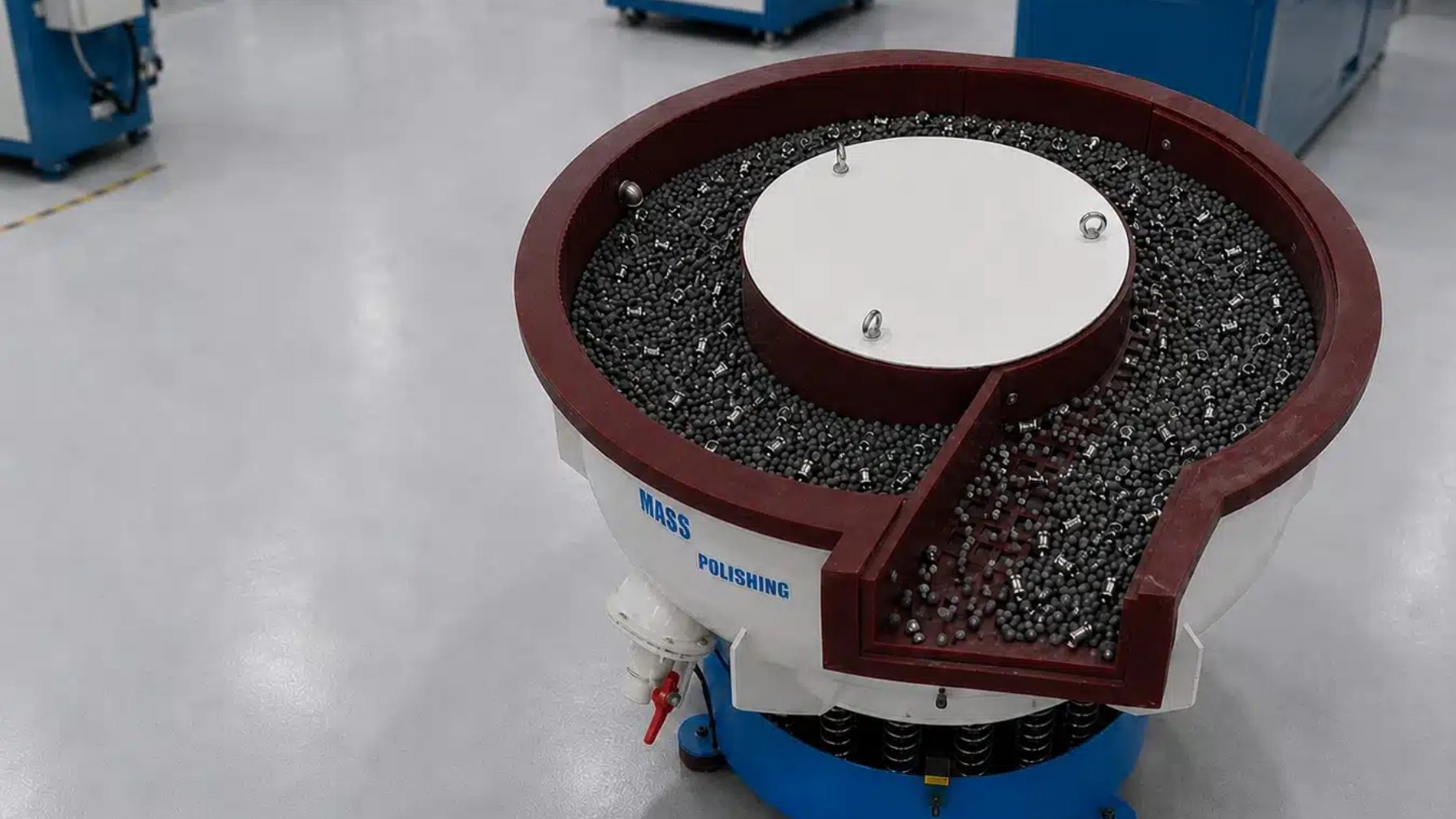
Why Complex Pendant Geometry Defeats Standard Finishing Setups
Most generic jewelry finishing advice assumes small, dense parts with similar dimensions in all directions. Pendants break that assumption quickly. A pierced cross or an open filigree oval has thin sections and through-openings. A hollow pendant has an internal cavity. A pendant with a bezel-set stone has a protected surface that must not see aggressive cutting. If the part is loaded loose into a standard vibratory bowl, the same feature that creates visual interest also creates a trap. Media packs into undercuts, wedges in openwork, and misses the recessed base of a setting while overworking the outer rim.
The failure pattern is not random. It follows the ratio between the media particle and the smallest feature clearance. When a cone or a cylinder cannot pass freely through an opening, it either lodges or bridges across the gap. When it can pass, it may still impinge unevenly on the inside corner. The first separation check after a trial load should therefore happen before the parts look bright. Inspect for trapped media, edge rounding beyond spec, and dull patches around the prongs or gallery. These are geometry problems first and surface finish problems second.
Pendant Surface Finishing Equipment Options for Delicate and Intricate Parts
Machine choice has to match the contact pattern the pendant needs. A loose vibratory bowl is fine for strong cast pendants without set stones. A centrifugal disc or high-energy barrel reaches deep recesses quickly, but it raises the risk of part-on-part contact. Завершение шлифовки и magnetic finishing are usually safer where the priority is controlled finishing around fragile details.
| Finishing method | Suitable pendant types | Main advantage | Key limitation |
|---|---|---|---|
| Вибрационная ванна | Solid cast pendants, light deburring | Low part-on-part force | Limited access in deep undercuts |
| Центрифужный диск | Filigree and dense settings | High energy reach into recesses | Needs strict media-to-part control |
| Завершение шлифовки | Fine prongs, filigree, set stones with fixtures | Controlled part orientation | Lower batch volume per cycle |
| Magnetic finishing | Openwork and blind holes | Pins enter micro gaps | Not ideal for large flat surfaces |
| Роторная бочка | Simple shapes and burnishing | Gentle long-duration cycle | Poor access on complex geometry |
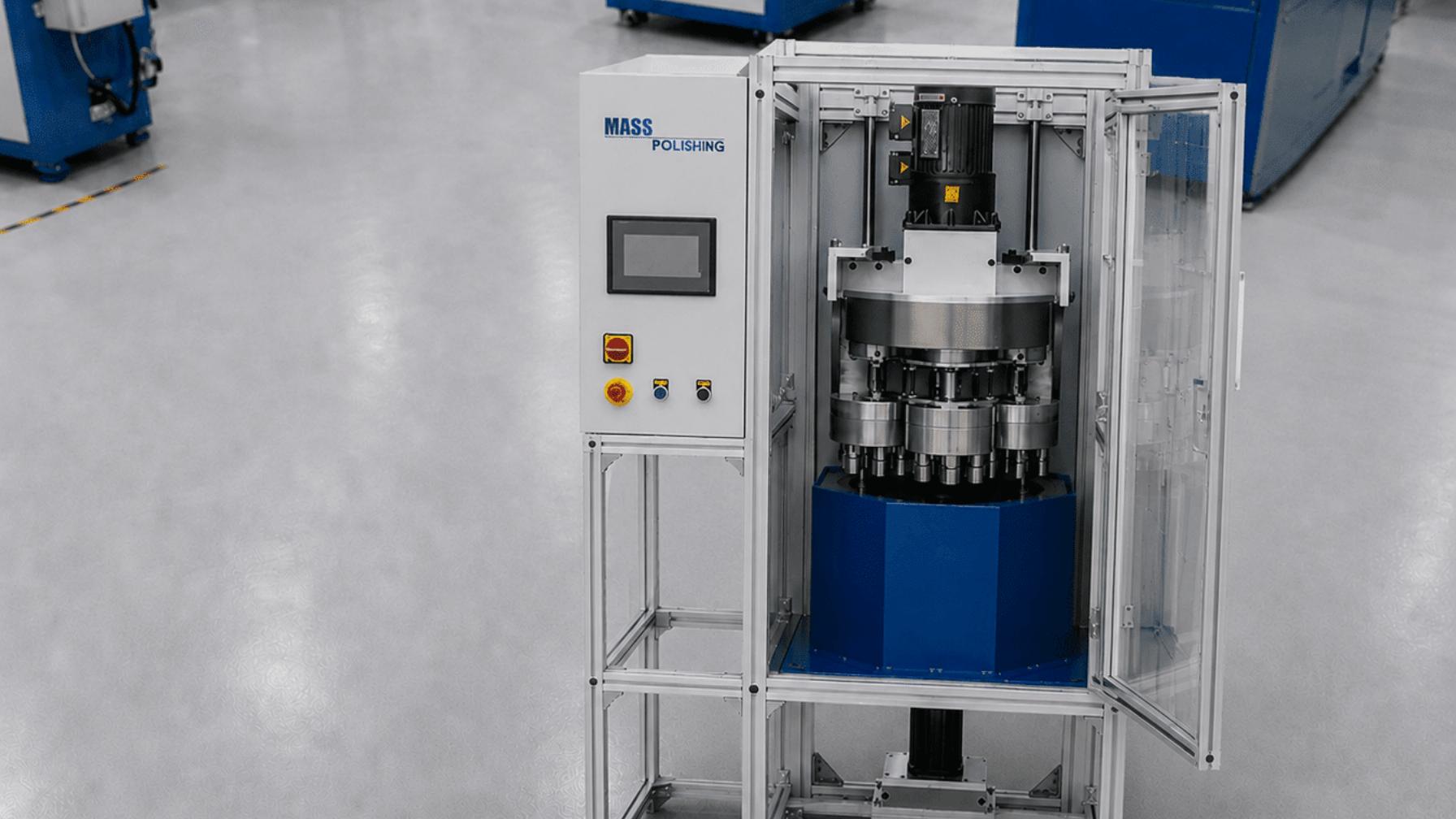
For high-detail pendants that must keep crisp edges while still reaching recessed areas, drag finishing is often the safest starting point. The part is clamped and moved through media under controlled contact, so the media cannot freely tumble against the setting or stone.
For a closer comparison of loose tumbling and clamped processing, <What Is a Drag Finishing Machine> covers how fixed holders and controlled speed change the contact pattern on delicate parts, and why that reduces some of the geometry-related damage common in barrel finishing.
Машина – Точная удаление заусенцев)
If the pendant line includes openwork or a mixed stone layout, it is worth confirming the media-to-gap clearance before locking the media specification. Send the smallest gap dimension and a part photo to [email protected]. We can check whether the selected shape will pass through without lodging.
Media and Compound Choices That Keep Pendant Detail Intact
Media selection for a pendant is not about hardness alone. Shape and size determine where the abrasive can reach, and where it cannot. A 10 mm cone may deburr the outer profile quickly, but it cannot clear a 2 mm gallery between stones. A 3 mm straight-cut cylinder may enter that gap, but it can also wedge tightly in a tapered seat. The correct sequence is to measure the smallest feature clearance, select media small enough to pass through it with clearance to spare, then confirm that the media still has enough mass to do the work.
Because the media is doing most of the shaping work, <Вибрационные материалы для обработки незаменимы> covers how media geometry and fill level govern impingement, and why skipping media qualification to save time usually creates more rework later.
For fine silver or gold pendants with high surface detail, porcelain fine polish pins and jewelry microbrite beads are usually safer than large ceramic triangles. Plastic media can work for pre-plate surface preparation on softer metals, but the selected shape must still pass through the filigree or setting gap. Anti-adhesion beads are useful when small pendants nest or stick together, because they keep individual pieces apart without doing aggressive cutting.
A Repeatable Pendant Finishing Process That Protects Fragile Features
cURL Too many subrequests by single Worker invocation. To configure this limit, refer to https://developers.cloudflare.com/workers/wrangler/configuration/#limits.
- cURL Too many subrequests by single Worker invocation. To configure this limit, refer to https://developers.cloudflare.com/workers/wrangler/configuration/#limits.
- cURL Too many subrequests by single Worker invocation. To configure this limit, refer to https://developers.cloudflare.com/workers/wrangler/configuration/#limits.
- cURL Too many subrequests by single Worker invocation. To configure this limit, refer to https://developers.cloudflare.com/workers/wrangler/configuration/#limits.
- cURL Too many subrequests by single Worker invocation. To configure this limit, refer to https://developers.cloudflare.com/workers/wrangler/configuration/#limits.
- cURL Too many subrequests by single Worker invocation. To configure this limit, refer to https://developers.cloudflare.com/workers/wrangler/configuration/#limits.
- cURL Too many subrequests by single Worker invocation. To configure this limit, refer to https://developers.cloudflare.com/workers/wrangler/configuration/#limits.
cURL Too many subrequests by single Worker invocation. To configure this limit, refer to https://developers.cloudflare.com/workers/wrangler/configuration/#limits.
cURL Too many subrequests by single Worker invocation. To configure this limit, refer to https://developers.cloudflare.com/workers/wrangler/configuration/#limitscURL Too many subrequests by single Worker invocation. To configure this limit, refer to https://developers.cloudflare.com/workers/wrangler/configuration/#limitscURL Too many subrequests by single Worker invocation. To configure this limit, refer to https://developers.cloudflare.com/workers/wrangler/configuration/#limits.
cURL Too many subrequests by single Worker invocation. To configure this limit, refer to https://developers.cloudflare.com/workers/wrangler/configuration/#limits
cURL Too many subrequests by single Worker invocation. To configure this limit, refer to https://developers.cloudflare.com/workers/wrangler/configuration/#limits.
cURL Too many subrequests by single Worker invocation. To configure this limit, refer to https://developers.cloudflare.com/workers/wrangler/configuration/#limits.
cURL Too many subrequests by single Worker invocation. To configure this limit, refer to https://developers.cloudflare.com/workers/wrangler/configuration/#limits
cURL Too many subrequests by single Worker invocation. To configure this limit, refer to https://developers.cloudflare.com/workers/wrangler/configuration/#limits
cURL Too many subrequests by single Worker invocation. To configure this limit, refer to https://developers.cloudflare.com/workers/wrangler/configuration/#limits vibratory finishing cURL Too many subrequests by single Worker invocation. To configure this limit, refer to https://developers.cloudflare.com/workers/wrangler/configuration/#limits.
cURL Too many subrequests by single Worker invocation. To configure this limit, refer to https://developers.cloudflare.com/workers/wrangler/configuration/#limits
cURL Too many subrequests by single Worker invocation. To configure this limit, refer to https://developers.cloudflare.com/workers/wrangler/configuration/#limits.
cURL Too many subrequests by single Worker invocation. To configure this limit, refer to https://developers.cloudflare.com/workers/wrangler/configuration/#limits
cURL Too many subrequests by single Worker invocation. To configure this limit, refer to https://developers.cloudflare.com/workers/wrangler/configuration/#limits.
cURL Too many subrequests by single Worker invocation. To configure this limit, refer to https://developers.cloudflare.com/workers/wrangler/configuration/#limits
cURL Too many subrequests by single Worker invocation. To configure this limit, refer to https://developers.cloudflare.com/workers/wrangler/configuration/#limits.
Если вас интересует, ознакомьтесь с этими связанными статьями:
Индустрия инструментов
Выбор вибрационного тумблера
cURL Too many subrequests by single Worker invocation. To configure this limit, refer to https://developers.cloudflare.com/workers/wrangler/configuration/#limits