
What a Custom Part Finishing Service Should Actually Include
Most finishing suppliers can quote a machine, but few can take an unfinished part through material audit, burr mapping, edge conditioning, surface texture development, media and compound selection, pilot processing, and final surface verification. A practical custom part finishing service should complete those steps before a machine specification is locked.
Mass Polishing, operated by Huzhou Qiaoyun Grind Co., Ltd., has been doing exactly that since the 1990s. Instead of starting with a product catalog, the process starts with the workpiece: its material, geometry, current surface condition, functional requirements, and what happens after finishing. From there, the engineering team defines a candidate process and tests it on real parts before recommending equipment, media, compounds, or a full production line.
Machine – Deburring)
Why Surface and Edge Requirements Are Defined Before Equipment
A part drawing often contains a surface texture callout, but that callout only becomes useful when the required profile is clearly interpreted. For Ra and related surface texture symbols, ISO 1302 provides an internationally recognized way to indicate surface texture requirements on technical drawings [1]. The profile parameters used in verification are more fully defined in ISO 21920-1 [2].
Edge condition matters just as much as surface roughness. Many parts are deburred and lightly radiused to remove sharp edges, but the designer rarely wants an uncontrolled radius. ISO 13715 gives a direct way to indicate edge break dimensions and directions, which helps avoid over-rounding critical seating faces or threaded zones [3].
For functional surfaces, roughness alone does not tell the whole story. ASME B46.1 separates roughness, waviness, and lay, which is useful when a part must seal, slide, carry a coating, or meet a contact requirement [4]. When those callouts are missing or ambiguous, the process-development step should clarify them before a trial is run.
The Process-Development Sequence We Use
A custom part finishing program at Mass Polishing generally follows this order:
- Incoming condition audit — record burr severity, scale, flash, rust, milling marks, stamping edges, and handling damage.
- Material and heat-treatment identification — separate aluminum, zinc, brass, stainless steel, titanium, hardened steel, and other workpieces because they respond differently to media and chemistry.
- Geometry and accessibility mapping — identify blind holes, threads, recesses, thin walls, sharp corners, and surfaces that must remain untouched.
- Finish target and functional ranking — classify surfaces by pre-plating, pre-coating, cosmetic, sealing, or contact requirements.
- Route screening — compare vibratory, centrifugal disc, centrifugal barrel, magnetic, and drag finishing options against part size, fragility, and required cycle time.
- Trial matrix and measurement — process test batches with controlled media, compound, water, speed, and time, then verify the result against the agreed callout.
Machine selection follows part-related facts first, not catalog preference. <How to Choose the Right Polishing Machine> covers the selection criteria that match workpiece geometry and finish goals.
What to Send With Your Parts
The most useful trial submission is not necessarily a large quantity of parts. It is a small batch accompanied by the right information.
| Item to send | What it tells the process engineer |
|---|---|
| 10–20 typical parts, including burr or defect samples | Confirms worst-case condition and whether the proposed process can handle normal variation |
| 2D drawing or STEP/3D file | Identifies critical surfaces, tolerances, threads, and areas that must stay untouched |
| Material grade and heat treatment | Determines media aggressiveness, compound choice, and cycle limits |
| Current surface photos | Shows incoming roughness, burrs, oxidation, or coating condition |
| Target finish and Ra or surface texture requirement | Sets the measurable acceptance standard |
| Post-finishing steps such as plating, anodizing, painting, or laser marking | Ensures the surface is prepared correctly for downstream operations |
| Annual volume and batch size | Determines whether the process should be scaled as a small-batch cell or an automated line |
Machine – Precision Disc Finishing)
Process Variables We Lock Down During a Trial
Four variables dominate most mass finishing outcomes: media, compound, machine energy, and residence time.
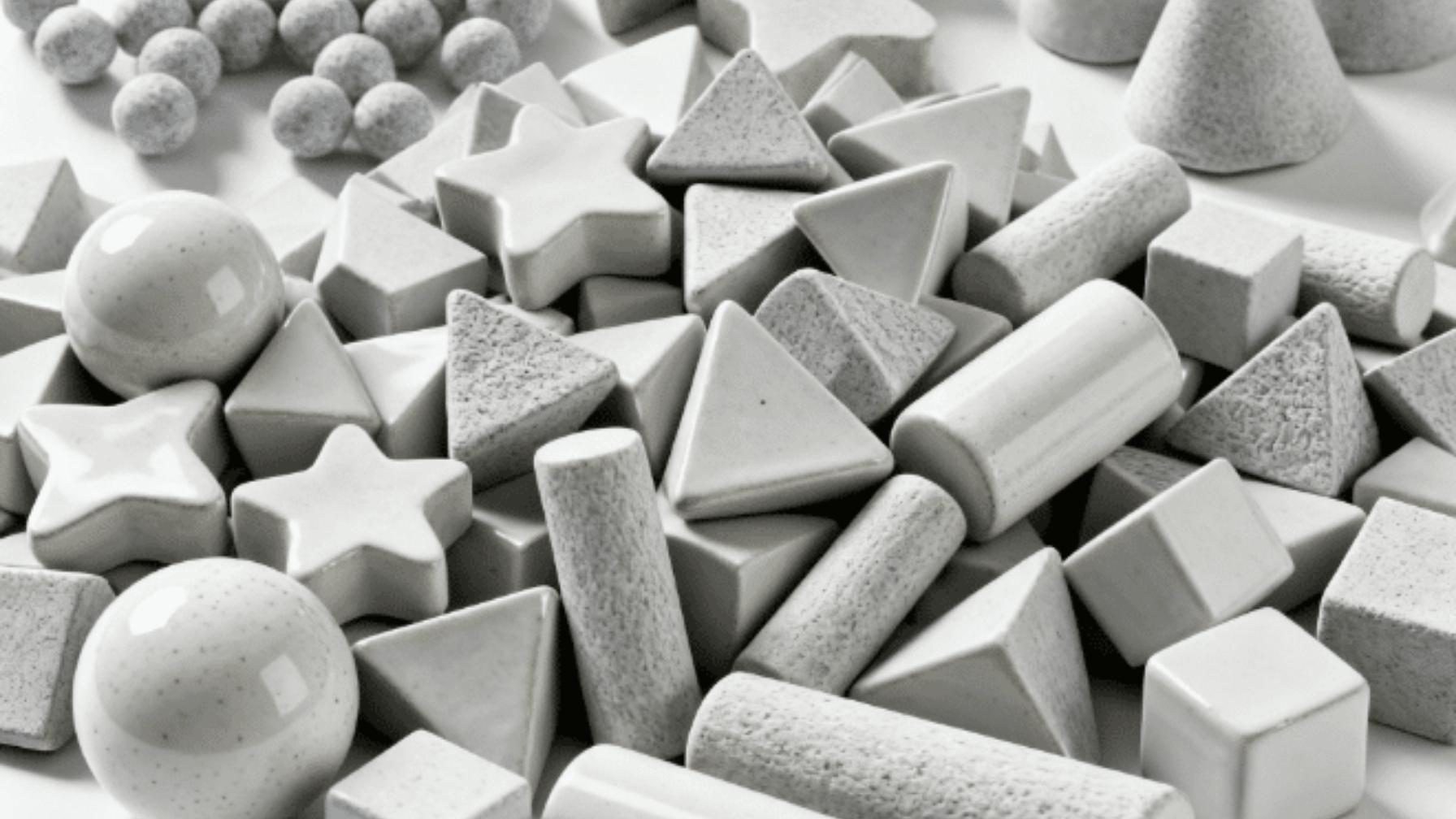
Ceramic media are generally selected for cutting and controlled radiusing, while plastic media produce a softer cut on non-ferrous metals and pre-plate applications. Stainless steel pins are used mainly in magnetic finishing for holes, grooves, and recesses. Each media family has a different contact pattern, so choosing the right shape and size is as important as choosing the material.
Machine route also changes the result. A general-purpose vibratory finishing machine works well for mixed-part deburring. Centrifugal disc finishing adds higher energy and shorter cycle times for stamped, cast, and machined components. Centrifugal barrel finishing provides high-force isotropic finishing for small precision parts, while magnetic finishing reaches internal features and drag finishing protects precise geometry while delivering controlled edge rounding and polish.
Media selection changes how much cutting, smoothing, and brightness each cycle can produce. <Types of Vibratory Polishing Media> covers ceramic, plastic, and stainless steel options in detail.
A starting route is selected from part condition:
| Part condition | First route to evaluate | Why |
|---|---|---|
| Heavy burrs on steel or zinc castings | Centrifugal disc finishing with aggressive ceramic media | Higher energy reaches strong edges quickly |
| Mixed aluminum or brass stampings | Vibratory finishing with plastic media and compound | Gentle contact helps avoid part damage and media embedment |
| Precision edges on delicate components | Drag finishing | Controlled edge radius and consistent surface quality |
| Blind holes, small gaps, and internal features | Magnetic finishing | Stainless steel pins penetrate recesses without changing geometry |
| High-volume standardized parts | Automatic finishing systems | Continuous feed, discharge, and separation support higher throughput |
Send Parts for a Trial Before You Commit to Equipment
If you are evaluating several part numbers, a sample trial is the fastest way to convert a surface problem into a repeatable process. Send 10–20 typical parts, the drawing or 3D file, and the target finish to [email protected].
Mass Polishing will run a screening trial, record the settings, return the processed samples, and provide a short report on what was achieved. The trial is not a pass-fail demonstration; it is a process-development step that shows whether the part should run in a standard machine, a high-energy system, or a fixture-based precision process.
What the Trial Report Should Give You
A useful process-development report should include more than photographs. At minimum, it should document:
- Before-and-after surface texture values using the agreed measurement reference [4].
- Measured or visual edge condition before and after processing.
- Media type, shape, size, compound, water flow, speed, and cycle time.
- Part-on-part contact risk and whether dividers or fixtures are needed.
- Recommended separation, drying, and wastewater handling.
- Estimated cost per part for the trial process.
- Recommended machine class and load size for pilot production.
The ASM Handbook on surface engineering describes why route selection and process control are tightly related in finishing operations [5]. A trial without a written recipe is difficult to validate, scale, or transfer into production.
– Media Separation)
Vibratory deburring is often the lowest-risk starting point for mixed-part production. <The Benefits of a Vibratory Deburring Machine> covers the main advantages in a production environment.
From Approved Sample to Production Handoff
After the sample is approved, the next step is to lock the process envelope. The approved recipe should include machine type, chamber or barrel capacity, media specification, compound concentration, water flow, speed, cycle time, loading, and separation method.
For higher-volume applications, the process can be scaled with automatic separation, drying, and continuous-feed equipment. For sensitive parts, fixtures or chamber dividers are specified to prevent collision. The final handoff includes operator settings, incoming-part criteria, and a simple verification plan so the approved surface is maintained lot after lot.
Custom Part Finishing Service: Start With a Sample Evaluation
If you have a difficult part, a new surface standard, or a manual finishing bottleneck, start with a no-obligation sample evaluation.
Send the following to [email protected]:
- 10–20 sample parts
- Drawing or 3D file
- Material grade
- Current and target surface conditions
- Annual volume and batch size
- Downstream plating, coating, or assembly requirements
Mass Polishing will recommend a process-development route, run a trial on representative parts, and return the results with a clear recommendation. This gives you a practical basis for equipment selection, subcontract finishing, or full-line investment before committing to large capital or production changes.
FAQ
How many sample parts do I need to send?
In most cases, 10–20 parts are enough for a screening trial. The batch should include worst-case burrs, typical parts, and any samples that represent difficult geometry or surface variation.
Do you accept customer-supplied parts with proprietary drawings?
Yes. Customer drawings and 3D data are treated as confidential, and they are used only to plan and document the trial. If needed, a specific non-disclosure route can be arranged before sending parts.
Can you finish small, fragile, or high-precision parts?
Yes. Precision centrifugal disc, centrifugal barrel, magnetic, and drag finishing systems are available for small and delicate components. The selected process depends on part geometry, material, and the required edge or surface result.
What surface finishes can mass finishing realistically achieve?
Mass finishing covers a wide range, from heavy deburring and descaling to pre-plate smoothing, satin finishes, bright burnishing, and fine polishing. The achievable result depends on material, incoming condition, media selection, and the number of process steps. Ra limits for a given part are best confirmed by sample testing.
How long does process development take?
A simple screening trial can be completed faster than a full multi-step development program. The timeline depends on the number of part numbers, complexity, and whether the finish must be matched to an existing approved sample.
Do you provide trial reports and process parameters for our own production line?
Yes. The trial report is designed to support process transfer. It includes the machine class, media, compound, settings, cycle time, verification method, and the conditions required to repeat the result.
References
[1] ISO 1302:2002, Geometrical Product Specifications (GPS) — Indication of surface texture in technical product documentation, International Organization for Standardization.
[2] ISO 21920-1:2021, Geometrical product specifications (GPS) — Surface texture: Profile — Part 1: Indication of surface texture, International Organization for Standardization.
[3] ISO 13715:2017, Technical product documentation — Edges of undefined shape — Indication and dimensioning, International Organization for Standardization.
[4] ASME B46.1-2019, Surface Texture (Surface Roughness, Waviness, and Lay), American Society of Mechanical Engineers.
[5] ASM Handbook, Volume 5: Surface Engineering, ASM International, 1994.
If you’re interested, check out these related articles:
Troubleshooting of Centrifugal Drum Finishing Machines
How to Maintain Vibratory Polishing Machine
Medical Industry
The Role of the Automatic Mirror Polishing Machine for the Case
What Kind of Functional Characteristics Does the Three Dimensional Vibration Grinder Have