
A global mass finishing machine export partner is a supply chain decision before it is an equipment decision. The right partner aligns machine range, media, process validation, spare parts, and export documentation with the demand in your region. That alignment lets you quote with predictable lead times, train local customers, and support repeat orders without becoming a spare parts warehouse. This guide looks at the checks that matter for distributors, agents, and OEM buyers who are building a distribution model rather than buying one machine.
What Should a Mass Finishing Export Partner Provide Beyond the Machine?
A machine manufacturer can sell equipment; an export partner should help you build a repeatable product line. The difference appears in five areas: machine and media range, process development, documentation, spare parts availability, and installation support. If a supplier only provides a price list, you carry the technical risk. If the supplier can process sample parts, recommend media and compound combinations, and document voltage, dimensions, and loading requirements, you can qualify customers faster and reduce warranty exposure.
Process capability matters because mass finishing is a system, not a stand-alone machine. Deburring, polishing, radiusing, and drying depend on bowl geometry, media shape and size, compound chemistry, cycle time, and water treatment. A partner that understands these relationships can help you sell the correct configuration instead of the largest machine.
What Factory Capabilities Should You Audit First?
Start with what the manufacturer controls in-house. A dependable export partner should control or directly manage bowl fabrication, polyurethane lining, machine assembly, electrical wiring, and final testing. This reduces the risk of receiving a machine that looks right in photos but cannot handle continuous production. Request a factory video, production line layout, and sample test report rather than relying on brochure images alone.
| Audit item | What to request | Why it matters |
|---|---|---|
| Machine range | Drawings and datasheets for bowl, trough, disc, barrel, drag, drying, and separation systems | Confirms you can serve multiple part types and industries |
| Manufacturing control | Welding standard, lining material and thickness, motor brand, balancing test | Predictable machine life and fewer field claims |
| Process validation | Sample processing report with before and after finish, cycle time, media use | Confirms the proposal will work on the customer’s actual part |
| Documentation | Operating manual, spare parts list, voltage options, certification evidence | Speeds customs clearance and end-user acceptance |
| Export packaging | Container loading plan, lifting points, moisture and shock protection | Reduces transit damage and installation delays |
| After-sales | Spare parts lead time, remote training, installation and commissioning support | Protects margin and repeat orders |
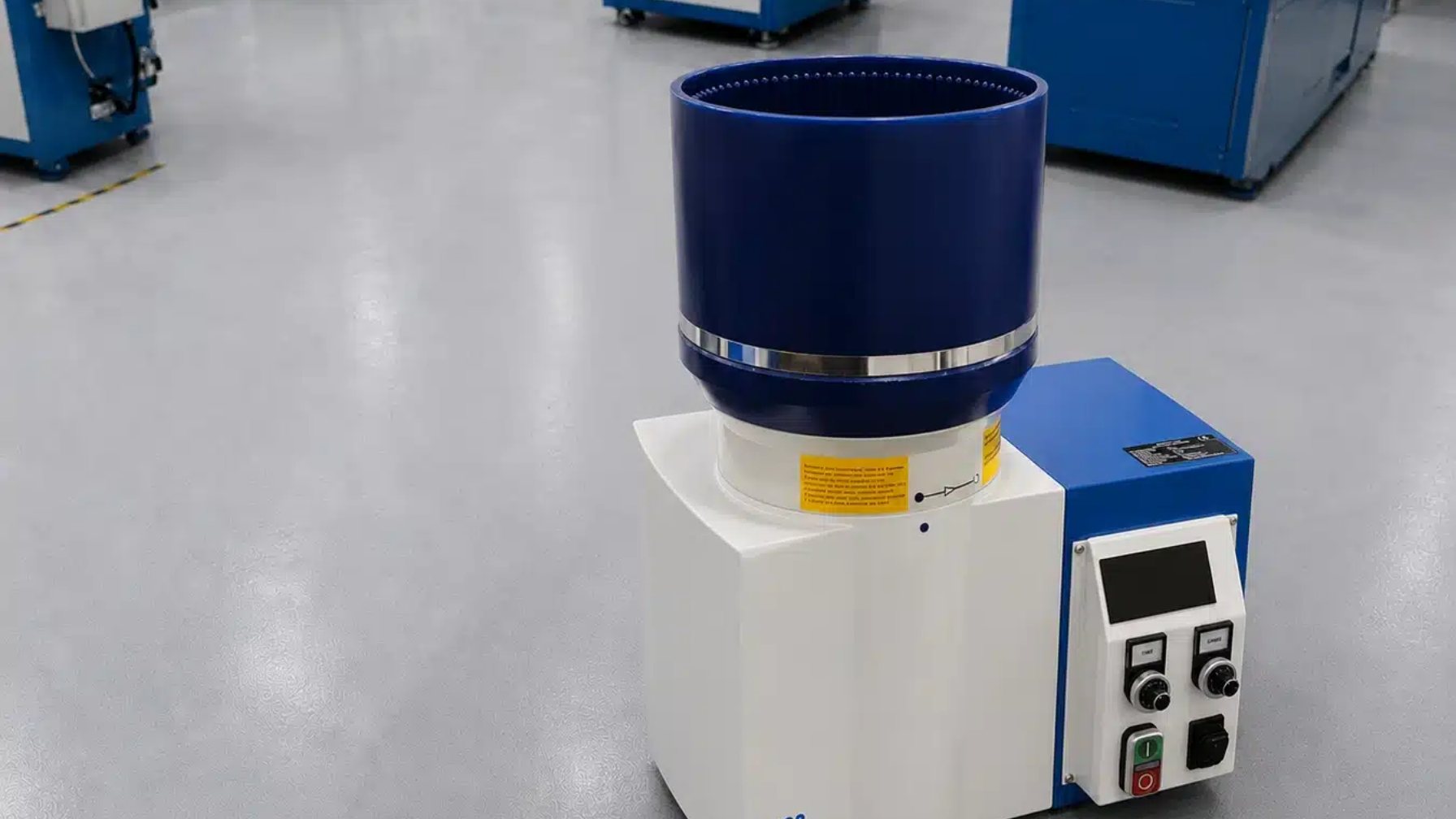
Factory capability should also include the ability to produce multiple machine types under one quality system. That makes it easier to ship mixed containers and maintain consistent documentation.
A factory visit should confirm engineering capability, not just the number of models on the website. <What Is the Purchase Skill of Grinding and Polishing Machine> covers the purchase criteria that help buyers separate a real production partner from a trading company.
Which Machine and Media Range Fits a Regional Distribution Model?
The product line should cover the most common customer jobs first. A distributor or OEM buyer needs equipment for general deburring, high energy finishing, precise edge rounding, gentle jewelry or small part polishing, drying, and parts-media separation. Without that range, you either turn away orders or force customers into the wrong process.
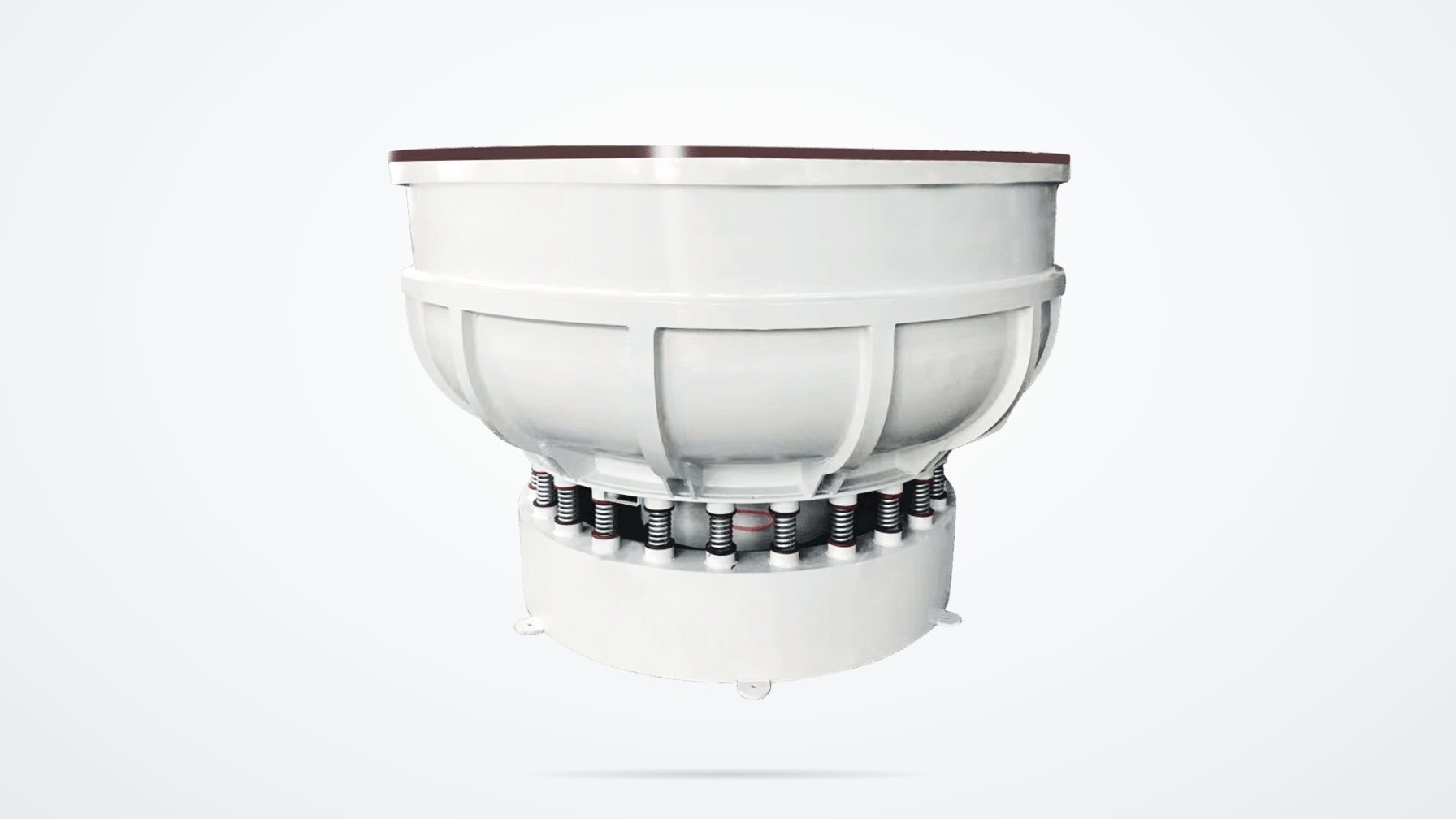
Mass Polishing, for example, offers straight-wall and curved-wall vibratory machines from 30 L to 2500 L, high energy centrifugal barrel machines, disc finishers, drag finishers, rotary barrels, dryers, separators, and wastewater treatment systems. This range supports a distributor in moving from a first machine sale to a fuller finishing line.
Machine – Deburring & Separation)
| Machine category | Common customer problem | Distributor role |
|---|---|---|
| Vibratory bowl and trough | Deburring, radiusing, polishing mixed parts | High volume, general purpose |
| Centrifugal disc and barrel | Fast deburring, high energy finishing, harder materials | Precision and production work |
| Drag finishing | Edge rounding and mirror finish on delicate parts | Tools, medical, aerospace, jewelry |
| Rotary barrel | Gentle wet or dry processing | Small shops and batch production |
| Dryers and separators | Drying and parts-media separation after finishing | Add-on equipment with machine sales |
| Media and compounds | Consumable selection for each process | Repeat revenue and after-sales |
Rotary barrel machines are useful for distributors serving smaller workshops and jewelry manufacturers because the process is simple and can run overnight. They are not a replacement for high energy systems when cycle time is the main concern, so the product line needs both.
Machine – Mass Barrel Finishing)
A distribution program works best when the machine range matches multiple part types rather than one narrow process. <Vibratory Finishing Machine the Ultimate Guide to Industrial Surface Excellence> covers how vibratory systems perform in industrial surface finishing and where they fit a broader equipment line.
Process Support, Media, and Spare Parts
Consumables decide whether the equipment works in the customer’s shop. Ceramic media handles heavier cutting, plastic media is used before plating on softer non-ferrous parts, stainless steel and zirconia media produce bright surfaces, and anti-adhesion beads keep small parts from sticking together. A partner that supplies media and compounds and matches them to the part material, finish requirement, and machine type gives you a technical selling advantage.

Spare parts supply is equally important. Ask for the lead time on linings, springs, motors, screens, and drive components. A distributor should carry fast-moving consumables locally and keep slower spare parts at the regional warehouse or factory. This split controls inventory cost while preventing long downtime on a part that may cost only a few dollars.
Before committing to a product line, distributors should know how the equipment is used in daily production. <How to Use the Grinding and Polishing Machine> covers the operating and process factors that affect finishing results and customer training.
How Do You Structure Territory, Margin, and After-Sales Support?
Distribution agreements need clear rules for territory, pricing, sample processing, lead times, and after-sales. A workable agreement separates hardware margin from consumable margin, because media and compounds are the repeat part of the business. It also defines who pays for sample testing before a customer places an order and who handles warranty labor and replacement parts.
Territory protection should be limited by performance, not promised indefinitely. The agreement should state the minimum annual purchase or active customer count required to keep exclusive rights. Otherwise, a partner can hold a market without developing it. Training should include machine operation, media selection, process troubleshooting, and basic electrical and mechanical maintenance.
What Should the Export Documentation and Installation Package Include?
Export readiness shows up in the details. Request a container loading plan that groups machine, media, and spare parts by destination and keeps heavy units from shifting. The supplier should confirm voltage and frequency, supply lifting points and mounting dimensions, and provide manuals and nameplate information before the ship date. For complete lines, the documentation should include installation sequence, utility requirements, and commissioning checks.
Local installation support can be remote, on-site, or through a trained partner. The practical approach is remote guidance for standard machines, with factory or regional technical support reserved for complete lines and high value systems. This keeps cost under control while still giving customers a clear escalation path.
Build a Global Distribution Line With Mass Polishing
Tell us the regions you cover, the industries and part materials you serve, and the machine and media categories you want to stock. Include part drawings, material, current finishing method, target surface finish, and monthly volume. Our engineers will respond with a product line proposal, sample processing plan, lead time, and export packaging arrangement.
Contact Mass Polishing through masspolishing.com to reach the export team and discuss territory, branding, training, and after-sales support.
FAQ
What is the difference between a machine supplier and an export partner?
A machine supplier provides equipment and a price list. An export partner adds process validation, media and compound selection, export documentation, spare parts planning, training, and after-sales support. For a distributor, the second set of services is what makes repeat orders and regional reputation possible.
Can we sell the machines under our own brand?
Private label and OEM arrangements depend on the supplier’s manufacturing control, documentation, and production capacity. You should confirm whether the supplier can build to your specifications, place your brand on the nameplate, and support the product after it reaches your local customers.
How much stock should a new distributor carry?
Start with fast-moving consumables such as ceramic or plastic media, compounds, and common spare parts. Keep machines to a limited demonstration or sample-processing stock until local demand is clear. The supplier should hold slower spare parts centrally and ship them when needed.
What happens if a customer sends a part for process testing?
Sample processing should confirm the machine, media, compound, cycle time, and final surface result. The report should show the part before and after processing and note any process limits. This gives the distributor a factual basis for the proposal and reduces the chance of a misapplied machine.
If you’re interested, check out these related articles:
Centrifugal Finishing Machines for High Efficiency Surface Treatment
Tub Vibratory Finishing Machines Efficient Solutions for Large and Delicate Workpieces
What Are the Advantages of Vibrating Dust Collector Lapping Machine Compared with Polishing Wheel
How to Use a Small Round Tube Polishing Machine and What Problems Should Be Paid Attention to
Jewelry Industry