
Outsource deburring to a contract manufacturer finishing service only when the supplier proves process control on your actual part. Most buyers compare price per kilogram before they compare qualification discipline, and that is where edge rounding, surface roughness, and plating adhesion problems start. I have spent years on the finishing side of those conversations. The decision should rest on a documented sample, the right machine and media combination, and a supplier that returns measurable results instead of a verbal promise. This article covers the checks I would want completed before any production batch leaves the shipping dock.
Pre Shipment Checks for Outsource Deburring
Every deburring quotation starts with the same blind spot: the buyer sends a drawing but not the problem. A clean print shows dimensions and material, but it rarely shows the burr condition, the machining direction, or the surface requirement after polishing. For a contract manufacturer finishing service, those details determine whether the job belongs in a vibratory bowl, a centrifugal disc, or a drag finisher. Send the material grade, heat treatment condition, pre-finish surface state, and the required edge radius. Add photographs of the part and the burr locations. If the parts have blind holes, cross-drilled passages, or fine threads, say so before the quote is fixed.
What part data should you send?
At minimum, send the alloy or plastic grade, the hardness range, the current burr height, the maximum edge radius you will accept, and the target surface roughness value. Without those numbers, a supplier can rough deburr the part and call the job finished. We have seen programs where a drawing called out a controlled edge radius but the buyer accepted a satin result because the original requirement had never been translated into a measurable post-finish check.
Which process risks change the quote?
Threads, cross holes, blind pockets, thin walls, and pressed-in features all change the process risk. A shop that misses those details may load the parts into a high-energy disc and damage a thread lead or fold a thin edge. The quote should state the proposed machine type, the media shape, the compound, and the planned cycle time. If it only states a price and a delivery date, the supplier has not thought about your part.
Machine – Deburring)
Qualification Samples for a Contract Manufacturer Finishing Service
A polished sales pitch will not catch the difference between a burr that peels off and a burr that deforms into the surface. The qualification sample catches it. Ship real parts from the same machining process, not clean samples picked from the best shift. Ask the supplier to run those parts on the machine and media they intend to use in production, then return the finished parts with the process record attached.
Burr location is only half the picture. <Choosing a Vibratory Tumbler> covers how bowl configuration and media volume affect what actually reaches the troublesome edges when a batch first starts rolling.
I want the sample report to show the before and after photographs, the measured edge radius, the surface roughness reading, and the recorded compound concentration. If the shop cannot tell me which media lot ran the sample, I cannot trust that the first production lot will behave the same way. That may sound strict, but it is the reason a contract manufacturer finishing service either becomes a stable extension of your line or another inspection problem.
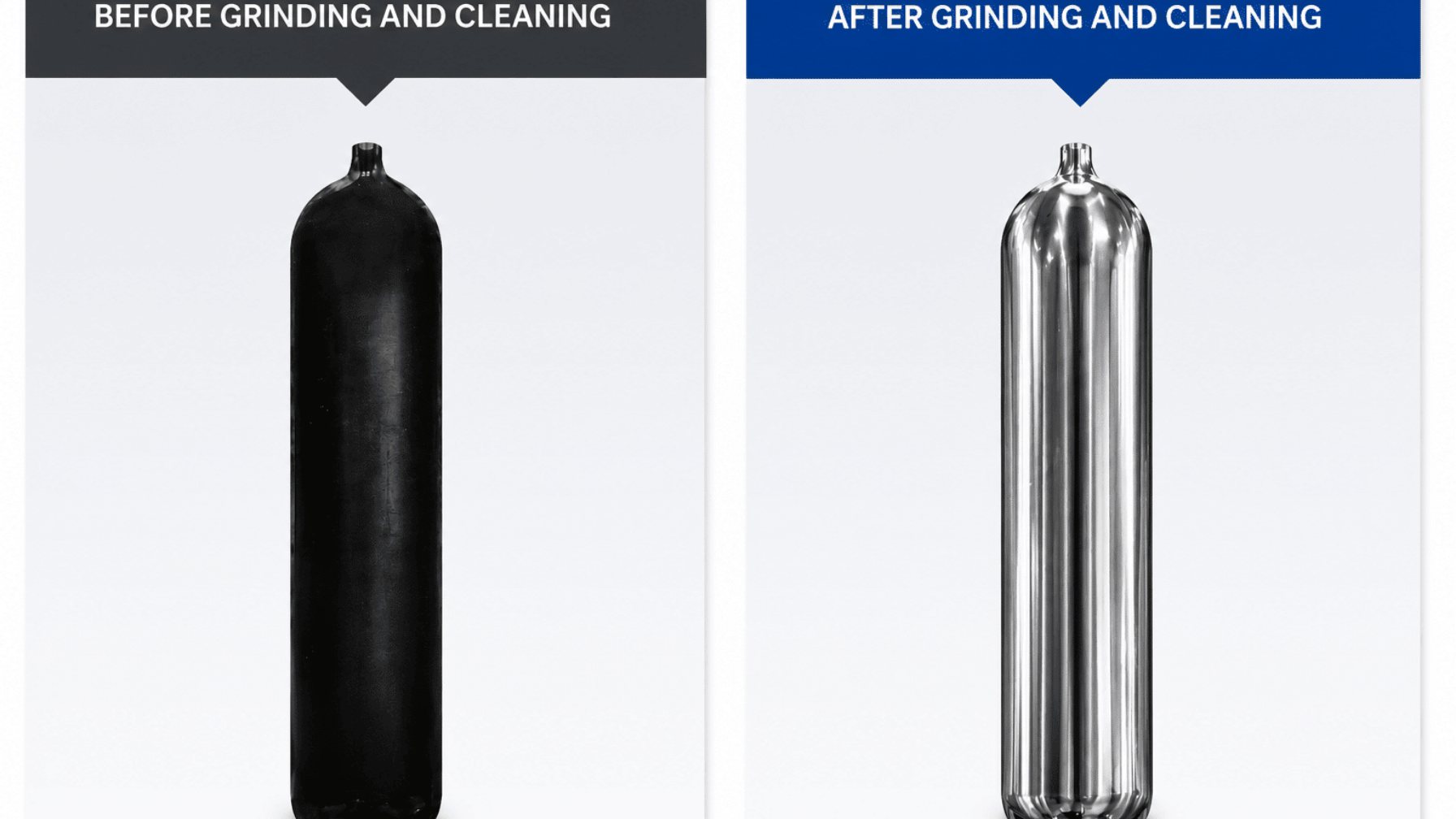
Process Selection by Part Geometry
The right process is not the machine a supplier happens to own. It is the one that reaches the burr without over-processing the surrounding surface. I group parts by geometry first: small machined parts, flat stampings, precision parts with threads, complex castings, and long or fragile workpieces.
| Part profile | Suitable finishing process | Why it works |
|---|---|---|
| Small machined parts with external burrs | Vibratory bowl | Gentle enough for threads when media is selected correctly |
| Flat or disc shaped parts needing heavy edge breaking | Centrifugal disc | High energy shortens cycle time and keeps parts separated |
| Precision parts needing controlled radius | Drag finishing | Fixturing stops part on part contact |
| Small complex parts with cross holes | Magnetic finishing | Pins reach internal intersections without damaging edges |
| Fragile or thin wall stampings | Vibratory tub with dividers | Dividers prevent collision and distortion |
Process selection starts with geometry, but the media shape determines whether the cut lands on the burr or the surrounding surface. <Ceramic Polishing Media Complete User Guide> covers why angle-cut triangles and cones behave differently on threads, holes, and flat faces.
If your program mixes part families with different materials and thread forms, it is worth confirming the separation method and the media recipe before finalizing the bill of materials. Send the part matrix to [email protected] and ask for a process recommendation instead of a generic machine quote.
Machine – High Energy Deburring)
Documentation That Protects the Outsourcing Decision
Most outsourcing failures show up after the quote is signed and the first containers arrive. The buyer realizes no one recorded the original surface condition, so no one can prove the parts changed. Documentation is what matters. Request a process sheet for each part number with the machine model, media type and size, compound, cycle time, water flow, and inspection method.
Ask whether the supplier keeps a retained sample from the qualification lot for a defined period. That sample becomes the reference when a later batch arrives with a different sheen. If the answer is no, the supplier has left you with no audit trail, and the second order starts from memory. I would rather pay a little more for a shop that treats this as standard practice than chase a lower price that disappears when the process drifts.
A documented process is only useful when the machine is running the way the report assumes. <Solutions to Common Problems of the Polishing Machine in the Polishing Process> covers how small shifts in water flow, media level, and compound dosing change the final result between shifts.
A Practical Way to Start Your Deburring Outsourcing Program
Deburring outsourcing feels like losing control only when the supplier cannot show what happened to the part. The fix is to start with a controlled sample, not a trial shipment. Send the part number, material, quantity, current burr condition, and the surface requirement. Include a drawing and photographs. At Mass Polishing, we run the part through the appropriate finishing process, record the parameters, and return the sample with the measured results.
From there, scaling to production is a repeat of the qualified process. If you already have parts waiting, email the part number and quantity to [email protected] or call +86 572 2685 666. Ask for a sample report that includes edge radius, surface roughness, and the exact media compound used. That one request filters out the shops that sell capacity from the shops that sell process control.
Common Questions About Contract Manufacturer Finishing Service
How do we know a supplier can hold our edge radius?
A supplier proves it with a measured before and after sample, not with a catalog page. Ask for the edge radius on five points across the part and the inspection method. If the shop uses a radius gauge, profilometer, or vision system, those numbers should appear on the report. If the answer is only visual inspection, the risk is higher for sealing edges and mating faces. We run the sample, record the measurements, and send the parts back with the inspection data. That gives you something to audit against the next batch.
Is outsourcing deburring always cheaper than in house?
It is not always cheaper on the invoice line, and that is the wrong first question. Outsourcing tends to work when in house deburring creates a labor bottleneck, inconsistent edge quality, or excess media expense. If your volumes are small and mixed, a contract manufacturer may spread equipment and media costs across many part numbers. If volumes are stable and dedicated, in house equipment may pay back faster. Compare cost per finished part, including rework, inspection time, and scrap, before deciding.
Which parts should not be batch finished?
That depends on geometry, not material alone. Parts with fine threads, sharp sealing edges, delicate pressed features, or surfaces that cannot accept any impingement may need fixturing or a different process. Thin wall stampings can distort in high-energy equipment if they are not divided or fixtured. Small parts that nest or lock together may need separators or special media. The supplier should identify those features from your drawing before quoting. If a shop says every part can go into the same vibratory bowl, ask for a sample.
How do we compare sample results from two suppliers?
In programs we have supported, the comparison only works when both suppliers receive the same part sample, the same target values, and the same inspection points. Without that alignment, one shop may report a bright surface while the other reports a controlled radius. Ask each supplier to number the sample parts and return them with the process record. Compare edge radius, surface roughness, part contact marks, and retained documentation before you compare price. If you are comparing suppliers now, send the same part data to [email protected] and ask for a retained sample and process record.
If you’re interested, check out these related articles:
Consistent Finish Drag Finishing Precision Manufacturing
What Are the Characteristics of the Three Dimensional Vibration Grinder
Types of Vibratory Polishing Media