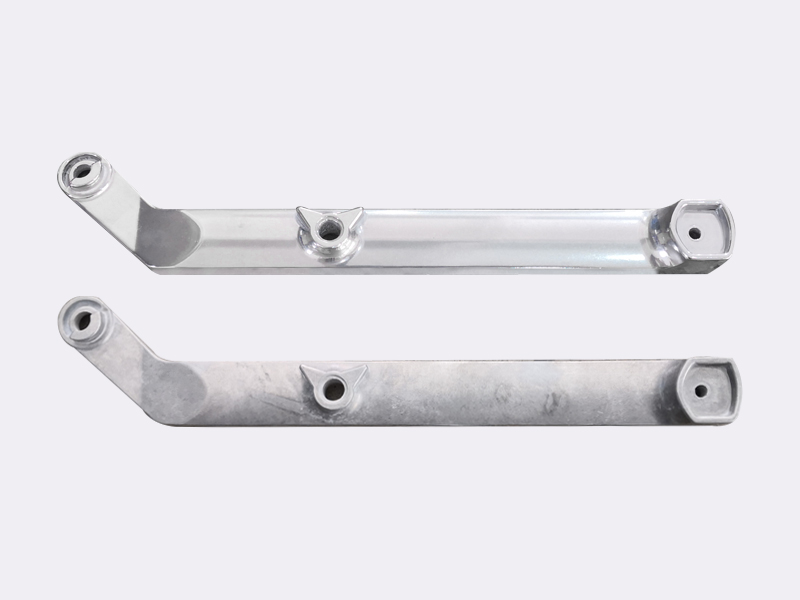
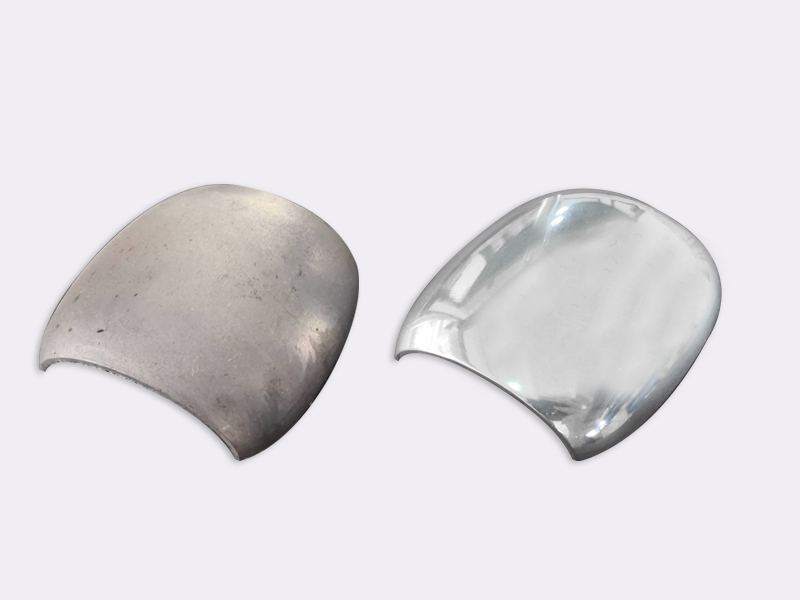
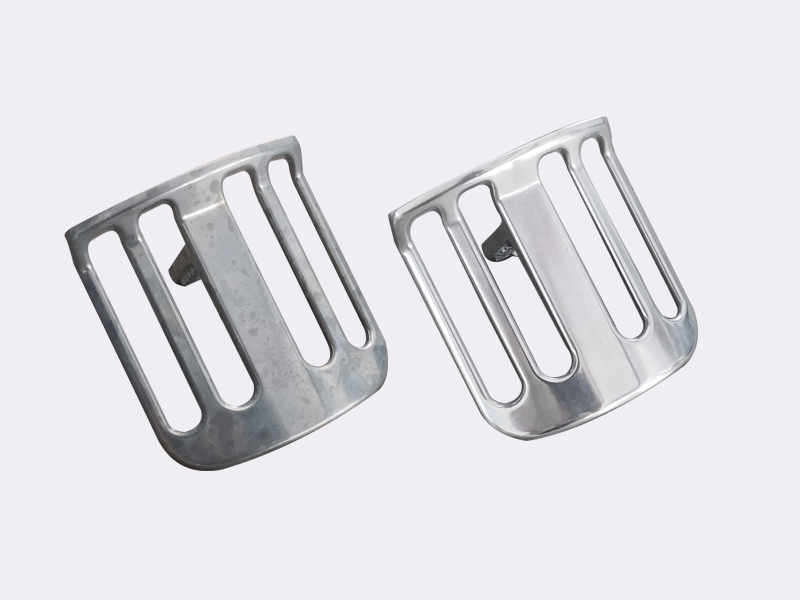
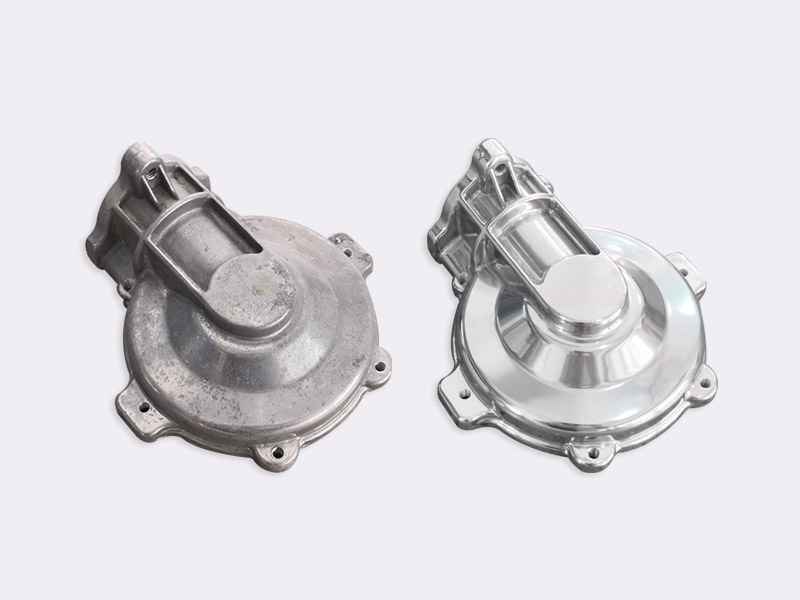
Drag finishing is a high-precision mass finishing process used in precision manufacturing to achieve repeatable, batch-to-batch consistent surface finishes on high-value, complex-geometry components — without any part-on-part contact.
Unlike conventional vibratory finishing or barrel tumbling, drag finishing individually clamps each workpiece onto rotating spindle fixtures and “drags” them through a stationary media-filled bowl at high speed. This controlled motion generates up to 40× higher processing intensity than standard vibratory systems, making it the preferred choice for manufacturers in aerospace, medical device, cutting tool, and defense industries.
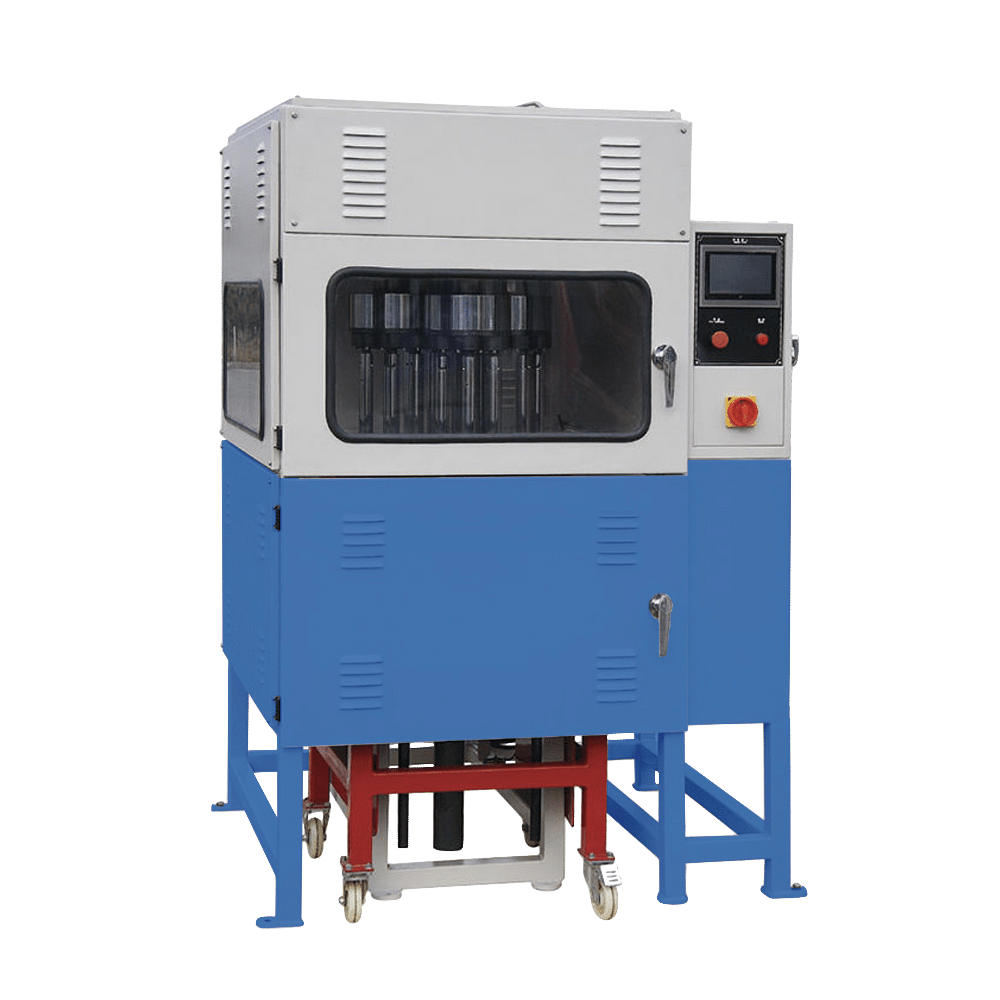
What is Drag Finishing? (Process Overview)
In drag finishing, workpieces are:
1. Individually clamped onto specially designed fixtures mounted to a rotary carousel with 2–12 spindles
2. Lowered and dragged through a bowl filled with abrasive or polishing media (ceramic, plastic, or organic media)
3. Simultaneously rotated — both carousel and spindle rotate independently — ensuring homogeneous all-around surface contact
4. Processed without touching adjacent parts, eliminating nicking, scratches, and dimensional deviation
The result is a controlled, isotropic surface finish — from aggressive deburring and edge radiusing to mirror-bright polishing — achieved in cycle times often 4–5× faster than centrifugal barrel systems.
Key Process Parameters:
- Spindle rotation speed (RPM)
- Carousel orbit path and immersion depth
- Media type, size, and abrasiveness
- Compound chemistry (wet or dry process)
- Cycle time per stage
Why Consistent Surface Finish Matters in Precision Manufacturing
In sectors such as orthopedic implants, turbine blade manufacturing, CNC cutting tools, and aerospace structural components, surface finish consistency is not cosmetic — it is a functional and regulatory requirement.
| Industry | Finish Requirement | Why It’s Critical |
| Aerospace (NADCAP) | Ra ≤ 0.4 µm, isotropic | Fatigue life, coating adhesion, aerodynamic efficiency |
| Medical Implants (ISO 13485) | Mirror polish, no micro-cracks | Biocompatibility, osseointegration, infection resistance |
| Cutting Tools (carbide/HSS) | Controlled edge radius | Tool life extension, chip evacuation |
| Automotive (Tier 1) | Deburring + edge prep | Assembly precision, sealing integrity |
| Defense / Marine | Surface hardness + corrosion resistance | Durability under extreme conditions |
Drag finishing eliminates the batch-to-batch variation inherent in manual polishing and free-tumbling methods. Once process parameters are validated, every part — regardless of operator skill — exits with the same finish specification.
Drag Finishing vs. Other Mass Finishing Methods
Understanding where drag finishing sits in the finishing technology landscape is essential for engineers specifying a process solution.
| Parameter | Drag Finishing | Vibratory Finishing | Centrifugal Barrel |
| Processing Intensity | Up to 40× vibratory | Baseline | ~10–15× vibratory |
| Part-on-Part Contact | None (individually fixtured) | Possible (mitigated with dividers) | Yes |
| Finish Quality | Mirror, isotropic, tight Ra | High-quality batch polish | High-energy, less targeted |
| Ideal Parts | High-value, complex geometry | Bulk batch production | Medium-value, robust parts |
| Cycle Time | Short (minutes per batch) | Longer (hours) | Medium |
| Automation Integration | Yes (robot load/unload) | Yes | Yes |
| Capital Cost | Higher | Lower | Medium |
Bottom line: Drag finishing is the optimal choice when part value is high, geometry is complex, and finish specification is tight.
Key Applications of Drag Finishing
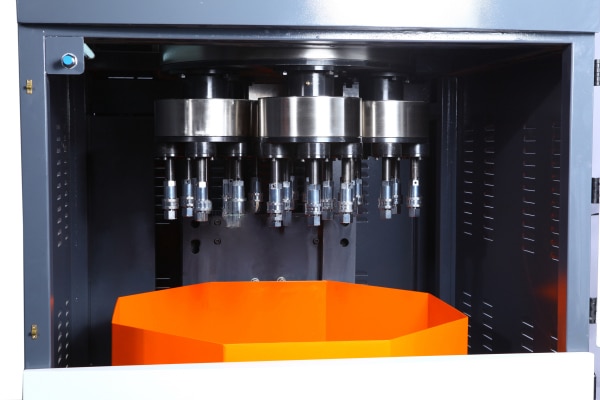
Aerospace Components
Turbine blades, gear components, and small-to-medium structural aircraft parts demand high repeatability against strict production tolerances. Drag finishing delivers homogeneous all-around results across even the most complex geometries — eliminating manual deburring labor and reducing scrap rates.
Medical Implants & Orthopedic Devices
Orthopedic implants such as femoral stems, knee/hip replacement components require mirror-polish finishes with zero surface micro-defects to ensure biocompatibility and reduce post-surgical complication risk. Drag finishers like the Rösler R6/1000 SF can process 18 femur components simultaneously across three sequential finishing stages (pre-grinding → pre-polishing → dry polishing).
CNC Cutting Tools & Carbide Inserts
Edge preparation — controlled edge rounding (honing) of cutting tools — is critical to tool life and chip load performance. Drag finishing produces precise, reproducible edge radii on carbide drills, milling cutters, and inserts within minutes, replacing time-intensive manual honing.
3D Printed / Additive Manufactured Parts
Drag finishing effectively removes layer lines, support marks, and surface porosity from metal AM parts (Ti-6Al-4V, Inconel, stainless), preparing them for functional use, coating, or electroplating.
Molds, Dies & Forming Tools
Tooling surfaces require consistent low roughness (Ra) values to minimize friction, extend service life, and ensure cosmetic part quality. Drag finishing achieves repeatable mold surface finishes across high-alloy tool steels and hardened components.
Drag Finishing Machines — What to Look For
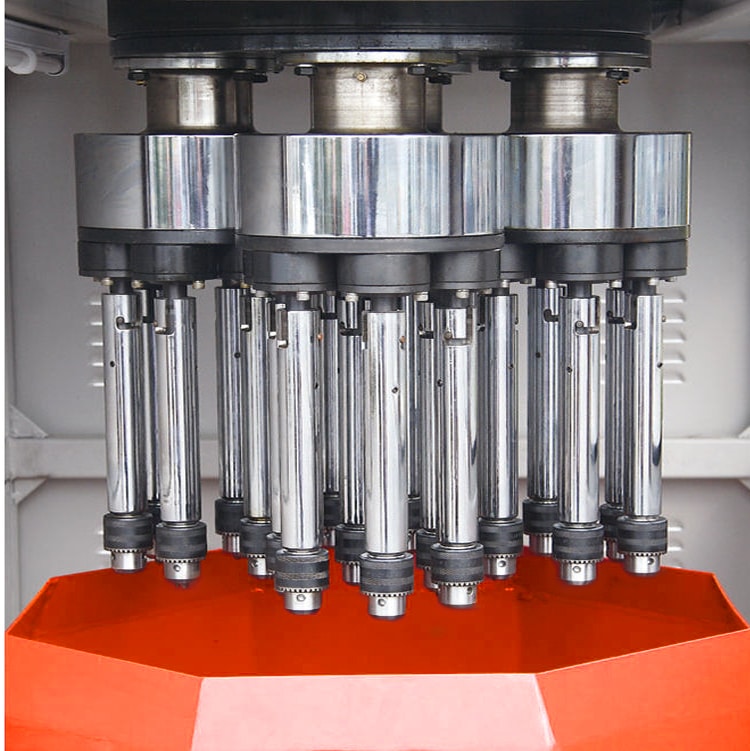
When specifying a drag finishing system for your precision manufacturing process, evaluate:
- Number of spindles: 2–12 spindles per carousel; more spindles = higher throughput
- Bowl diameter: Determines maximum workpiece size (e.g., 600mm to 1,200mm bowls for large implants or aerospace parts)
- Independent drive control: Separate carousel and spindle RPM for process fine-tuning
-
- Automation compatibility: Robot-ready interfaces for Industry 4.0 / autonomous manufacturing cell integration
-
- Wet/dry process capability: Wet for grinding/pre-polish, dry for final mirror polish stages
- Media classification system: Auto-discharge of undersized worn media ensures consistent media bed
Mass Polishing supplies drag finishing machines and full media/consumable solutions configured for your specific part geometry, material, and Ra target. [Contact our engineers →]
Finishing Media for Drag Finishing
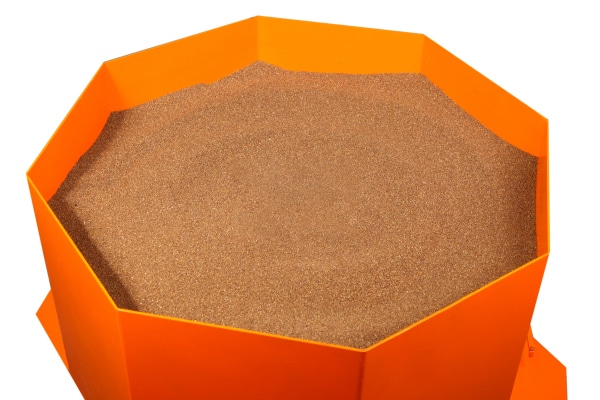
The choice of processing media directly determines the surface finish outcome:
| Media Type | Application Stage | Typical Result |
| Ceramic (dense) | Pre-grinding | Aggressive stock removal, Ra reduction |
| Plastic (medium) | Pre-polishing | Surface smoothing, edge refinement |
| Porcelain / High-density | Fine polishing | Near-mirror surface |
| Organic (walnut, corn cob + compound) | Dry polishing / burnishing | Mirror finish, brightness |
| Stainless steel pins | Burnishing metals | High luster, no material removal |
Working with the right media-compound combination is as critical as the machine itself. Mass Polishing’s application engineers provide process development and media qualification for your specific components.
Drag Finishing Process Validation & Quality Control
For regulated industries (aerospace, medical), process validation is mandatory. A properly characterized drag finishing process should document:
- Cpk / Process Capability for Ra, Rz values across production lots
- IQ/OQ/PQ protocols (Installation, Operational, Performance Qualification) for ISO 13485 / AS9100 compliance
- SPC monitoring of cycle time, spindle speed, and media volume
- First Article Inspection (FAI) surface measurements using profilometry
Once validated, drag finishing operates as a fixed, repeatable process — eliminating subjective operator variance that plagues manual finishing operations.
FAQ: Drag Finishing for Precision Manufacturing
Q1: What is drag finishing and how does it work?
Drag finishing is a mass finishing process where parts are individually clamped onto spindles and dragged through an abrasive or polishing media at high speed. The controlled motion generates extreme contact pressure for rapid, consistent surface finishing without any part-on-part contact.
Q2: How much faster is drag finishing compared to vibratory finishing?
Drag finishing operates up to 40 times faster than conventional vibratory finishing systems and 4–5 times faster than centrifugal barrel finishing — due to the high speed and direct pressure applied during the dragging motion.
Q3: What industries use drag finishing most commonly?
Drag finishing is most widely used in aerospace (turbine blades, structural parts), medical device manufacturing (orthopedic implants, instruments), cutting tool production (carbide drills, inserts), and defense/marine component processing.
Q4: Can drag finishing achieve a mirror finish?
Yes. Drag finishing can progress from deburring through multiple polishing stages to achieve mirror-bright (Ra < 0.05 µm) finishes — especially on stainless steel, titanium, and cobalt-chrome alloys when combined with the correct media and compound sequence.
Q5: What is the advantage of no part-on-part contact in drag finishing?
Since each part is individually fixtured, there is zero risk of adjacent parts scratching, denting, or damaging each other. This is critical for high-value components like hip stems, turbine blades, or precision molds where any surface defect is cause for rejection.
Q6: Is drag finishing suitable for titanium and Inconel?
Yes. Drag finishing excels on hard-to-machine materials including titanium alloys (Ti-6Al-4V), stainless steel (316L, 17-4PH), Inconel, tool steel, and other high-alloy metals — due to its high processing intensity enabling effective material removal on tough surfaces.
Q7: How do I validate a drag finishing process for medic
al or aerospace compliance?
Process validation involves IQ/OQ/PQ documentation, Cpk studies for Ra/Rz consistency, and First Article Inspection per your industry standard (ISO 13485 for medical, AS9100 for aerospace). Mass Polishing’s engineers support full process development and qualification.
Q8: What media should I use for drag finishing stainless steel implants?
A typical multi-stage approach: ceramic preform media for initial grinding → plastic media for pre-polishing → organic dry polishing media (e.g., corn cob with polishing compound) for final mirror finish. Media selection depends on your starting Ra and target Ra specification.