
Investment casting surface finish seldom depends on the finishing operation alone. Gate stubs, shell reaction scale, and residual ceramic particles put roughness into the part before any media touches it. I approach mass finishing as the correction and blending stage that turns a sound casting into a repeatable surface condition. The process has to do more than brighten the surface: it must remove thin flash without rounding machined datums, reach recesses without lodging media, and produce the same Ra across mixed part numbers. That changes equipment selection, media choice, and process qualification in ways a general vibratory finishing guide may not cover.
Investment Casting Surface Finish Problems That Start at the Gate and Shell
Foundries sometimes send castings to finishing with the assumption that a vibratory bowl can remove whatever scale remains. It cannot do that economically in every case. A heavy reaction layer on a nickel alloy casting may need chemical or thermal descaling before mechanical finishing begins. If the casting goes directly into ceramic media, the high points polish while the reaction layer stays in recesses.
Gate contact areas and witness marks from shell removal are better first targets. Those defects are localized, and media action reaches them predictably. I would rather inspect five raw castings before committing to a cycle than run a longer cycle and hope the defect disappears. That early inspection tells me whether the part needs cutting, blending, or only a final polish.
Equipment and Media Choices for Investment Casting Surface Finish
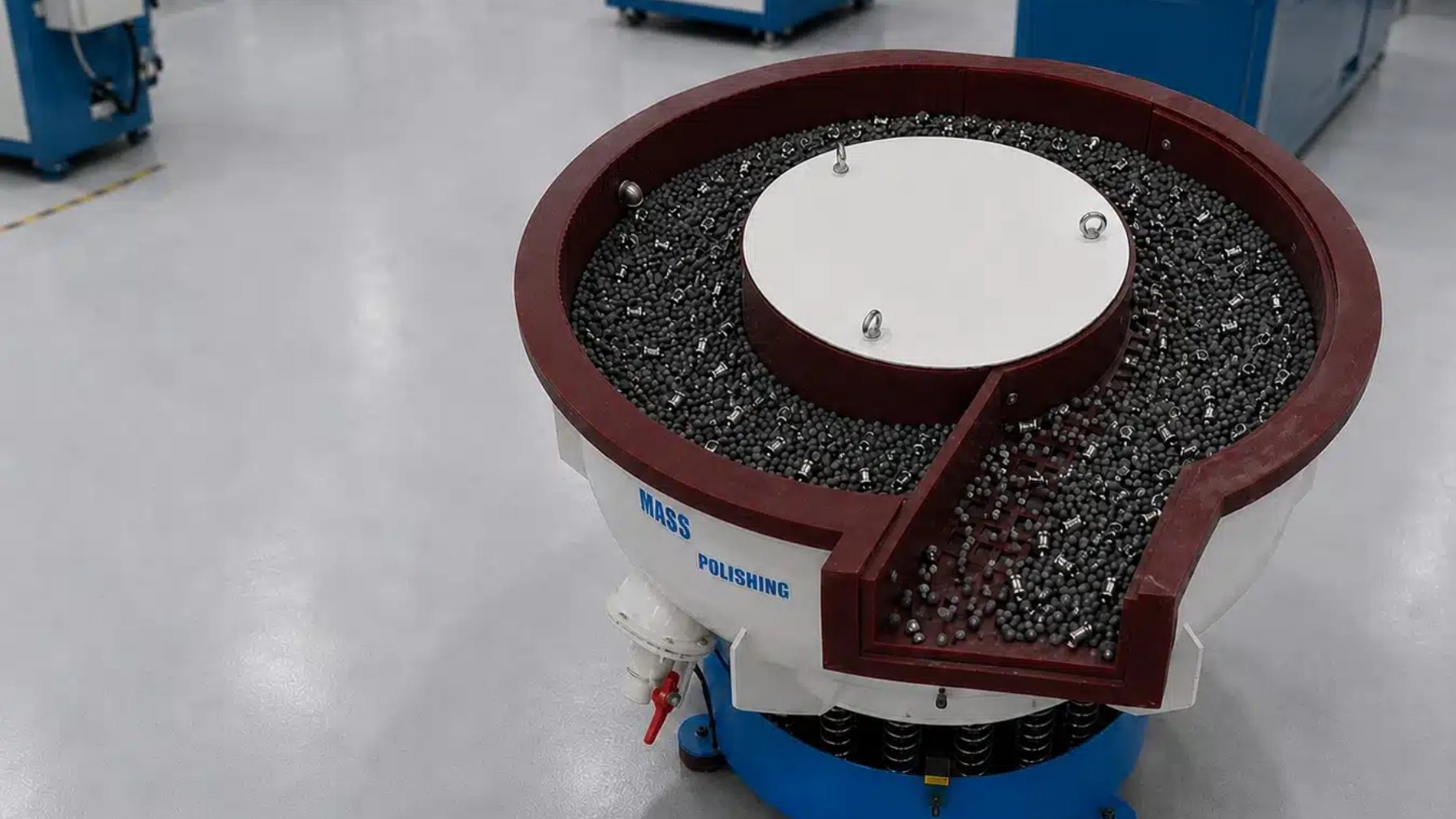
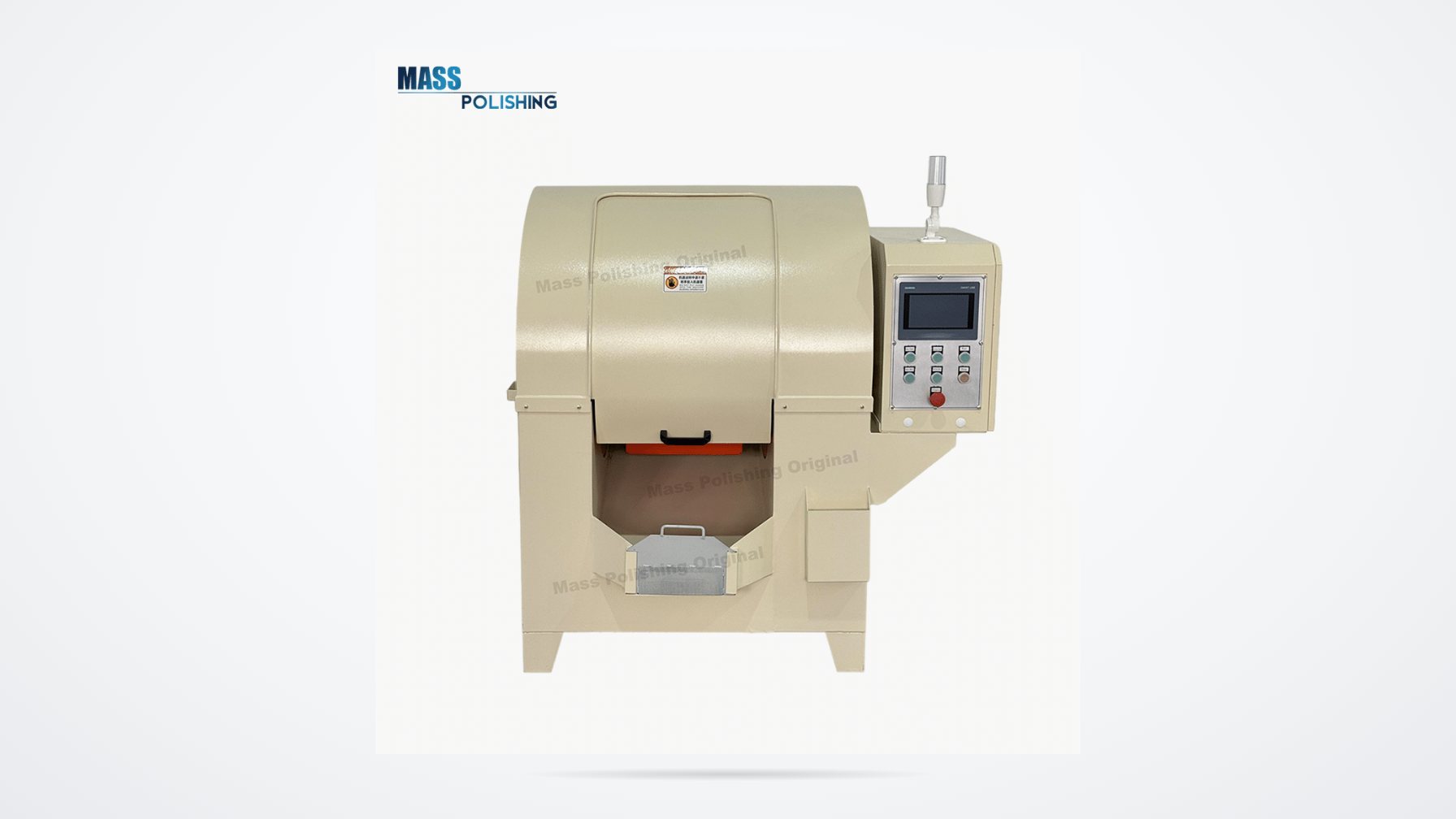
Investment casting geometry dictates how much energy the finishing machine can apply. A straight-wall vibratory machine in the SW series works for parts that can tumble freely and tolerate part-on-part contact. For small, complex castings with thin vanes or sharp lettering, an EB centrifugal barrel machine applies high energy while keeping each batch contained, which reduces random impact. Drag finishing is the better choice when a machined datum cannot be rounded: the part is fixtured and moved through the media, so energy reaches the surface under controlled contact.
| Casting condition | Recommended equipment | Reason |
|---|---|---|
| Robust small-to-medium castings | SW series vibratory bowl | Lowest cost per part for free-tumbling work |
| Thin walls, complex geometry | EB centrifugal barrel | High energy with contained batches |
| Critical datums, low damage risk | DF drag finishing machine | Fixtured part control |
| Deep recesses, internal holes | MF magnetic finishing machine | Pins reach areas standard media misses |
For larger castings and longer production runs, a vibratory bowl is usually the lowest-cost starting point. <A Comprehensive Guide to Vibratory Finishing for Beginners> covers load height, media-to-part ratio, and the setup details that keep cycle time stable on mixed part batches.
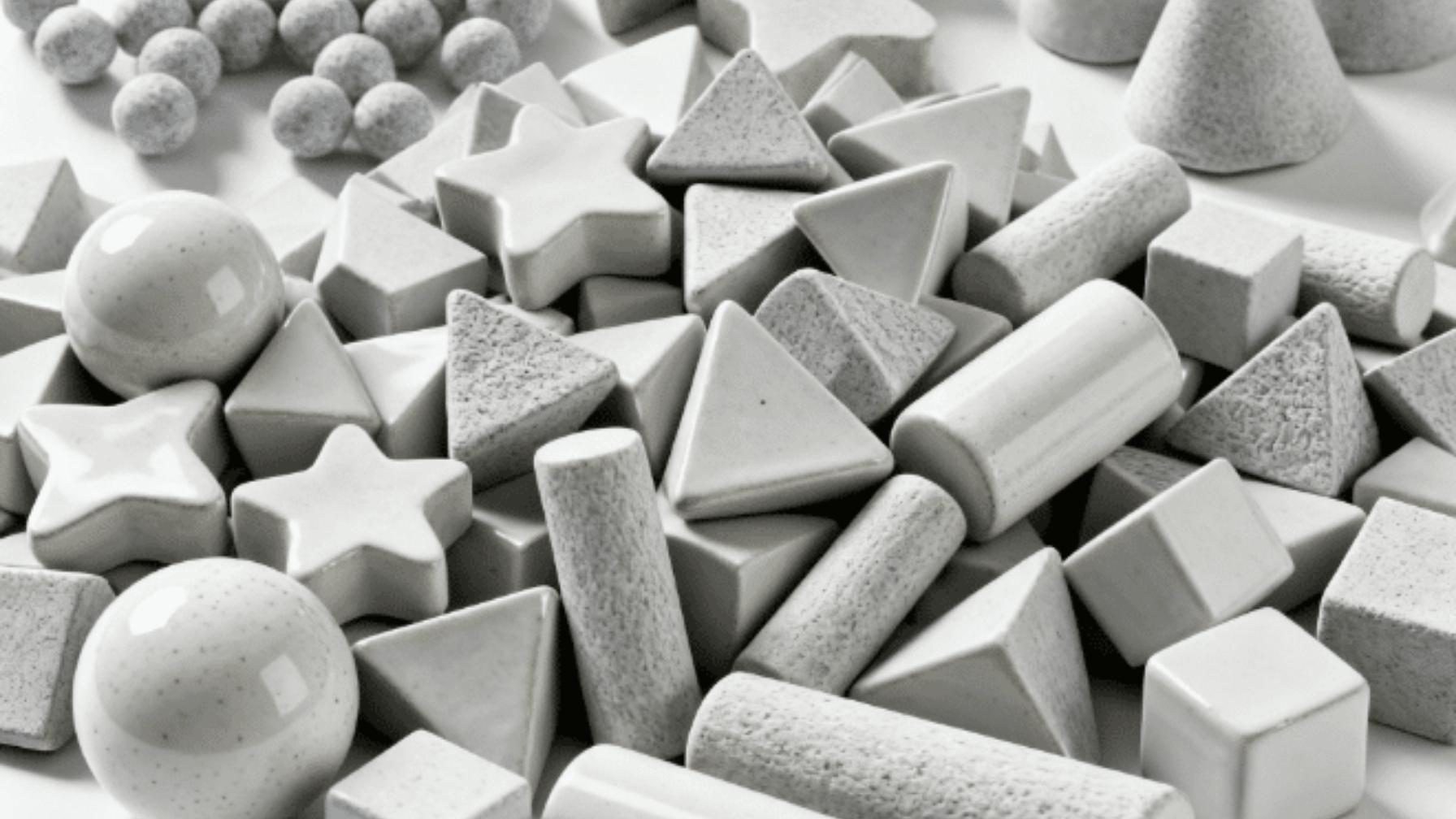
Media selection is the second decision. Ceramic media cuts scale and blends gate lines. On complex castings, I prefer small angle-cut triangles or cylinders because they enter fillets and letter relief without lodging. Plastic media, especially pre-plate grades, suits non-ferrous investment castings that feed directly into plating. Stainless steel media burnishes well on hard alloys, but it can embed in soft aluminum and create magnetic handling issues. Walnut shell and corn cob produce a final dry polish on delicate parts, yet they will not remove scale.
| Surface condition | Media type | Application |
|---|---|---|
| Heavy scale and gate lines on steel or nickel | Small ceramic angle-cut triangle | Cutting and blending |
| Non-ferrous castings before plating | Plastic pre-plate media | Low damage, plating-ready surface |
| Bright burnish on hard alloys | Stainless steel balls | High luster on dense metals |
| Final dry polish on delicate parts | Walnut shell or corn cob | Gentle surface refinement |
Investment castings almost always need a media grade matched to the alloy, not just the roughness target. <Ceramic Polishing Media Complete User Guide> covers how shape, size, and abrasive grade change cut rate and final brightness on cast components.
If your casting has a blind hole under 6 mm, or the drawing forbids part-on-part contact, the machine decision should not come from a catalog page alone. Send a marked-up drawing and annual volume to [email protected]. We will run sample parts and return a recommended machine, media, and target cycle.
Process Parameters and Qualification for Repeatable Casting Finish
Wet Cutting vs Dry Polishing
Wet processing dominates investment casting work because cast parts carry scale, ceramic dust, and oil. Water keeps media clean and prevents fines from becoming airborne. The tradeoff is drying: after wet cutting, the line needs a separator and a dryer, whether a centrifugal hot air dryer or a vibratory dryer. Dry centrifugal barrel polishing is an alternative when the requirement is mirror brightness without a subsequent drying step. It is less effective as a first-cut operation on heavy scale. For stainless investment castings, I would use wet cutting first, then a dry high-energy polish only if the print calls for a cosmetic mirror.
Qualification Checks That Keep the Process Stable
One good sample does not make a qualified finishing process. After the recipe is fixed, I run first articles at multiple fill points and record Ra, Rz, weight loss, and edge radius change. The media lot and compound batch stay on the process sheet. If the foundry changes shell material or gate location, the finishing result changes, so the process must be re-qualified. For high-volume castings, samples taken every two hours catch media wear before roughness drifts.
When finishing results shift on a previously stable batch, the cause is rarely the machine alone. <Common Problems and Countermeasures of Polishing Machine Equipment> covers the failure patterns we check first, from worn lining to drive adjustment, so the root cause is easier to isolate.
Sourcing a Finishing Process That Matches Your Casting Program
Investment castings rarely respond to a stock recipe. Shell material, gate placement, surface requirement, and annual volume all shape the right process. Our engineers work backwards from the part drawing and surface target rather than starting with a machine and forcing the part into it. Send your part drawing, material grade, current Ra measurement, and quantity to [email protected] or call +86 572 308 8888. We will recommend a machine, media, and process sequence, then run sample parts before you commit to equipment.
Common Questions About Investment Casting Surface Finishing
What surface finish can mass finishing achieve on investment cast parts?
A practical production range is Ra 0.2 to 0.8 micrometers, depending on alloy, media sequence, and starting condition. Lower values are possible on dense alloys with high-energy centrifugal finishing and fine media. The limit is set by casting porosity and prior shell reaction, not by the finishing machine alone.
Does media choice change when castings go to plating?
It depends on whether the plating specification controls surface preparation. For non-ferrous castings headed to nickel or chrome, I specify plastic pre-plate media after cutting because it leaves a brighter surface with less embedded abrasive. For steel castings that will be plated, the final step should remove all polishing compound and ceramic fines; otherwise adhesion tests fail.
Why does a longer finishing cycle not always produce a lower Ra?
A common assumption is that more time always improves roughness. On investment castings, long cycles can erode fine lettering, round sharp edges, and pack media into blind holes while doing little to the remaining roughness. At that point the process is not polishing; it is changing geometry. A shorter, tighter cycle with the correct media often produces a better surface and lower scrap.
Can mass finishing clean internal passages and blind holes?
In test batches we have run, deep blind holes benefit most from magnetic finishing with small stainless steel pins, which reach areas standard tumbling media cannot enter. The risk is pin lodging, so the processing direction and demagnetization step must be correct. Share a section drawing and the smallest hole diameter, and we will confirm whether the current casting design can be finished in one piece or needs a process change.
If you’re interested, check out these related articles:
Technical Operating Procedures for Vibrating Mills
What Are the Significant Advantages of Polishing Equipment
How to Reduce Noise Pollution of Automatic Polishing Machine
Vibratory Tumbling Media Is Indispensable