
Bulk buying surface finishing machines is not simply a matter of finding the lowest unit price. It is a channel strategy. Distributors that build a coherent machine portfolio, attach the right media and compounds, and offer spare parts and process support create repeat revenue far beyond the first equipment sale. Mass Polishing, operated by Huzhou Qiaoyun Grind Co., Ltd, has manufactured mass finishing equipment since the 1990s and supplies distributors, agents, and private-label partners worldwide.
A reliable wholesale supply chain starts with manufacturing discipline. A documented ISO 9001:2015 quality management system [1] is a practical baseline because it helps prevent the specification drift that becomes expensive when orders scale across borders, customers, and product families.
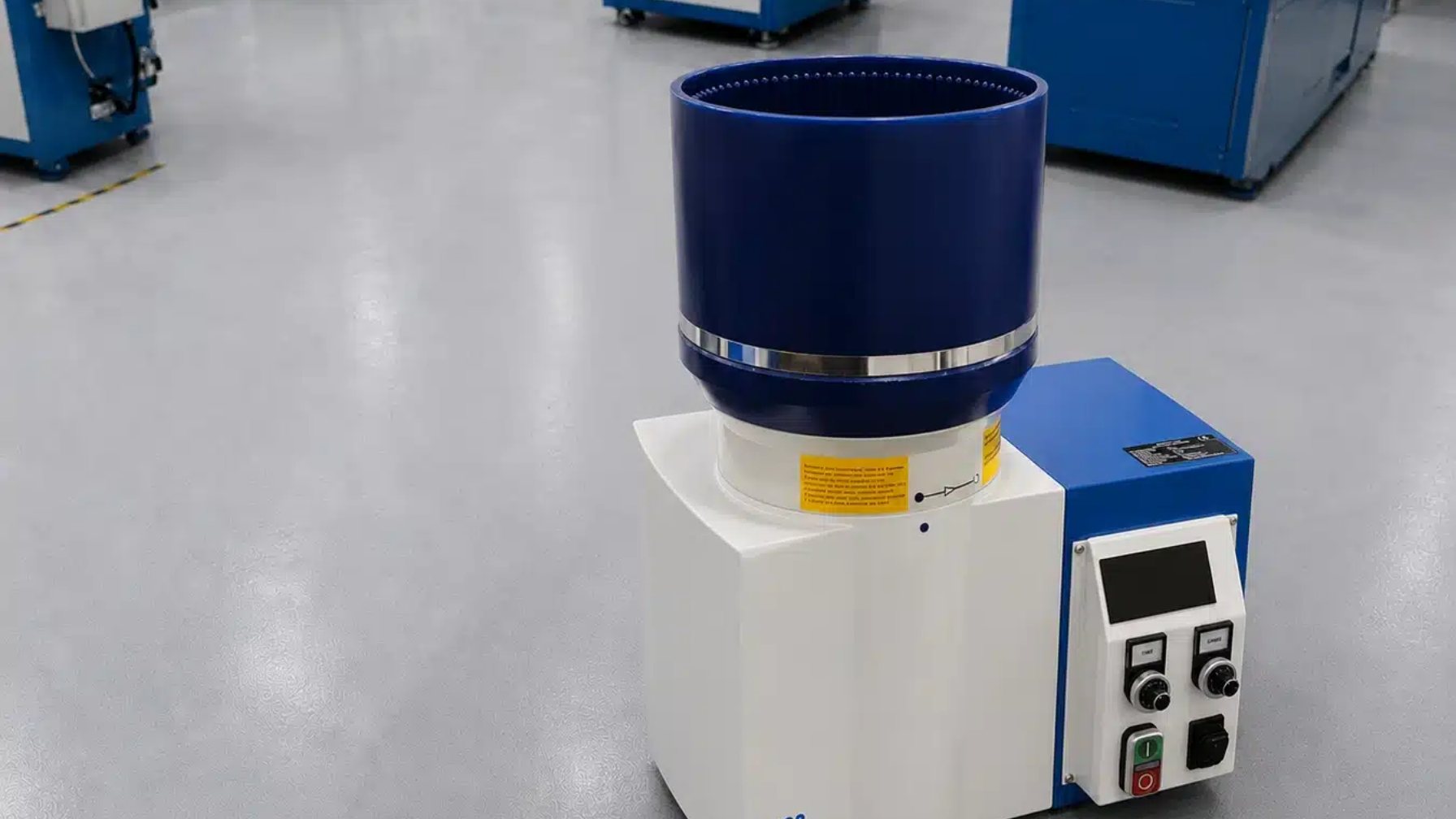
Wholesale Surface Finishing Machines: What the Channel Needs
A defensible wholesale line covers more than one technology. The broad categories of mass finishing equipment solve different problems and give distributors a wider addressable market.
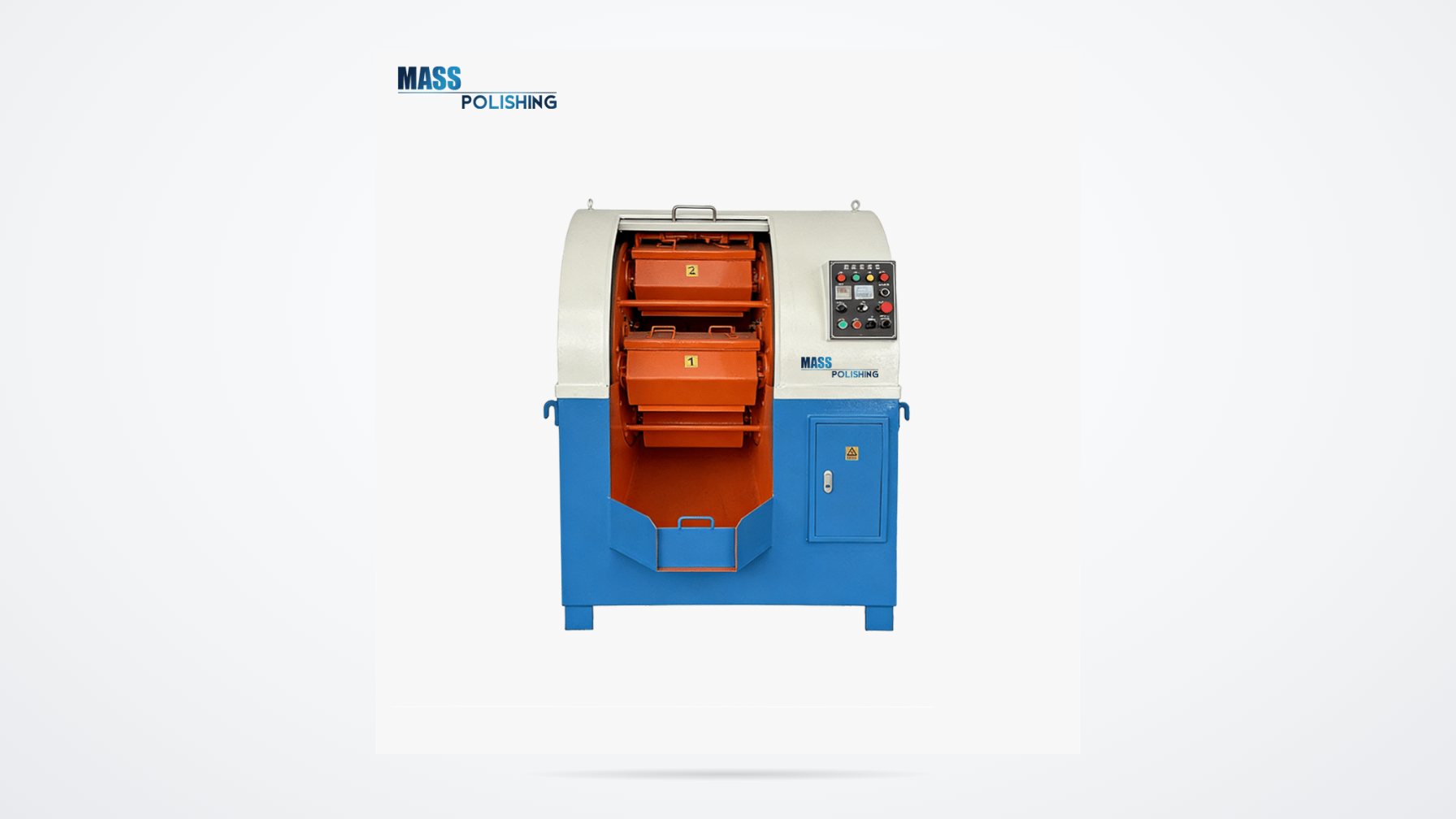
Vibratory Finishing is the volume anchor. It handles deburring, radiusing, cleaning, and polishing for mixed small and medium parts, with bowl capacities from compact 30 L units to 2,500 L industrial systems. Centrifugal Disc Finishing and Centrifugal Barrel Finishing serve customers that need shorter cycles, stronger edge rounding, or finer surface control. Rotary Barrel Tumbling provides a lower-cost entry point for straightforward deburring and polishing work.
For project-based or specialized accounts, Tub Vibrator systems handle long, large, and sensitive parts. Drag Finishing and Magnetic Finishing address precision, tooling, jewelry, and micro-burr applications where finish quality is the main purchase driver. Completing the line with Dryer, Separator, and Automatic Sewage Treatment allows your customers to buy a running production cell instead of an isolated machine.
Machine Portfolio Planning for Wholesale Buyers
When planning a starter wholesale portfolio, it is better to choose three to five core model families than to list every available size from day one. In our experience, the strongest distributor lineup includes one broad vibratory range, one high-energy centrifugal range, and one economical rotary range. Premium precision buyers can then be served by drag or magnetic finishing lines without overloading the initial catalog.
| Machine Category | Best Wholesale Application | Typical Capacity Range in the Product Line | Notes for Bulk Buyers |
|---|---|---|---|
| Vibratory bowls | High-volume deburring, radiusing, polishing | 30–2,500 L | Broadest end-user base; offer VFD and separation options |
| Centrifugal disc | Small-to-medium precision parts, faster process windows | 9–240 L | Higher force; attractive for compact automated lines |
| Centrifugal barrel | Precision parts, mirror finishing, dry polishing | 7.5×4–90×4 L | Four-barrel configurations suit batch processing |
| Rotary barrel | Simple deburring, burnishing, gentle tumbling | 150–2,600 L | Cost-effective entry option |
| Drag finishing | Edge rounding, high-precision surface quality | 85–120 L | Premium segment; strong margin potential |
| Magnetic finishing | Micro deburring of holes, gaps, and fine parts | 3–90 kg | Magnetic pins create repeat consumables revenue |
| Trough vibrators | Long, large, or sensitive workpieces | 80–6,000 L | Project-based; container planning is critical |
| Drying and separation | Post-finishing automation and line integration | CD35–VD600, VS/MS units | Adds system value and repeat parts demand |
Successful wholesale buyers do not list every model at first. They select core models per category so linings, motors, screens, and spare parts remain manageable. Over-selection increases holding cost without improving close rates.
Choosing between vibratory, centrifugal, and drag systems affects how a distributor positions each line. <How to Choose a Suitable Automatic Polishing Machine> covers the machine-selection decision path for different part geometries, materials, and volume requirements.
Machine – Deburring)
Factory Evaluation and Compliance for Wholesale Supply
Before committing to a bulk order, assess the factory as carefully as the product list. For mass finishing equipment, the most important physical points are welded steel construction, polyurethane lining quality, chamber geometry, and access to critical components. Drive systems should use recognizable motor and VFD brands, and safety interlocks should be standard.
Compliance documentation matters for importers. CE marking under the Machinery Directive 2006/42/EC [2] is required for many export markets, while clear electrical schematics, dimensional drawings, operation manuals, and spare parts lists reduce downstream technical support load. The combination of ISO 9001:2015 process control [1] and complete export documentation gives a distributor confidence that the machine delivered in month 12 will match the machine approved in month one.
For partners selling to end users, the value argument rests on finish consistency, labor reduction, and process control. A machine line that looks inexpensive can become costly if it cannot hold the required surface finish part after part.
For channel partners building a product story around ROI, machine advantages matter as much as price. <What Are the Significant Advantages of Polishing Equipment> covers the performance, consistency, and process-control arguments that help end users justify investment.
Bulk Order Structure, Pricing, and Specification Logic
Wholesale pricing should be negotiated on a model-family basis, not only per unit. Ask for multi-unit pricing tiers by machine group and for media and compound attach rates. In many markets, the durable margin comes from consumables: ceramic and plastic media, stainless steel pins, compounds, and spare linings.
Surface texture is the most practical way to align machine, media, and quote assumptions. When a customer drawing specifies a target surface finish, the requirement should be evaluated according to the indication rules in ISO 1302:2002 [3]. This keeps machine capability claims technically comparable and prevents ordering a machine that cannot deliver the required finish.
Minimum order quantity and production lead time are best discussed after the distributor shares a representative part mix and destination market. Rather than quoting a fixed universal number, we build orders around container utilization and model mix. Combining machines, spare parts, and consumables in one shipment often lowers landed cost per unit and simplifies import documentation.
Send an Inquiry for a Bulk Quote
Send part drawings or a representative product mix, target annual volume, and destination port to our export team through the contact form at masspolishing.com. We will respond with a recommended shortlist, option matrix, FOB quotation, and a tentative production lead time.
The same machine line can perform differently when media, compound, and process parameters are misaligned. <The Importance of Selection and Coordination Between Grinders Abrasives and Workpieces> covers the media-abrasive-workpiece coordination that determines finish quality and repeatability.
Export Packaging, Regional Support, and After-Sales
Export packaging is a practical part of wholesale machine supply. Machines should be mounted in wooden cases, loose options bagged and sealed, and moisture-sensitive components protected before container loading. Clarify the Incoterms 2020 [4] term before shipment so cost and risk responsibility are defined for freight, insurance, unloading, and import clearance.
Regional support is what separates a transaction supplier from a long-term partner. Distributors should expect installation and commissioning guidance, operator training documents, spare parts availability, and clear channels for technical questions. Marketing support may include machine photos, line drawings, application descriptions, and private-label preparation for partners building their own brand.
Machine – Mass Barrel Finishing)
Plan Your First Wholesale Order
Request the current wholesale model list, lead times, media pricing, and private-label requirements. Tell us your target territory and customer profile, and we will recommend a starter portfolio rather than sending a generic price list.
FAQ
How do I choose a starting inventory for a new surface finishing distributor?
Begin with a small-to-medium vibratory range because it covers the widest part base. Add one centrifugal disc or barrel series for precision work, one rotary barrel series for price-sensitive buyers, and only then consider drag, magnetic, or large trough systems if your territory shows demand.
What is the typical minimum order quantity for surface finishing machine wholesale orders?
There is no single fixed MOQ across all machine types because capacity, voltage, options, and destination affect production planning. Instead, we structure bulk orders around container utilization and model mix so the shipment is efficient and the product assortment is practical.
Can Mass Polishing build machines under our brand?
Yes. We support private-label and OEM arrangements. The scope can include branding, documentation, and machine specification according to your market requirements.
What export documentation is provided?
We provide the commercial invoice, packing list, and required shipping documents. Depending on the destination and machine configuration, this may include CE documentation, electrical information, operation manuals, and spare parts lists.
How are machines packed for export?
Machines are placed in wooden cases with component protection, loose accessories are bagged and sealed, and containers are loaded to maximize cube while preventing movement and damage during transit.
References
[1] International Organization for Standardization. ISO 9001:2015, Quality management systems — Requirements. Geneva: ISO, 2015.
[2] European Parliament and Council of the European Union. Directive 2006/42/EC of 17 May 2006 on machinery. Official Journal of the European Union, L 157, 2006.
[3] International Organization for Standardization. ISO 1302:2002, Geometrical Product Specifications (GPS) — Indication of surface texture in technical product documentation. Geneva: ISO, 2002.
[4] International Chamber of Commerce. Incoterms 2020: ICC Rules for the Use of Domestic and International Trade Terms. Paris: ICC, 2019.
If you’re interested, check out these related articles:
Advantages of Vibrating Grinder
The Importance of Regular Cleaning of Vibrating Grinder
How to Improve the Grinding Efficiency of the Vibration Grinder
What Abrasives Are Generally Used in Vibrating Grinders