Blog

Gold Ring Polishing: Batch Finishing for Jewelry Production

Gold ring polishing at batch scale creates tension between speed and surface control. Jewelry manufacturers want the same bright finish on hundreds of rings without hand buffing every shank, but load damage, media lodging, and over-cutting at stone settings still drive up rework. We treat batch polishing as a process selection problem first: match the […]

Gold Ring Polishing: Batch Finishing for Jewelry Production Read More »
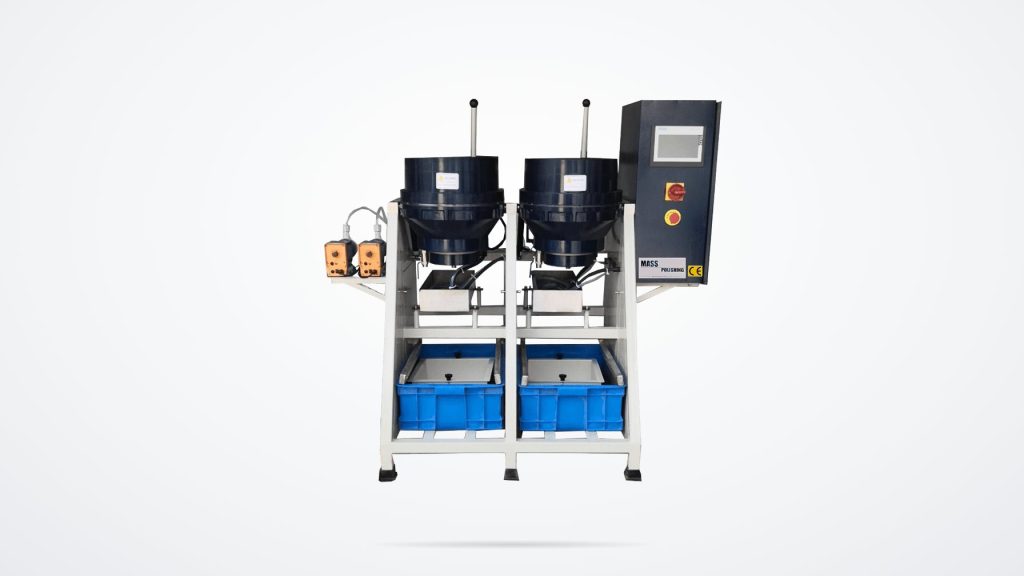
Oxide Removal from Hardware Before Plating and Finishing

Oxide removal from hardware is the step that determines whether a later finish holds or fails. Plating and coating lines cannot hide heat scale, rust, or zinc corrosion, because these residues leave voids, weak adhesion, and cloudy deposits. We treat oxide removal as a preparation problem for the alloy, oxide thickness, and final surface, not

Oxide Removal from Hardware Before Plating and Finishing Read More »

Door Hinge Polishing Machine: Batch Deburring for Hardware

Door hinge polishing machine selection starts with the final surface requirement, not the catalog rating. Steel and zinc die cast hinges respond differently to batch finishing, and a line that only chases throughput often creates uneven edge rounding, media trapped in knuckle gaps, or plating rejects. We work backward from a uniform pre-plate satin finish

Door Hinge Polishing Machine: Batch Deburring for Hardware Read More »

Zinc Die Casting Deburring and Polishing for Hardware Parts

Zinc die casting deburring and polishing starts with a fact most process sheets miss: zinc alloys are soft enough to smear, pit, or burnish unevenly when treated like steel. A door handle, lock body, or faucet escutcheon will not forgive an aggressive ceramic load. The real differentiator is not faster metal removal; it is controlled

Zinc Die Casting Deburring and Polishing for Hardware Parts Read More »

Stainless Steel Hardware Polishing: Satin vs Mirror Finishes

Stainless steel hardware polishing fails more often from uneven stock removal than from a poor final buff. For hinges, lock bodies, fasteners, and cabinet hardware, a uniform satin or mirror finish depends on load density, media shape, and machine energy set before the first minute of cycle time. I treat most stainless steel hardware as

Stainless Steel Hardware Polishing: Satin vs Mirror Finishes Read More »

Brass Faucet Polishing Before Plating: What to Check First

A faucet body that looks clean after deburring can still produce plating rejects if the surface carries embedded compound, uneven edge rounding, or micro porosity. Brass faucet polishing before plating is not about making the part glossy; it is about creating a controlled surface that holds the plated layer and exposes defects early. The wrong

Brass Faucet Polishing Before Plating: What to Check First Read More »

Brass Faucet Polishing Before Plating: Avoid Plating Defects

Plating exposes every shortcut in brass faucet polishing before plating. A bright nickel chrome deposit magnifies scratches, pits, and leftover oxide, so the surface must be cut, blended, and cleaned to a uniform satin before the part ever reaches the plating tank. We treat pre plate finishing as three linked steps: controlled stock removal, correct

Brass Faucet Polishing Before Plating: Avoid Plating Defects Read More »

Scroll to Top