
For export buyers, efficient container loading for finishing machines starts before the crate is built. A vibratory bowl, centrifugal barrel line, or magnetic finisher can leave the factory in perfect condition and still arrive with shifted bases, chafed cable runs, or condensation damage because the container plan treated it like ordinary steelwork. The more practical approach is to use the machine’s own load points and dimensions as the loading map. This article sets out the data to collect, the blocking and bracing checks that matter, and the packing documents that help buyers receive and commission the equipment without avoidable delays.
Why Container Loading Affects Finishing Machine Quality on Arrival
A finishing machine is not a uniform steel box. Vibratory machines depend on springs, motor mounts, and lined bowls that must stay aligned through lifting and road movement. A container load that lets the bowl shift can transfer force through the lining and springs, and the machine may then need recalibration at the destination even when no component is visibly broken. That is why container loading for finishing machines should be treated as part of the equipment specification, not as a warehouse afterthought.
Machine – Heavy Duty Deburring)
Moisture is the second major risk. Wet finishing equipment may still hold compound or water in pipes, troughs, and collection points unless it is drained before packing. Condensation can then settle on control panels, motor terminals, and exposed steel surfaces during long sea transit. For a machine that must run reliably within days of arrival, those small points of corrosion or electrical fault can be more disruptive than a dented panel.
A finishing machine’s support points and motion system only do their job when the machine is loaded and lifted without unintended movement. <How Vibratory Finishing Machine Works> covers the operating principle buyers need to understand before planning installation and handling.
Pre-Loading Data You Need Before Packing a Finishing Machine
A reliable export package begins with a complete load data sheet. For each machine, the packer should record the gross weight, base dimensions, overall height, lifting points, center of gravity where known, and any fragile attachments such as separators, dosing lines, or control panels. This information determines whether the machine can be floor-loaded, crate-loaded, or mounted on skids.
The next step is to confirm the lifting arrangement. Machines with cast steel bases and marked lifting lugs can usually be handled with slings or shackles. Machines with painted sheet metal covers, plastic tanks, or attached screens should not be lifted from those surfaces. The lifting plan must identify which points are structural and which are only covers or service panels.
| Machine class | Load-bearing points to verify | Container loading focus |
|---|---|---|
| Vibratory bowl and tub machines | Motor base, support springs, frame rails | Support the base, protect the bowl lining, drain compound |
| Centrifugal barrel and disc machines | Barrel turret, drive housing, control cabinet | Block rotating parts, secure through the base, watch top-heavy balance |
| Magnetic and small precision machines | Drum, magnet assembly, control panel | Crate with desiccant, separate loose pins and small accessories |
| Dryers and water treatment systems | Tank, heater, filter housing, pump | Drain completely, protect ports, pack loose hoses and fittings |
How to Block, Brace, and Secure Bulk Finishing Equipment
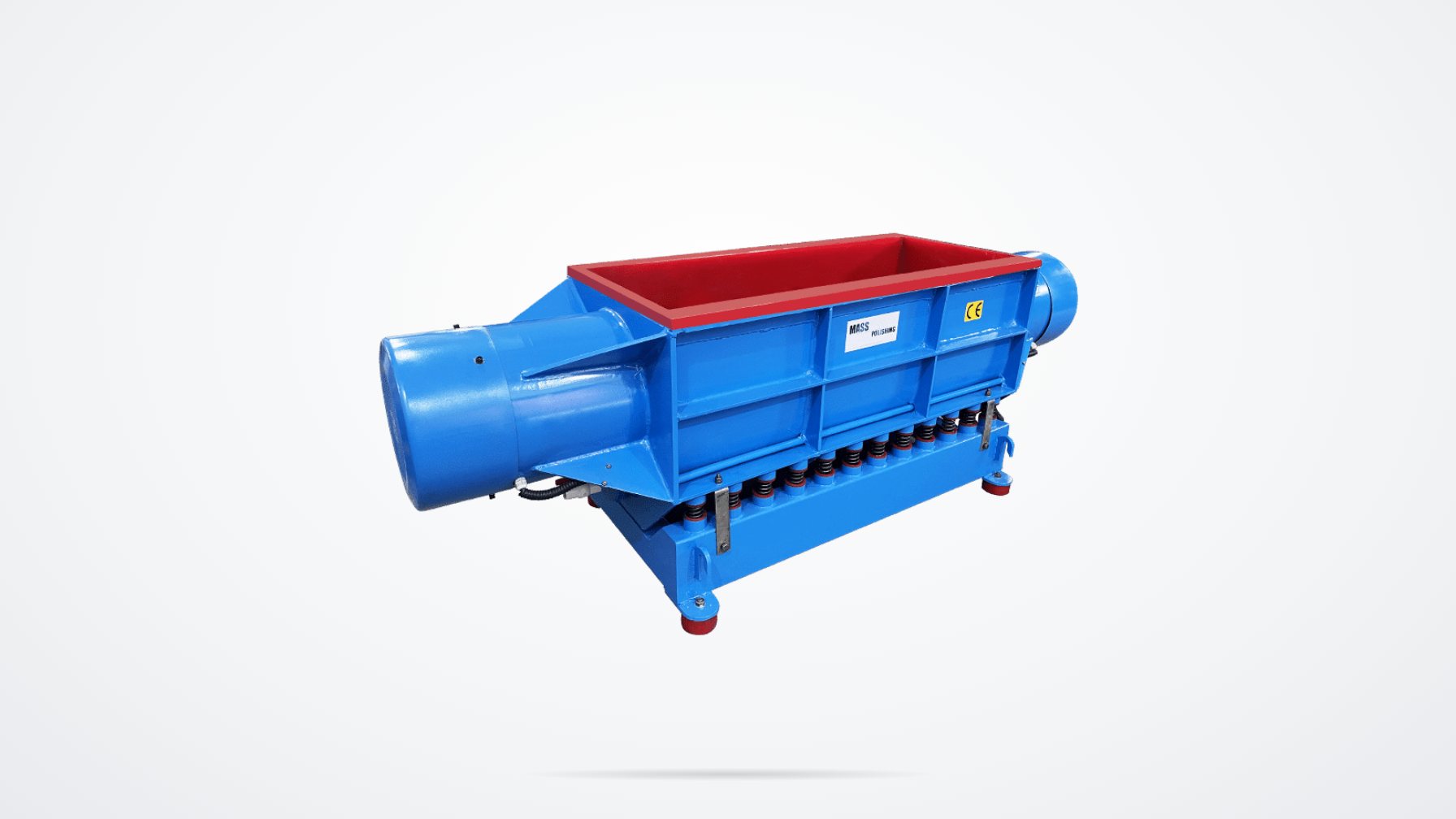
Heavy machinery should be supported on full-length timber or steel bearers, not on narrow blocks that can concentrate load and crack a base. For a large vibratory machine, the best anchor points are the frame rails or the motor base. Lashings should hold the machine firmly to the container floor without pulling against guards, cable glands, or the lip of a polyurethane-lined bowl.
For example, a Mass Polishing 2500 L straight-wall vibratory machine is listed at about 3,700 kg, while larger tub machines can exceed 7,000 kg. A load of that size needs a container floor that can accept the point load, plus cross-bracing that prevents the machine from creeping forward under braking. Use indirect lashing where necessary, and place corner protectors where straps pass over painted edges.
Do not place small accessories loose inside the bowl. Media bags, screens, dosing pumps, and control-panel keys should be packed in marked cartons secured to the machine base or to a separate pallet. That keeps small items from moving during transit and gives the receiving team a clear unpacking list.
Space Planning and Mixed-Model Container Loading
Mixed-machine containers are common because a finishing line often includes a vibratory machine, a separator, a dryer, and a water recycling unit. The loading sequence should place the heaviest machines over the container floor area that transfers load best, normally toward the front or over the axle path for road transport. Lighter crates can follow, but they should not be stacked on machine housings.
Leave one central access path when possible. A buyer may need to open the container, inspect the largest machine, and then reclose it before customs release. If the first machine is completely blocked by crates, the inspection becomes slower. The most efficient load is not necessarily the fullest load; it is the one that can be unloaded and checked without unnecessary handling.
Machine – Mass Barrel Finishing)
For barrel machines, block the barrel or turret so it cannot rotate during transport. Remove or lock hoppers, screen decks, and any bolted components that could swing. For machines with frequency drives or touchscreen panels, specify an export crate with internal bracing rather than relying on shrink wrap alone.
Moisture Protection and Documentation for Export Inspection
Use a barrier method matched to the transit route. For short routes, a breathable machine cover and dry packing may be enough. For ocean freight or long storage, add moisture barrier film, desiccant bags, and vapor corrosion protection on exposed machined surfaces. Drain all wet lines before loading and record the draining in the packing report.
The paperwork should make inspection easy. Prepare a packing list with model numbers and gross weights, a lashing and bracing photo record, a drainage or dry-loading declaration, and any fumigation certificate required by the destination. If the machine will be handled by a third-party forwarder, add simple lifting and unloading instructions to the shipment file rather than leaving the receiving team to guess from an image.
Plan Your Next Container Load Before the Machine Is Packed
Send your machine model, gross weight, base dimensions, lifting points, destination port, and any moisture or inspection requirements. Those details allow a loading plan to be prepared before the crate is built, so the machine arrives protected and ready for commissioning. Contact Mass Polishing through the website at www.masspolishing.com to confirm the packing and container arrangement before shipment.
FAQ
Does container loading change for wet finishing machines?
Yes. Wet machines should be drained before packing because residual compound and water can leak, condense, or encourage corrosion during transit. The packing team should also protect pump inlets, dosing lines, and drain ports, and note the drainage on the packing list.
How are heavy vibratory machines secured inside a container?
The machine is usually supported on timber or steel bearers and lashed through its frame rails or motor base. Lashings should not pull against the bowl lining, cable glands, or sheet metal covers. Cross-bracing plus corner protectors helps prevent movement under braking and during port handling.
Can multiple finishing machines be packed in one container?
Yes. A typical export container may combine a vibratory machine, separator, dryer, and water treatment unit. Heavier machines should be loaded first and positioned over the strongest floor area. Lighter crates and accessory cartons follow, but they should not be stacked on machine housings or block the main inspection path.
What should a buyer check before unloading a finishing machine?
Check the seal record, compare the packing list with the delivered crates, and inspect the largest machine for shifted blocking or signs of moisture before removing lashings. Photo documentation of the original load is useful if a damage claim must be filed with the carrier or insurer.
If you’re interested, check out these related articles:
Vibration Grinder Price System Maintenance Precautions
Centrifugal Finishing Machines for High Efficiency Surface Treatment
2023 Hot Selling Parts Finishing Media Anti Adhesion Beads in Mass Polishing
Ceramic Polishing Media Complete User Guide
How Vibratory Finishing Machine Works