
Plating exposes every shortcut in brass faucet polishing before plating. A bright nickel chrome deposit magnifies scratches, pits, and leftover oxide, so the surface must be cut, blended, and cleaned to a uniform satin before the part ever reaches the plating tank. We treat pre plate finishing as three linked steps: controlled stock removal, correct media and compound matching, and final contamination control. When those three are right, adhesion improves and the plating line sees fewer returns from clouding, gas pits, and peeling at thread roots or undercut areas.
Start Brass Faucet Polishing Before Plating With a Controlled Surface Cut
Most brass faucet bodies arrive from sand casting or forging with a skin that plating will not hide. Parting lines, flash, heat scale, and small pits all sit on the surface and reproduce through nickel chrome. The first job is to remove that skin without washing out the part’s detail. We often run a two-step sequence for cast brass faucet bodies. The first step cuts with a high-alumina ceramic angle-cut cylinder at roughly 80 percent media fill and a wet deburring compound. The second step refines with a finer ceramic or porcelain shape to bring the surface to a uniform satin. This is not a simple tumble; the media shape has to reach the spout inlet, handle boss, and underside of the deck.
The cut depth matters more than cycle time alone. A faucet with deep sand-cast roughness may need 90 to 120 minutes in the first cut before the oxide and parting line disappear. A die-cast or forged body with smoother skin may need only 30 to 45 minutes. If the operator pushes the first cut too long, the brilliant polish afterwards can round the crisp edge around the handle boss and make the plating look wavy. We prefer to undercut slightly, inspect under 10x magnification, and then decide whether to return the batch for another 20 minutes. That extra inspection costs less than remaking a plated part.
Stock removal is only the first decision in a pre plating line. <How to Choose the Right Polishing Machine> covers how part shape, required finish, and machine capacity together set the right equipment before media and compound are chosen.
Match the Finishing Machine and Media to Faucet Geometry
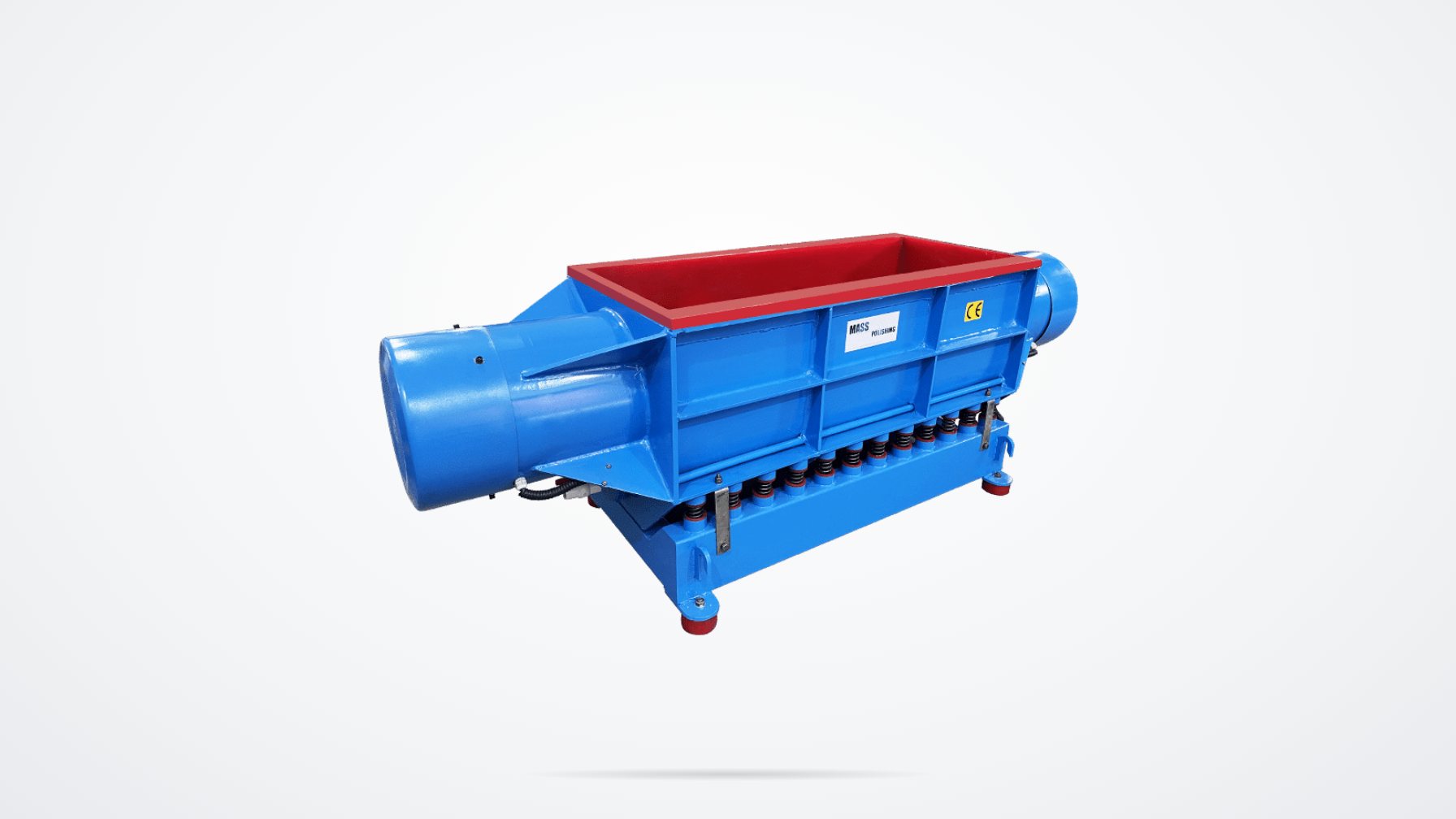
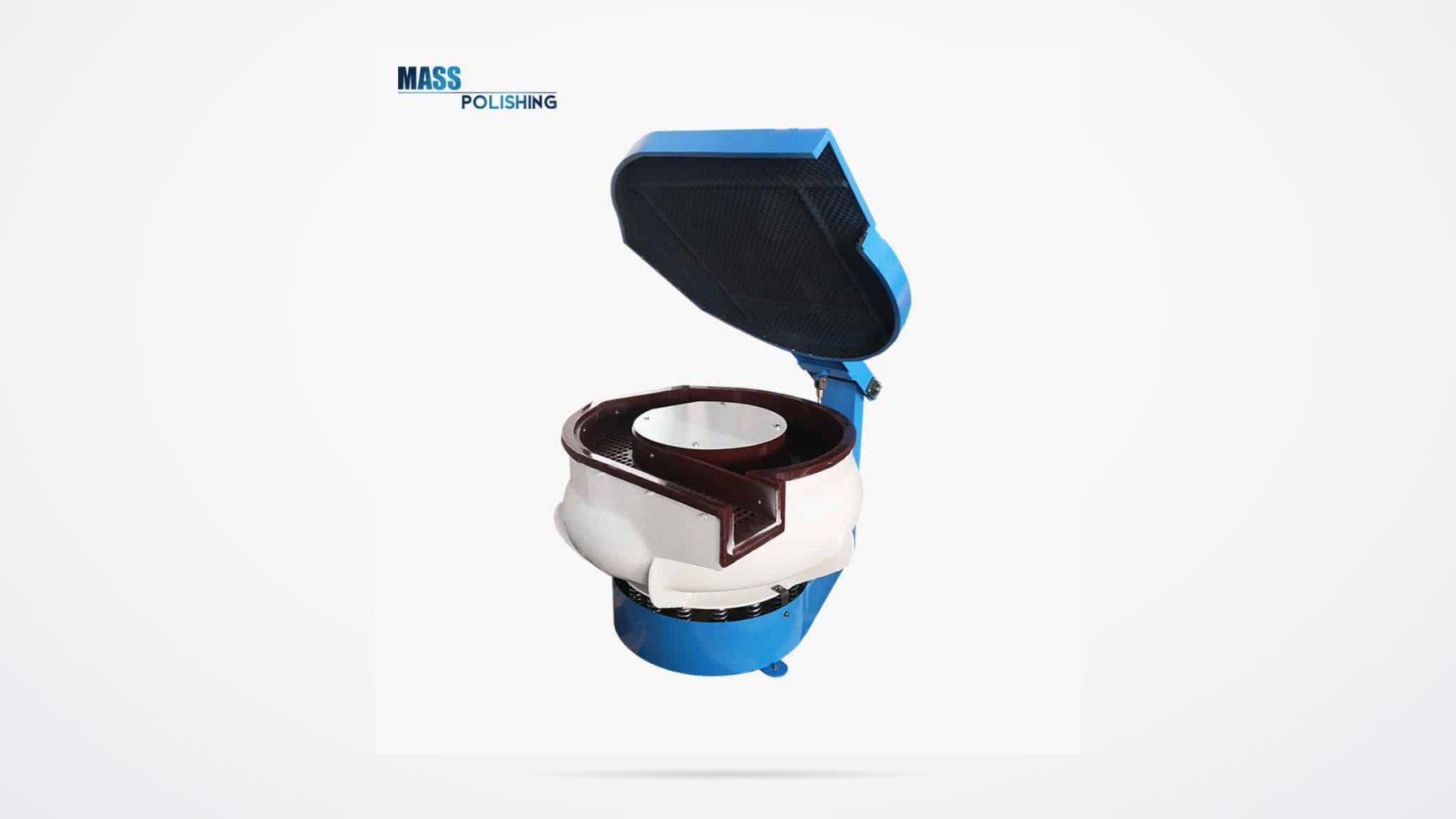
Brass faucet geometry decides the machine choice more than the plating specification does. A single-lever faucet body with a hollow waterway and deep valve cavity behaves differently from a simple spout tube. Vibratory bowl and tub machines move the media mass around parts, so they work well for mixed faucet components and moderate edge blending. Centrifugal barrel machines create higher contact force and remove stock faster, which suits heavy castings but raises the risk of denting thin brass walls. The table below compares the main options for brass faucet pre plate work.
| Process | Best use for brass faucets | Typical action | Watch for |
|---|---|---|---|
| الوعاء الاهتزازي | Mixed handles, spouts, small bodies | Deburring and satin finishing in one run | Parts can nest; need correct media size |
| Vibratory tub | Longer spout tubes and slender parts | Long travel, uniform blending along length | Part-on-part contact at high load |
| برميل طرد مركزي | Heavy sand cast bodies with thick walls | Fast scale removal and edge refinement | Thin wall distortion, media lodging in cavities |
| قرص مركزي | Flat, round, or detailed deck plates | High-energy finishing with short cycle | Tight crevices may trap small media |
The media size matters just as much as the machine. For faucet parts with M4 and M5 threads or fine waterway inlets, we stay with media small enough to pass through the smallest feature but not lodge inside. A 6 mm angle-cut cylinder might clear a valve cavity while a 3 mm ball can pack into the thread root. We test first with scrap castings and section one part after the cycle to check for lodged media. If we see a piece of ceramic trapped in a blind waterway, we change the media shape or add a fixture before the process goes into production.
Machine selection is only part of the pre plating decision. <اختيار آلة تلميع اهتزازية> covers how tub size, media fill level, and part loading affect the balance between fast stock removal and gentle surface refinement, including why heavier ceramic media rarely works as a one-step shortcut on thin-wall brass components.
Why do some faucet bodies come out with flat spots?
Flat spots usually mean the parts stayed too long in one position or sat against the chamber wall. In a vibratory bowl, the fault is often an overloaded bowl or the wrong amplitude setting. In a centrifugal barrel, flat spots appear when the media pack is too dry or the barrel is overfilled, so the part skids rather than rolls. We correct it by reducing the load, checking the media to parts ratio, and verifying that the machine is running at the manufacturer’s recommended amplitude.
Can the same machine finish both cast and forged brass faucets?
Usually yes, but the cycle parameters change. Cast brass carries more scale and often needs a longer first cut. Forged brass starts cleaner but may have sharper flash lines. We keep the same machine and media family, then split the recipe by part condition. That keeps the shop flexible without making every new faucet model a new capital purchase.
Control Compound Concentration and Cycle Time for a Uniform Pre Plate Finish
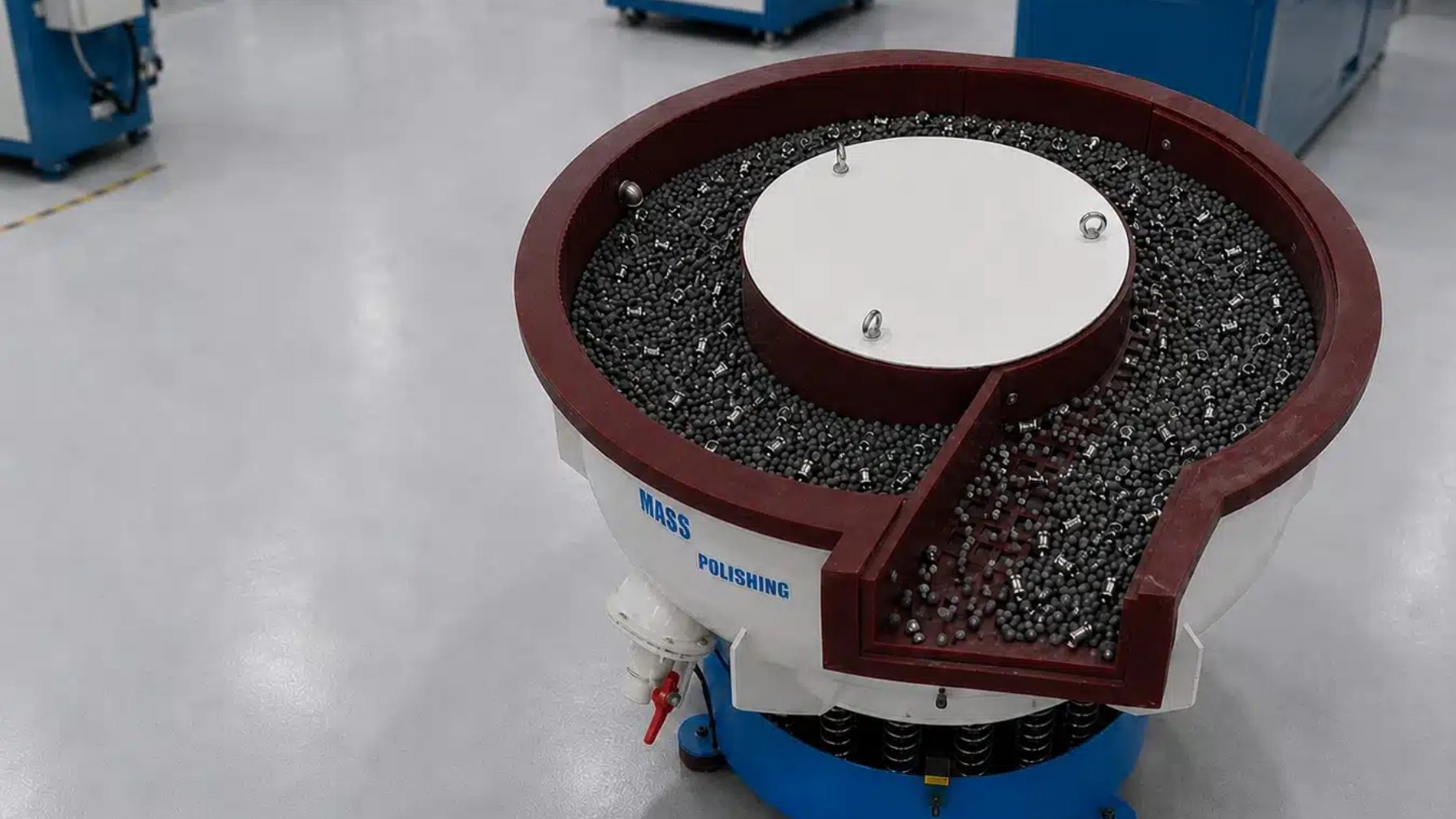
Compound is not a lubricant to pour in by guesswork. A wet deburring compound carries swarf away, keeps the media clean, and influences the final surface brightness. The concentration must be matched to the water flow and the media wear rate. In brass pre plate polishing, we usually run an acidic or neutral compound at a controlled dose through a metering pump rather than dumping a cup into the tub every half hour. A steady dose keeps the surfactant film consistent, so the last 20 minutes of the cycle do not produce a different finish than the first 20 minutes.
Cycle time is the variable operators like to extend when results are not right, but that is usually the wrong first move. If the first cut is too short, oxide remains in the grain boundaries and the plater sees staining or poor adhesion. If the cycle is too long, the surface can overwork and leave a smeared, soft finish that holds compound residue. We record the time, water flow, compound dose, and temperature for every brass faucet recipe. When a batch comes out with a yellow film, the first thing we check is whether the compound concentration drifted or the rinse was skipped.
If your faucet body has a deep internal waterway or a blind valve pocket, confirm media access and compound rinse before you finalize the machine. Send a sectioned scrap part or a rejected sample to [email protected] and we will check whether the waterway clears completely.
How long should a pre plate cycle run?
cURL Too many subrequests by single Worker invocation. To configure this limit, refer to https://developers.cloudflare.com/workers/wrangler/configuration/#limits.
cURL Too many subrequests by single Worker invocation. To configure this limit, refer to https://developers.cloudflare.com/workers/wrangler/configuration/#limits
cURL Too many subrequests by single Worker invocation. To configure this limit, refer to https://developers.cloudflare.com/workers/wrangler/configuration/#limits.
cURL Too many subrequests by single Worker invocation. To configure this limit, refer to https://developers.cloudflare.com/workers/wrangler/configuration/#limits
cURL Too many subrequests by single Worker invocation. To configure this limit, refer to https://developers.cloudflare.com/workers/wrangler/configuration/#limits.
cURL Too many subrequests by single Worker invocation. To configure this limit, refer to https://developers.cloudflare.com/workers/wrangler/configuration/#limits.
cURL Too many subrequests by single Worker invocation. To configure this limit, refer to https://developers.cloudflare.com/workers/wrangler/configuration/#limits
cURL Too many subrequests by single Worker invocation. To configure this limit, refer to https://developers.cloudflare.com/workers/wrangler/configuration/#limits.
cURL Too many subrequests by single Worker invocation. To configure this limit, refer to https://developers.cloudflare.com/workers/wrangler/configuration/#limits
cURL Too many subrequests by single Worker invocation. To configure this limit, refer to https://developers.cloudflare.com/workers/wrangler/configuration/#limits.
cURL Too many subrequests by single Worker invocation. To configure this limit, refer to https://developers.cloudflare.com/workers/wrangler/configuration/#limits.
cURL Too many subrequests by single Worker invocation. To configure this limit, refer to https://developers.cloudflare.com/workers/wrangler/configuration/#limits
cURL Too many subrequests by single Worker invocation. To configure this limit, refer to https://developers.cloudflare.com/workers/wrangler/configuration/#limits
cURL Too many subrequests by single Worker invocation. To configure this limit, refer to https://developers.cloudflare.com/workers/wrangler/configuration/#limits.
cURL Too many subrequests by single Worker invocation. To configure this limit, refer to https://developers.cloudflare.com/workers/wrangler/configuration/#limits
cURL Too many subrequests by single Worker invocation. To configure this limit, refer to https://developers.cloudflare.com/workers/wrangler/configuration/#limits.
cURL Too many subrequests by single Worker invocation. To configure this limit, refer to https://developers.cloudflare.com/workers/wrangler/configuration/#limits
cURL Too many subrequests by single Worker invocation. To configure this limit, refer to https://developers.cloudflare.com/workers/wrangler/configuration/#limits.
cURL Too many subrequests by single Worker invocation. To configure this limit, refer to https://developers.cloudflare.com/workers/wrangler/configuration/#limits
cURL Too many subrequests by single Worker invocation. To configure this limit, refer to https://developers.cloudflare.com/workers/wrangler/configuration/#limits.
إذا كنت مهتمًا، اطلع على هذه المقالات ذات الصلة:
cURL Too many subrequests by single Worker invocation. To configure this limit, refer to https://developers.cloudflare.com/workers/wrangler/configuration/#limits
cURL Too many subrequests by single Worker invocation. To configure this limit, refer to https://developers.cloudflare.com/workers/wrangler/configuration/#limits
cURL Too many subrequests by single Worker invocation. To configure this limit, refer to https://developers.cloudflare.com/workers/wrangler/configuration/#limits
cURL Too many subrequests by single Worker invocation. To configure this limit, refer to https://developers.cloudflare.com/workers/wrangler/configuration/#limits