
A faucet body that looks clean after deburring can still produce plating rejects if the surface carries embedded compound, uneven edge rounding, or micro porosity. Brass faucet polishing before plating is not about making the part glossy; it is about creating a controlled surface that holds the plated layer and exposes defects early. The wrong media grade for thin brass sections, too much water flow at the start, or skipping a final rinse check cause more problems than the plating tank itself. This article covers the process choices that keep the next process stable.
Machine – Metal Polishing)
Why Brass Faucet Polishing Before Plating Determines Yield
Plating does not hide surface defects. It magnifies them. On a brass faucet body, a scratch, a sharp edge break variation, or a small pit under the deposit becomes a visible flaw after nickel-chrome plating. Pre plating finishing has two jobs. Remove the mechanical defects left by casting or machining. Leave a uniform texture that lets the plating deposit evenly. If the texture is too smooth in one area and too rough in another, the plated surface will show different reflectance and the customer will see it immediately.
Brass makes this step less forgiving than it looks. Free machining brass often contains lead, and lead smears when the media is too dull or the cycle is too hot. That leaves a thin film that resists electrocleaning. Thin faucet walls also deform if the media weight is too high. For these parts, the first pass should not chase brightness. It should remove the worst cutting work with light plastic or fine ceramic media, then refine the surface in a separate stage.
Which Finishing Machines Fit Brass Faucet Parts
Machine selection follows the part shape more than the part name. A faucet spout, a body, a handle, and a threaded inlet all move differently in the bowl and contact media at different pressures. The table below maps the main choices to the pre plating task.
| Machine type | Best pre plating use | Surface result | Main limitation |
|---|---|---|---|
| Vibratory bowl | Batch processing of bodies, spouts, and handles | Uniform matte to satin finish | Slower on very hard burrs |
| Centrifugal disc | Small parts and tight radii | Faster cut with controlled edge rounding | Needs careful gap setup on thin brass |
| Drag finishing | Visible surfaces or matched sets | Consistent directional finish, low contact damage | Fixture labor and lower batch volume |
| Rotary barrel | Heavier cast components and cleaning | Gentle radius and good burnish | Long cycle, limited selectivity |
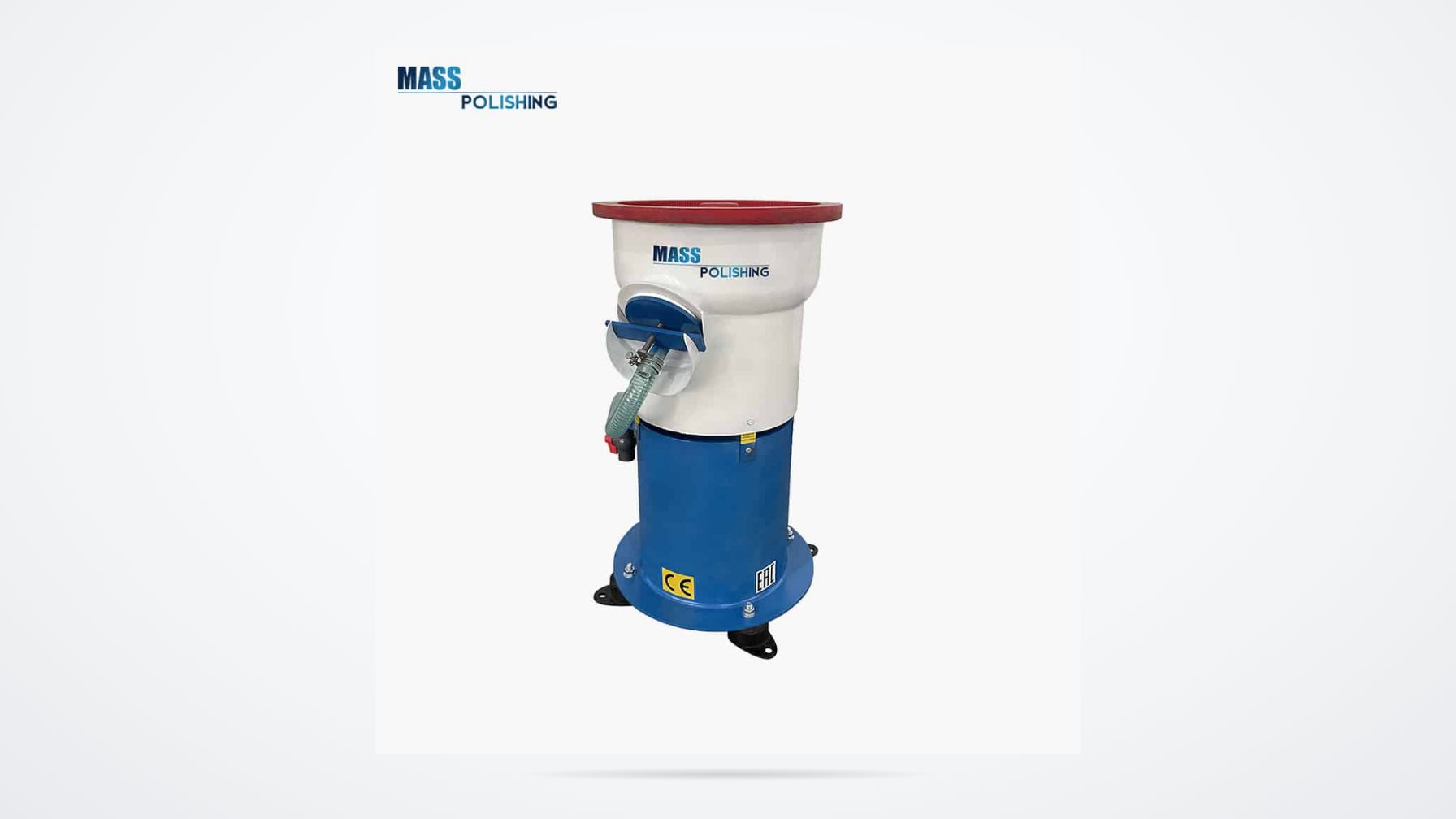
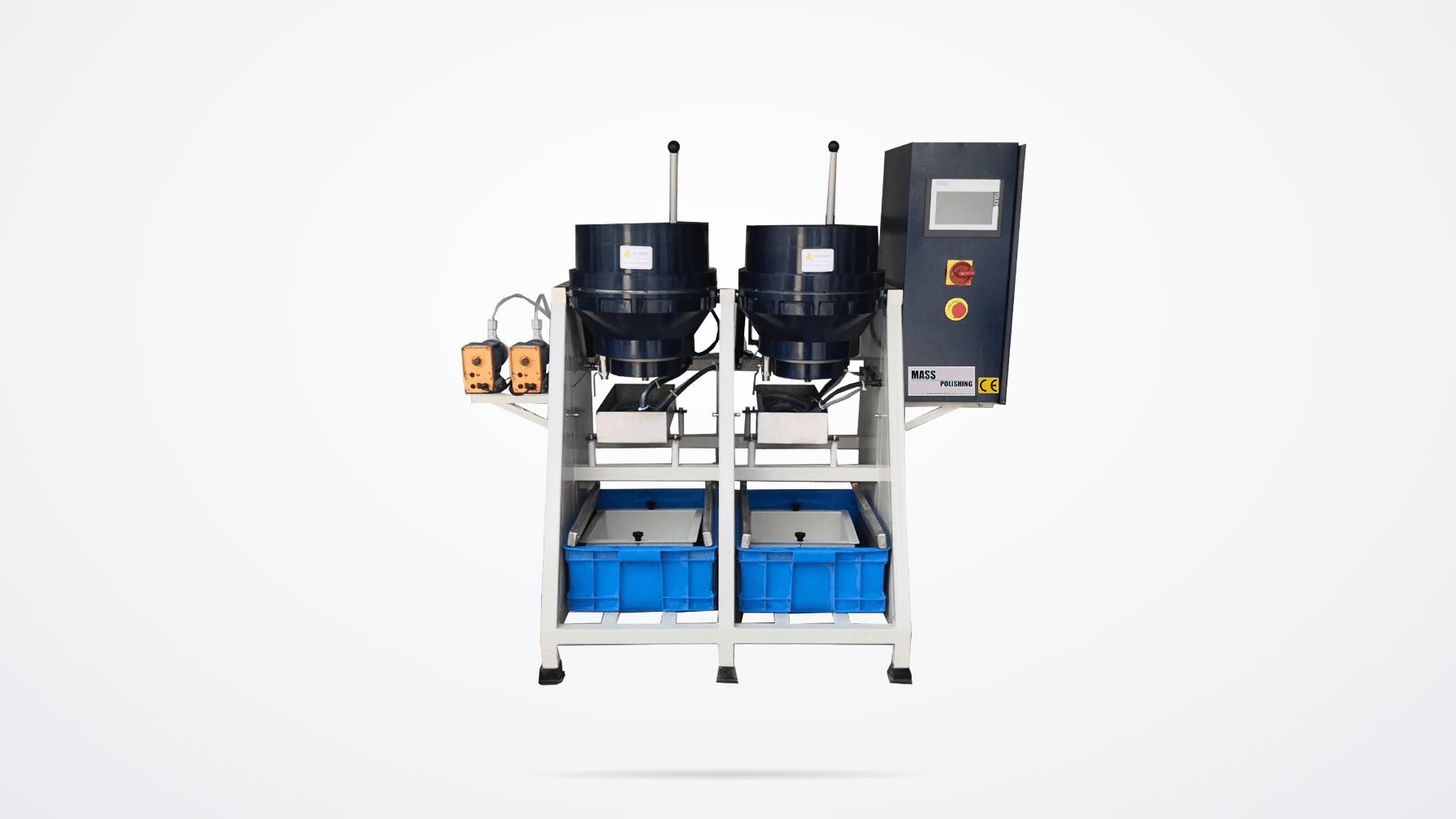
For most brass faucet pre plating work, a vibratory machine with a separation system is the practical starting point. It keeps one operator’s workload low and handles a mixed product line. If the parts have deep recesses or the reject rate is tied to missed burrs, a higher energy centrifugal disc can remove the burrs in a fraction of the time, but it demands tighter process limits so the thin brass sections do not smack or fold.
Machine selection should follow the part shape and defect pattern before the machine price or brand. <How to Choose a Suitable Automatic Polishing Machine> covers the machine selection logic for automated finishing lines.
Machine – Precision Deburring)
Which Pre Plate Media and Compounds Produce a Stable Surface
The media grade matters more than the machine in many brass faucet polishing failures. Start with a light cut plastic media or a fine ceramic shape to remove burrs without gouging the soft metal. Then move to a pre plate plastic media with a fine abrasive grade, such as a 1500 grit white plastic cone, to smooth the surface without creating a high gloss skin that could hide smeared lead. For final refinement on flat faucet surfaces, high density porcelain pins can raise brightness while keeping the surface clean.
Compound selection is linked to the media stage. The general purpose compound used on steel cannot go straight onto brass; it can stain or over-clean the surface. A brass-safe polishing compound with a controlled pH, paired with clean water feed, gives more consistent pre plating work. Add the compound gradually during the first portion of the cycle rather than dumping it at once.
Media selection is as important as the machine when the goal is a stable pre plating surface. <Vibratory Tumbling Media Is Indispensable> covers how media shape and grade determine cut rate and final surface condition.
If the faucet design includes deep recesses, thin walls, or internal threads, it is worth confirming the media shape and machine gap before locking the bill of materials. Send a part drawing and monthly quantity to [email protected].
How to Run and Inspect the Pre Plate Cycle
The cycle is only repeatable when the operator controls water flow, media level, and time from the first blank to the final rinse. Most brass faucet bodies run in two stages. The first stage handles the remaining burr and scale work. The second stage refines the surface with a finer media or dry compound, depending on the plating line’s incoming specification.
- Sort blanks by alloy and casting or machining condition. Leaded and low lead brass do not process the same way.
- Load the bowl to the recommended media to parts ratio, not above it. Overloading traps parts and creates uneven contact.
- Start the first stage with low water flow and add the brass-safe compound in small amounts. Too wet a start washes the abrasive work away.
- Transfer, rinse, and separate before the second stage. Do not let wet parts sit and dry in the bowl.
- Refine with pre plate plastic or porcelain media, then rinse immediately.
- Inspect a fixed sample size before releasing the batch to plating.
What surface condition should you accept before plating?
The surface does not need to look like a mirror. It needs to be uniformly matte to satin, free of sharp edges, burrs, smeared lead, pits, and embedded media. If a clean white cloth pressed across the part picks up grey residue, the rinse or compound step is not complete. The plating shop’s own incoming standard should set the release limit, not a general brightness target.
What should you check before releasing parts?
Check the same areas on every sample: the underside of the spout, the inlet thread root, the handle boss, and any parting line. These are the places where media access is poor and residue hides. Run a gloved hand across the surface; if the surface feels uneven, plate a small control piece rather than the whole batch. The main release check is not brightness. It is whether the surface is clean, dry, and consistent across the areas the customer sees.
If the plating shop reports haze after the pre plate polish, look at the earlier finishing stages before changing the plating bath. <How to Improve the Product Brightness of the Vibration Grinder Price> covers the main process levers that move a surface from clean to bright before plating.
When to Stop and Send the Part for a Process Review
If you have changed media grades, water flow, and cycle time, and the plating line still reports pitting, peel, or flow lines, further floor adjustments get expensive. The problem is rarely the machine alone. It is the process definition, or a mismatch between the blank condition and the finishing recipe. Mass Polishing’s engineers look at the alloy, the as-cast or as-machined condition, the part geometry, and the plating specification together. Then they recommend a machine, media grade, compound, and cycle that leave a stable surface for plating. Send the part number, plating specification, and monthly quantity to [email protected] or call +86 572 306 8888.
What Faucet Manufacturers Ask Before Releasing Parts
What surface roughness is acceptable before plating brass faucets?
A fine matte to satin finish is usually acceptable for decorative nickel-chrome plating, provided the surface is uniform and clean. Mirror gloss at this stage is not required and can even hide smeared lead or fine pits. The important limit is not brightness but defect control. Reject criteria should include pits, embedded media, sharp edges, and any grey smut that transfers to a white cloth. If the plating line has an incoming roughness standard, that standard should set the release limit for the batch.
Can one vibratory bowl process several faucet designs?
The machine is rarely the limiting factor; the load plan and media mix are. A single bowl can process different spouts, bodies, and handles if the operator separates parts by weight and geometry, uses the right media to parts ratio, and keeps the water flow consistent. Problems appear when heavy cast bodies and thin wall spouts run together without compartment dividers. Part-on-part contact marks then show up after plating. If the product mix changes frequently, a machine with a separation system and a stored recipe for each part family is the practical solution.
Does dry polishing eliminate the drying risk before plating?
It depends on the residual paste and whether the shop can keep the surface clean after unloading. Dry porcelain or walnut shell polishing removes the water drying step, a useful option when parts would otherwise sit wet. But it can leave fine paste dust in blind holes, and that dust can interfere with the plating line. If the part has deep recesses, a wet rinse and clean air blow off after dry polishing is still needed. If the part is simple and handled quickly, dry polishing can shorten the workflow.
How long should a brass faucet pre plating cycle take?
In the process work we run, a two stage wet cycle for a medium brass faucet body often lands between 30 and 50 minutes, but blank condition changes that. Cast parts with heavy scale may need a short first cut stage before the pre plate stage. Machined parts can usually go directly into the fine pre plate cycle. Time is less important than a stable surface at the end. If the cycle is shortened by raising the water flow or overloading the bowl, rejects move downstream. Share your part weight and current cycle time with our engineers at [email protected], and we will confirm whether the process is in a normal range.
If you’re interested, check out these related articles:
The Importance of Regular Cleaning of Vibrating Grinder
Solutions to Common Problems of the Polishing Machine in the Polishing Process