
Most watch case polishing machine searches start in the wrong place: the buyer lists equipment before defining the finish specification. A case blank that leaves a vibratory bowl with rounded lug edges, a washed-out chamfer, or uneven satin on the flanks will still fail inspection even if cycle time looks attractive. I treat watch case finishing as a geometry protection problem first and a stock removal problem second. The right watch case polishing machine preserves crisp transitions while producing a repeatable satin or mirror surface, and the process decisions around media, loading, and sequencing matter more than horsepower alone.
What Changes When the Part Is a Watch Case?
A watch case rarely carries one finish across every surface. The bezel top, lug tops, case flanks, and screw-down case back can each have different textures, and the transitions between those areas are part of the design. That changes the finishing problem immediately. A machine with enough force to brighten the flanks can round the fine edges and soften the chamfers that give the case its visual sharpness. A machine gentle enough to preserve those edges may not remove deep machining marks within an acceptable cycle. The starting point for a watch case polishing machine is therefore not bowl size. It is the set of surfaces that must stay untouched, the area that must be finished, and the maximum radius allowed on each edge.
Most of the cases we process are 316L or 904L stainless, but titanium, gold, brass, and bronze all appear in timepiece production. Each material accepts abrasives differently. Titanium cuts slowly and is easy to overheat in manual polishing; batch finishing removes that variable. Brass and bronze are softer and cut quickly, so a recipe that works for stainless will remove too much stock if transferred without changes. The material decision should be made before the machine decision because it controls media density, compound pH, and cycle time.
Which Watch Case Polishing Machine Configurations Actually Fit?
Five machine families are realistic for watch case work, but they occupy different positions in the process rather than competing directly.
| Тип машины | Strongest role | Watch case risk | Production note |
|---|---|---|---|
| Вибрационная ванна | Deburring and edge break after machining | Rounds fine edges if the cycle runs long | Use only ahead of a precision step |
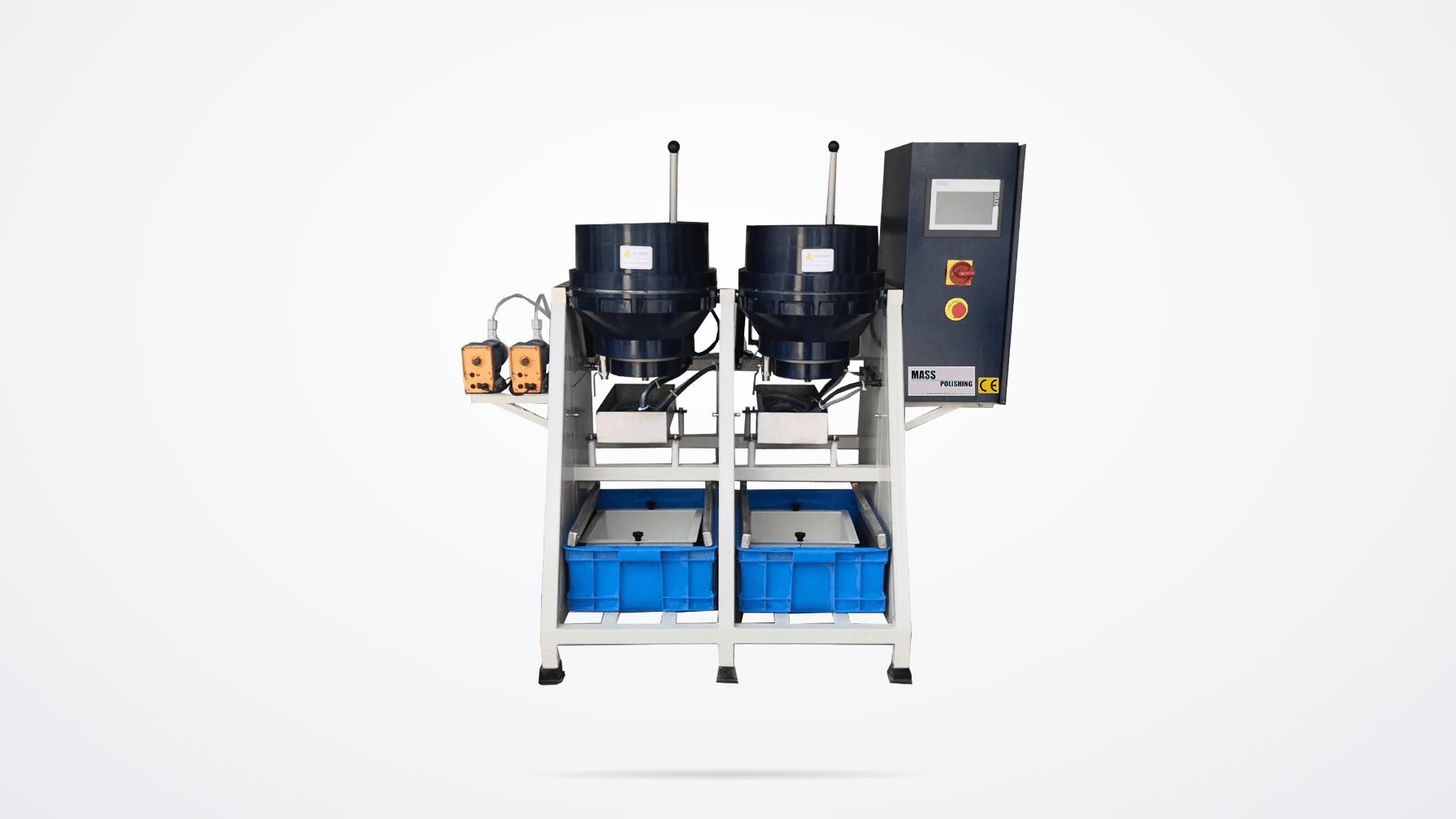
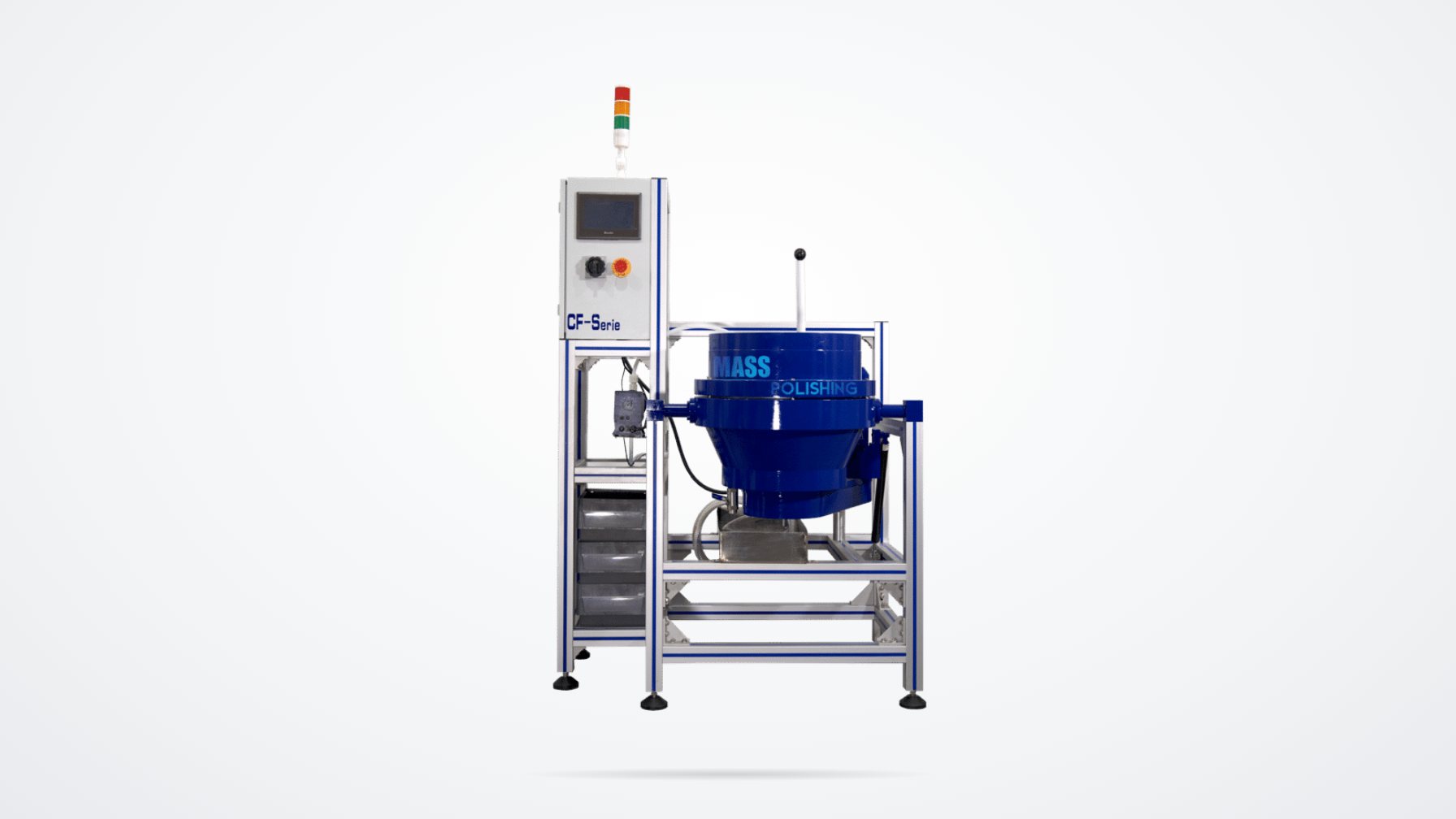
| Центрифужный диск | Uniform satin to mirror finishing on mixed case sizes | Part-to-part contact if the load is wrong | PD or CF series; strongest all-around choice |
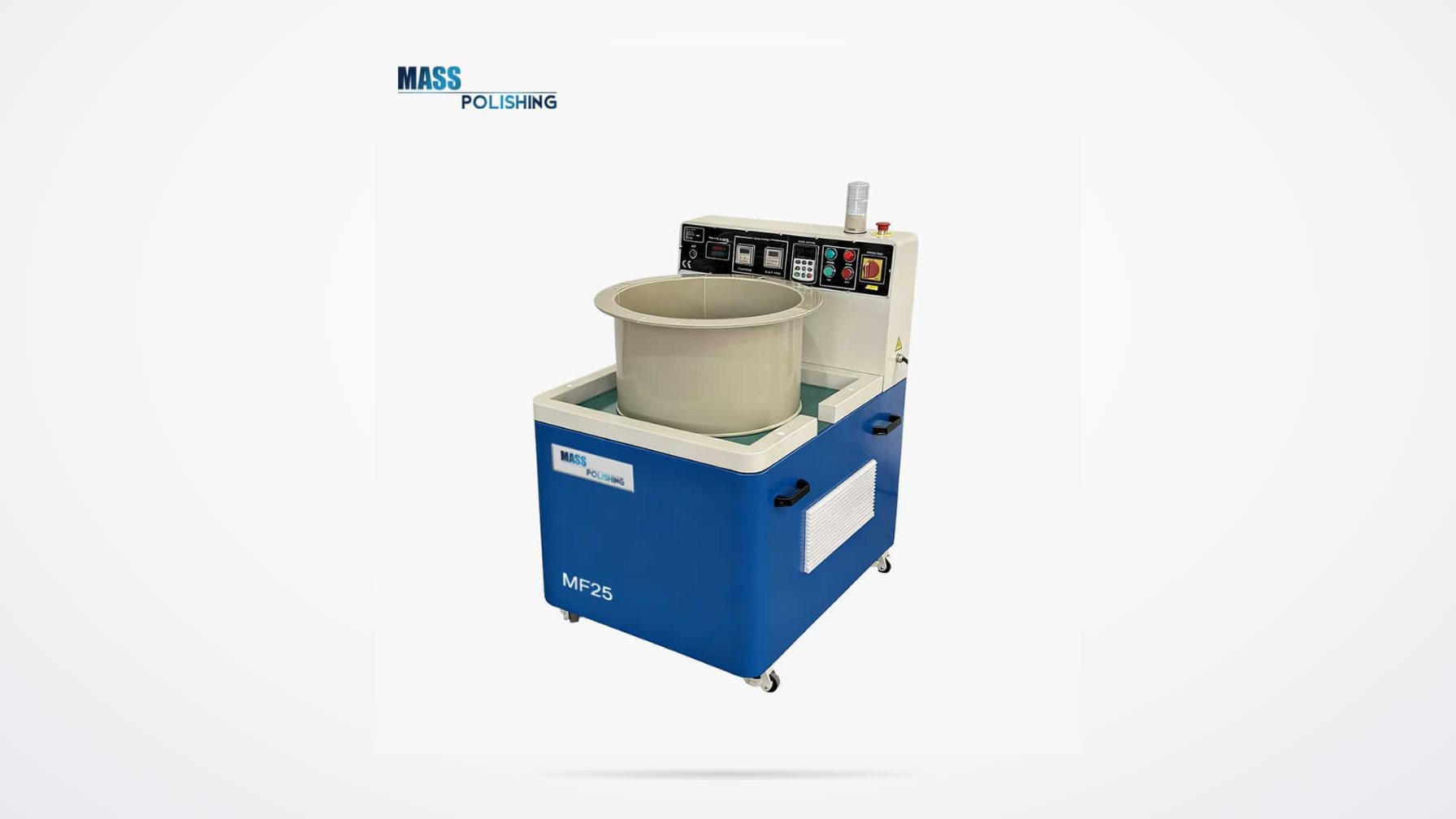
| Magnetic finishing | Micro burr removal from drill holes, threads, and slots | Limited surface leveling on broad flats | Secondary process, not a one-step finisher |
| Завершение шлифовки | Controlled face and chamfer finishing with fixed holders | Lower batch count and higher fixture cost | High-end mirror work and fragile cases |
| Центрифужный барабан | High-energy refinement of small case bodies | Media packs into recesses without tooling | Useful for high-gloss isotropic results |
For most medium-volume watch case lines, I start with a centrifugal disc machine and treat vibratory or magnetic equipment as supporting steps, not the final process. A PD series machine with a zero-gap wet and dry design suits development work because it can run small batches and switch between surface targets. A CF series machine with PLC control becomes more useful when the cell runs multiple case shapes and the operator needs repeatable speed, time, and direction settings.
Once the machine family is selected, the difference between good and poor output shifts to loading, speed, and compound control. <How to Operate the Polishing Machine Correctly> covers those operating variables and why a monitored recipe produces a more consistent finish than a fixed timer alone.
How Do You Build a Repeatable Media and Compound Recipe?
Media choice matters more than machine brand for watch case polishing. The media has to contact the visible surface without lodging in drilled holes, crown tube threads, or the gap between the case and the case back. For stainless cases, we typically use plastic pre-plate media or fine ceramic media in the first wet step, then move to porcelain fine-polish pins or zirconia mirror balls for the final surface. Walnut shell dry media is reserved for final brightening or handling delicate decorated cases because it cuts slowly and does not pack heavily into small openings.
Liquid compounds such as HM2 or HM7 work as general polishing agents, while AM 55, AM 72, and AM 99 finishing pastes are used when the target moves toward mirror gloss. The compound has to match the media; a high-cut paste with soft media just wears the media faster and creates sludge. When the case has both brushed and polished areas, masking and sequencing reduce rework more than a single universal polish cycle.
- Record the target Ra and mark which surfaces stay brushed.
- Select a first-pass media that reaches the lowest recess without lodging.
- Run a short cycle and inspect one case at 10x before loading a full batch.
- Set water and compound dosing so the load stays clean but not diluted.
- Run the final polish step only after the cut step produces a uniform base.

cURL Too many subrequests by single Worker invocation. To configure this limit, refer to https://developers.cloudflare.com/workers/wrangler/configuration/#limitscURL Too many subrequests by single Worker invocation. To configure this limit, refer to https://developers.cloudflare.com/workers/wrangler/configuration/#limitscURL Too many subrequests by single Worker invocation. To configure this limit, refer to https://developers.cloudflare.com/workers/wrangler/configuration/#limits.
cURL Too many subrequests by single Worker invocation. To configure this limit, refer to https://developers.cloudflare.com/workers/wrangler/configuration/#limits.
cURL Too many subrequests by single Worker invocation. To configure this limit, refer to https://developers.cloudflare.com/workers/wrangler/configuration/#limits
cURL Too many subrequests by single Worker invocation. To configure this limit, refer to https://developers.cloudflare.com/workers/wrangler/configuration/#limits.
cURL Too many subrequests by single Worker invocation. To configure this limit, refer to https://developers.cloudflare.com/workers/wrangler/configuration/#limits.
cURL Too many subrequests by single Worker invocation. To configure this limit, refer to https://developers.cloudflare.com/workers/wrangler/configuration/#limits.
cURL Too many subrequests by single Worker invocation. To configure this limit, refer to https://developers.cloudflare.com/workers/wrangler/configuration/#limitsРаспространенные проблемы и меры противодействия оборудованию для полировальных машинcURL Too many subrequests by single Worker invocation. To configure this limit, refer to https://developers.cloudflare.com/workers/wrangler/configuration/#limits.
cURL Too many subrequests by single Worker invocation. To configure this limit, refer to https://developers.cloudflare.com/workers/wrangler/configuration/#limits
cURL Too many subrequests by single Worker invocation. To configure this limit, refer to https://developers.cloudflare.com/workers/wrangler/configuration/#limits.
cURL Too many subrequests by single Worker invocation. To configure this limit, refer to https://developers.cloudflare.com/workers/wrangler/configuration/#limits.
cURL Too many subrequests by single Worker invocation. To configure this limit, refer to https://developers.cloudflare.com/workers/wrangler/configuration/#limits.
cURL Too many subrequests by single Worker invocation. To configure this limit, refer to https://developers.cloudflare.com/workers/wrangler/configuration/#limits
cURL Too many subrequests by single Worker invocation. To configure this limit, refer to https://developers.cloudflare.com/workers/wrangler/configuration/#limits
cURL Too many subrequests by single Worker invocation. To configure this limit, refer to https://developers.cloudflare.com/workers/wrangler/configuration/#limits.
cURL Too many subrequests by single Worker invocation. To configure this limit, refer to https://developers.cloudflare.com/workers/wrangler/configuration/#limits
cURL Too many subrequests by single Worker invocation. To configure this limit, refer to https://developers.cloudflare.com/workers/wrangler/configuration/#limits.
cURL Too many subrequests by single Worker invocation. To configure this limit, refer to https://developers.cloudflare.com/workers/wrangler/configuration/#limits
cURL Too many subrequests by single Worker invocation. To configure this limit, refer to https://developers.cloudflare.com/workers/wrangler/configuration/#limits.
cURL Too many subrequests by single Worker invocation. To configure this limit, refer to https://developers.cloudflare.com/workers/wrangler/configuration/#limits
cURL Too many subrequests by single Worker invocation. To configure this limit, refer to https://developers.cloudflare.com/workers/wrangler/configuration/#limits.
Если вас интересует, ознакомьтесь с этими связанными статьями:
Polishing Zinc Die Castings in Vibratory Tumbling Machines a Comprehensive Guide
cURL Too many subrequests by single Worker invocation. To configure this limit, refer to https://developers.cloudflare.com/workers/wrangler/configuration/#limits