
Most CNC machined parts deburring projects do not fail at the machine. They fail because the burr was never specified well enough to choose the right media, speed, and cycle time. I have watched shops buy a vibratory bowl, load mixed milled and turned parts, and then spend more on hand blending than the machine saved. The better starting point is a small process test that defines what the edge must look like, what the part can tolerate, and how the load will be separated afterward. Put that in place first and the equipment decision becomes much simpler.
Why CNC Machined Parts Deburring Belongs in Process Planning
Burr formation is not random. CNC mills and lathes leave predictable burr patterns depending on tool path, breakout direction, cutter wear, and material. When those patterns are mapped before finishing, a shop can choose a deburring route that removes the real burr instead of polishing around it. When they are ignored, the shop inherits the classic result: edges softened in the open areas, sharp corners still present near bores, and dimensional variation across the batch.
Our process work usually begins with the part print and a small batch of real parts rather than a generic machine specification. A 0.003 inch feather edge on 6061 aluminum behaves differently from the same visual height on 17-4 stainless. The first comes off quickly with plastic media; the second may need ceramic or a harder cutting action. That difference is why CNC machined parts deburring belongs in process planning instead of downstream sorting.
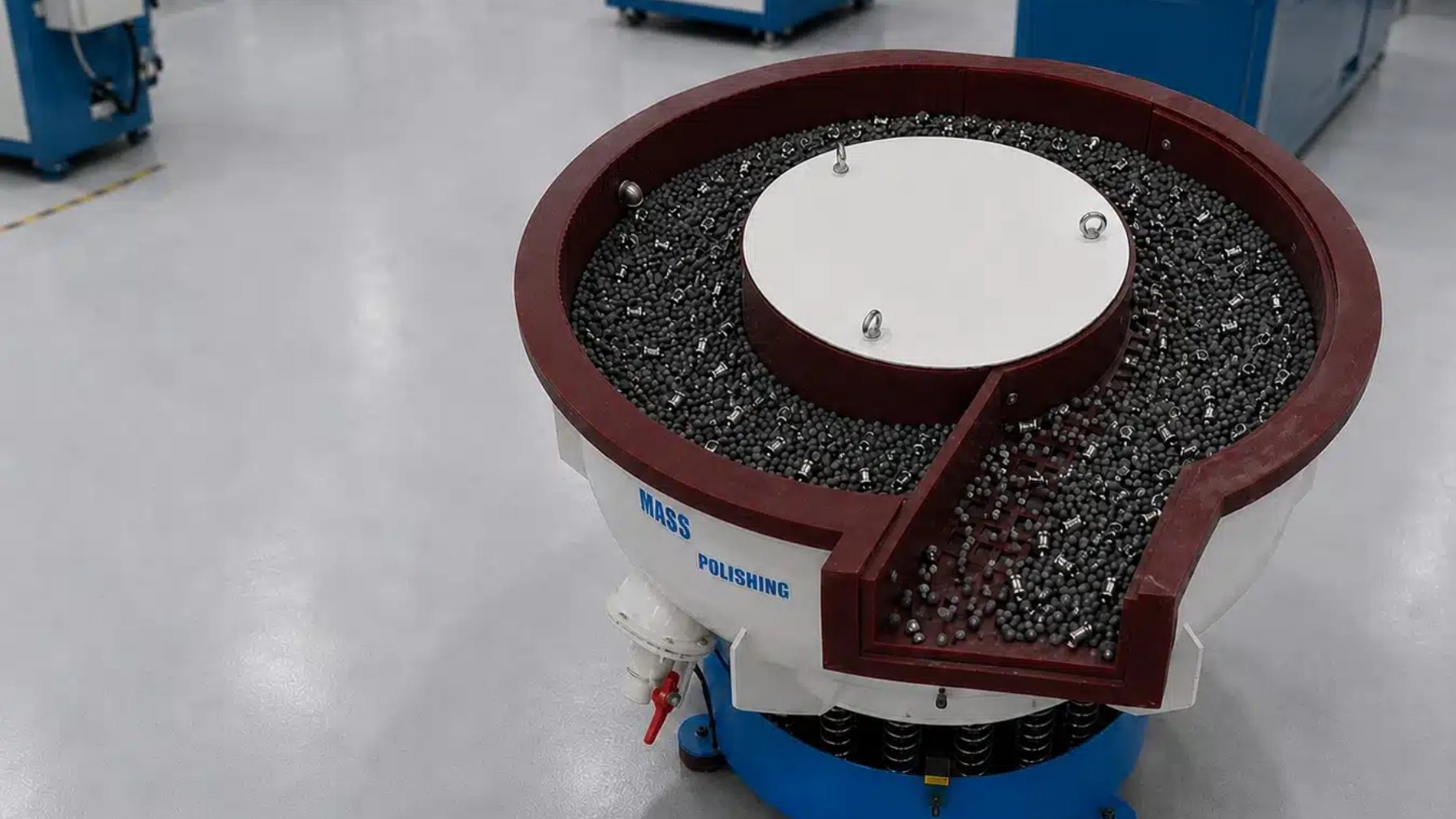
A useful check is to mark the burr location on the print before any finishing test. If the burr sits inside a bore, on a thread flank, or at a pocket intersection, the route must reach that feature. If the burr is only on open edges, a simpler and cheaper process will work. This small step prevents the most common failure we see: specifying a machine by part weight and then discovering the media cannot touch the area that actually matters.
How Burr Type, Material, and Geometry Set the Deburring Route
Burr Formation Changes by Material
Aluminum burrs are usually ductile and fold over instead of breaking off. A light cutting action with plastic media or fine ceramic works well, especially when the part has thin walls. Steel burrs are stiffer and often need a more aggressive ceramic shape, but that aggressiveness can erode sharp edges or threads if the cycle is not restrained. Titanium is another case: the material work-hardens at the surface, so an overaggressive process can smear metal and leave a bright but flawed edge. We prefer to test the actual part, because the material certificate will not predict how the burr root behaves.
Geometry Decides What the Media Can Reach
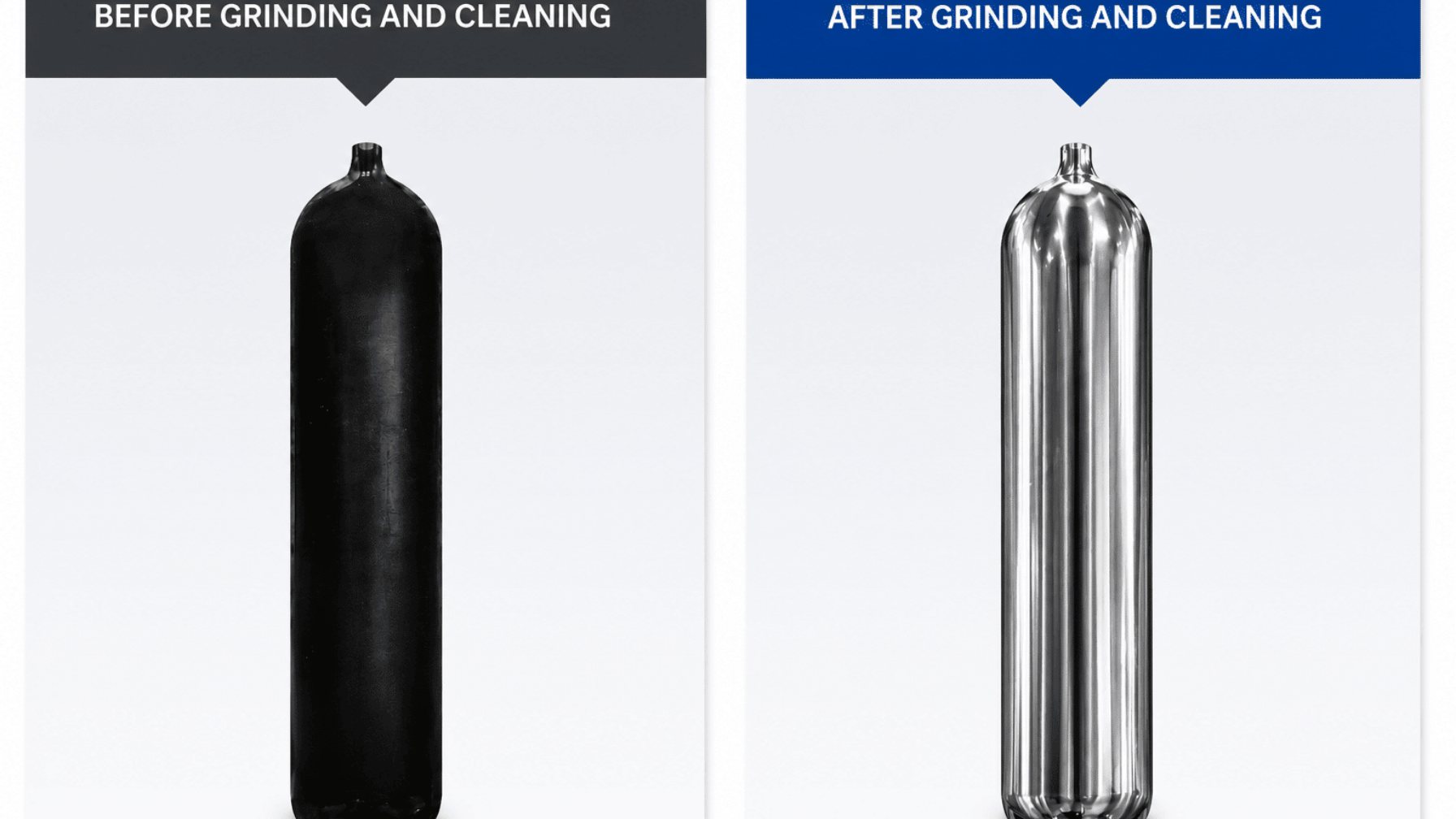
Blind holes, internal intersections, and deep grooves trap media. If the burr is inside a 2 mm bore, a 4 mm cone cannot get there. In that situation the correct route may be magnetic finishing with small stainless pins, or a drag process if the part can be fixtured. When the part has open edges and a flat face, vibratory finishing is faster and lower cost. The mistake is forcing one machine to cover every feature and then accepting inconsistent results.
When blind features are the problem, <Do You Understand Acabado en barril centrífugo Página de máquinas> explains how higher energy moves media into areas that a standard bowl misses.
Matching CNC Machined Parts Deburring Equipment to Your Part Mix
No single deburring method fits every CNC part. The choice should be made by the weakest feature on the part, not the average. For a shop running open aluminum housings, a straight wall vibratory machine with an automatic separation system is usually the lowest labor route. For small valve bodies, medical components, or parts with tight edge radius control, a high energy centrifugal disc or barrel machine becomes more suitable. The decision is not simply equipment price; it is the cost of rework, inspection, and handling across a monthly volume.
| Method | Strongest Fit | Typical Burr Condition | Process Watch Point |
|---|---|---|---|
| Cuba vibratoria | High volume open edges | Light to medium burrs | Part-on-part impingement on delicate faces |
| Disco centrífugo | Mixed geometry, faster cycle | Medium to heavy burrs | Aggressive action can round more than intended |
| Cilindro centrífugo | Precision edges and small parts | Radio de filo controlado | Limited batch size and longer load and unload time |
| Acabado de arrastre | Clamped parts with tight tolerances | Light burrs and surface refinement | Fixture cost per part number |
Each method changes more than the burr. Vibratory finishing is gentle enough for high volume but can round sharp edges if the cycle is too long. Acabado centrífugo de disco generates far more force, so it cuts faster but can change tight dimensions. A part with a threaded hole may require masking, or a cycle short enough to protect the thread while still removing the edge. That is why the equipment decision must follow a tested recipe.
For shops planning a vibratory route, <Using a Vibratory Polishing Machine> covers how bowl speed, water flow, and media level interact in production.
If your program involves tapped holes below M3, blind slots, or anodized surfaces, it is worth confirming media shape, media size, and compound pH before finalizing the line. Reach out at [email protected] and include a part drawing; the process variables matter more than machine brand.
cURL Too many subrequests by single Worker invocation. To configure this limit, refer to https://developers.cloudflare.com/workers/wrangler/configuration/#limits
cURL Too many subrequests by single Worker invocation. To configure this limit, refer to https://developers.cloudflare.com/workers/wrangler/configuration/#limits.
- cURL Too many subrequests by single Worker invocation. To configure this limit, refer to https://developers.cloudflare.com/workers/wrangler/configuration/#limits.
- cURL Too many subrequests by single Worker invocation. To configure this limit, refer to https://developers.cloudflare.com/workers/wrangler/configuration/#limits.
- cURL Too many subrequests by single Worker invocation. To configure this limit, refer to https://developers.cloudflare.com/workers/wrangler/configuration/#limits.
- cURL Too many subrequests by single Worker invocation. To configure this limit, refer to https://developers.cloudflare.com/workers/wrangler/configuration/#limits.
cURL Too many subrequests by single Worker invocation. To configure this limit, refer to https://developers.cloudflare.com/workers/wrangler/configuration/#limits.
cURL Too many subrequests by single Worker invocation. To configure this limit, refer to https://developers.cloudflare.com/workers/wrangler/configuration/#limitsTroubleshooting of Centrifugal Drum Finishing MachinescURL Too many subrequests by single Worker invocation. To configure this limit, refer to https://developers.cloudflare.com/workers/wrangler/configuration/#limits.
cURL Too many subrequests by single Worker invocation. To configure this limit, refer to https://developers.cloudflare.com/workers/wrangler/configuration/#limits
cURL Too many subrequests by single Worker invocation. To configure this limit, refer to https://developers.cloudflare.com/workers/wrangler/configuration/#limits.
cURL Too many subrequests by single Worker invocation. To configure this limit, refer to https://developers.cloudflare.com/workers/wrangler/configuration/#limits
cURL Too many subrequests by single Worker invocation. To configure this limit, refer to https://developers.cloudflare.com/workers/wrangler/configuration/#limits
cURL Too many subrequests by single Worker invocation. To configure this limit, refer to https://developers.cloudflare.com/workers/wrangler/configuration/#limits.
cURL Too many subrequests by single Worker invocation. To configure this limit, refer to https://developers.cloudflare.com/workers/wrangler/configuration/#limits
cURL Too many subrequests by single Worker invocation. To configure this limit, refer to https://developers.cloudflare.com/workers/wrangler/configuration/#limits.
cURL Too many subrequests by single Worker invocation. To configure this limit, refer to https://developers.cloudflare.com/workers/wrangler/configuration/#limits
cURL Too many subrequests by single Worker invocation. To configure this limit, refer to https://developers.cloudflare.com/workers/wrangler/configuration/#limits.
cURL Too many subrequests by single Worker invocation. To configure this limit, refer to https://developers.cloudflare.com/workers/wrangler/configuration/#limits
cURL Too many subrequests by single Worker invocation. To configure this limit, refer to https://developers.cloudflare.com/workers/wrangler/configuration/#limits.
Si está interesado, consulte estos artículos relacionados:
cURL Too many subrequests by single Worker invocation. To configure this limit, refer to https://developers.cloudflare.com/workers/wrangler/configuration/#limits
cURL Too many subrequests by single Worker invocation. To configure this limit, refer to https://developers.cloudflare.com/workers/wrangler/configuration/#limits