
Sheet metal stamping deburring is often handled as a quick cleaning step at the end of fabrication, but the edge condition controls how a stamped part plates, assembles, and holds up in service. Sharp edges create plating burns, cut seals and operators, and cause fit problems that only appear at final assembly. In our process work at Mass Polishing, the better target is a repeatable edge radius, not just a less visible burr. That means looking at tool condition, material direction, media, load, and cycle time together. The result is a predictable edge without sending a second lot back through the deburring machine.
Die Clearance and Stamped Edge Burr Formation
Most stamping burrs form because the punch to die clearance has drifted, worn, or been set inconsistently across the tool. Sheet metal cuts by shearing and then fracturing. With the correct clearance, a smooth shear band makes up roughly one third of the material thickness before the fracture completes. When clearance is too large, the metal bends and tears instead of separating cleanly, and the fracture leaves a wider burr on the breakout side. When clearance is too tight, the cutting edges wear faster and the same edge becomes ragged over a shorter run.
Material thickness and temper change the window. 300 series stainless and high strength low alloy strip carry more energy into the breakout than low carbon steel, so they produce harder, sharper burrs. We ask for the stock direction and temper on the drawing because anisotropic materials do not shear the same along the coil direction and across it. A deburring machine smooths what the tool leaves, but it cannot make a consistent edge if the stamping process is changing part to part.
Machine – Deburring)
The first decision is not which machine to run, but which abrasive matches the shape and condition of the stamped edge. <cURL Too many subrequests by single Worker invocation. To configure this limit, refer to https://developers.cloudflare.com/workers/wrangler/configuration/#limits> covers why media geometry, not just hardness, determines whether a corner cuts or simply gets polished.
Plating and Assembly Requirements for Stamped Edge Treatment
Before selecting equipment, we define the edge condition the downstream operation actually needs.
Why a sharp stamping edge fails in plating
A narrow sharp edge behaves like a current concentrator in electroplating. Plating thickness builds at the corner and pulls thinner on adjacent flat areas, often appearing as a bright or rough edge with lower coverage nearby. In a severe case, the plater fills the burr with deposit and the part no longer meets the hole tolerance. We call out edge radius before strip is plated because the plating line cannot correct mechanical damage.
What edge condition keeps assembly safe
Assembly operators, seal grooves, wire harnesses, and mating parts all respond to the same variable: edge radius. We have seen stamped brackets with a visible burr slice o-rings during installation and then leak in test. A consistent 0.05 to 0.15 mm break on the contact side often removes the hazard without changing the part profile. The drawing callout should specify which edge and how much, not just state deburred.
Why coating adhesion depends on edge treatment
Powder coating and wet paint pull away from a sharp corner because surface tension is lower there. A controlled radius gives the coating a wrap path and removes the microcrack or loose chip that starts corrosion under the film. This is why pre-treatment lines run better when the stamping deburring process already produced a uniform matte line along the edge.
Plating and coating lines expose edge defects quickly. <Why Glaze the Surface of Metal Products> covers why a smooth base surface is the difference between an acceptable coated part and one that fails appearance inspection.
Media and Machine Selection for Sheet Metal Stamping Deburring
The equipment choice is driven by part size, thickness, and whether the edge radius must be uniform on both sides.
| Application requirement | Recommended process | Typical machine | Why it fits |
|---|---|---|---|
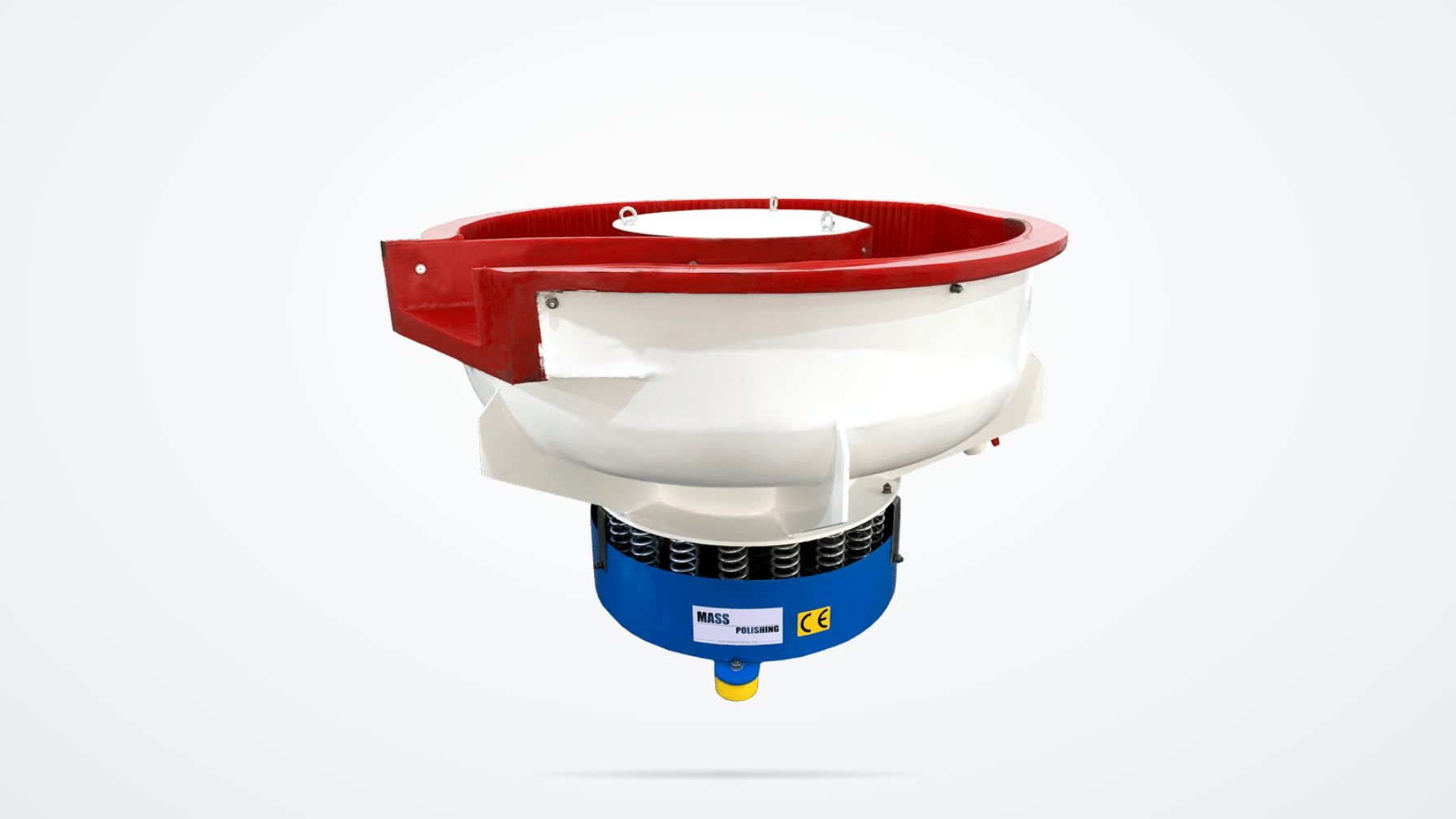
| Heavy burr removal on carbon steel | Wet vibratory with ceramic fast cut media | SW or SWS bowl machine | Good bulk handling across mixed stampings |
| Fine radius and pre-plate finish | Wet vibratory with plastic media | SW or SWS machine with speed control | Gentle cutting with low risk of distortion |
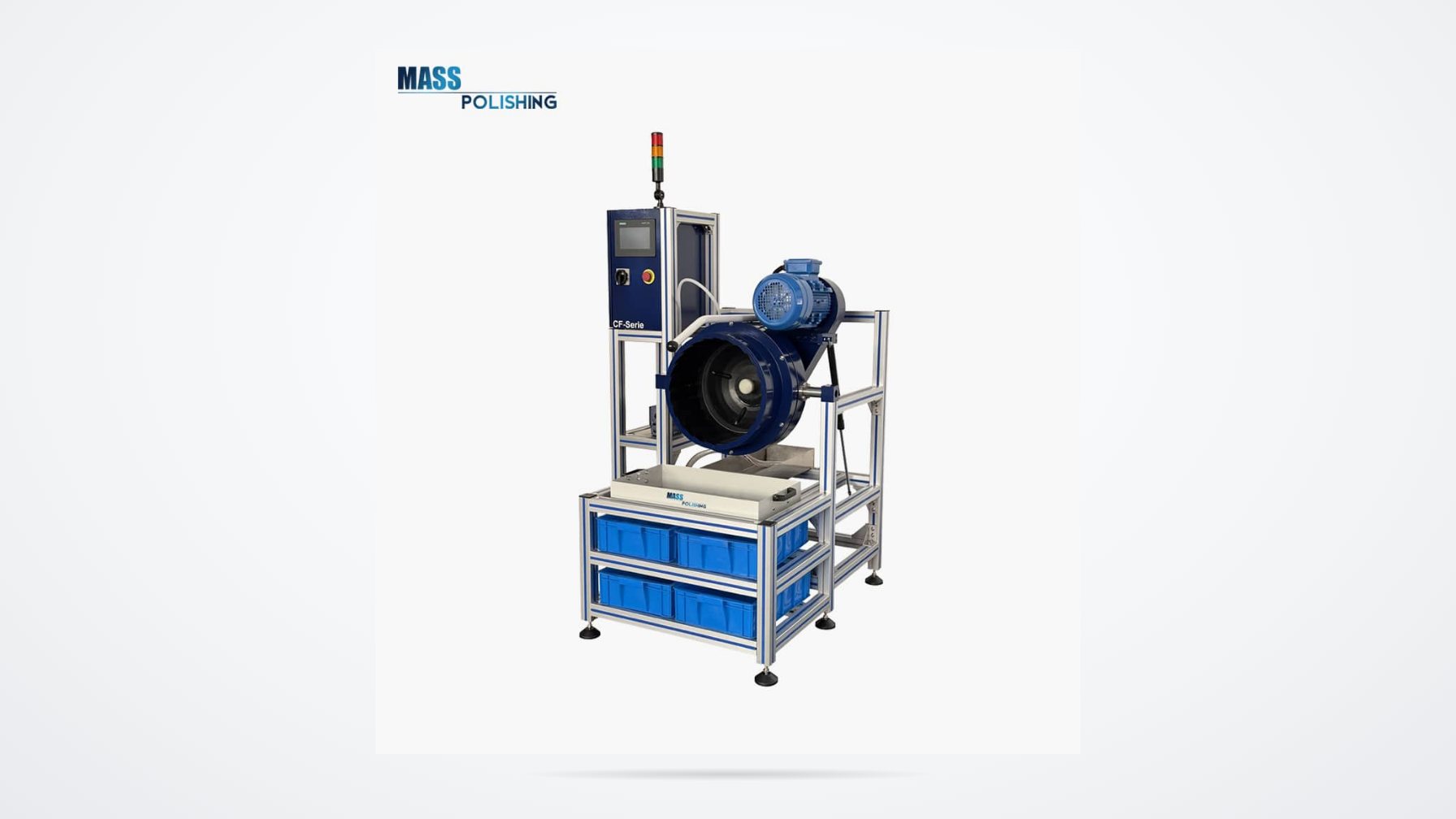
| Fast edge breaking on small mixed parts | تشطيب القرص المركزي | ED50F or ED120F | High energy reduces cycle time on hard burrs |
| Precise edge control on delicate parts | تشطيب السحب | DF18 or DF24 | cURL Too many subrequests by single Worker invocation. To configure this limit, refer to https://developers.cloudflare.com/workers/wrangler/configuration/#limits |
| cURL Too many subrequests by single Worker invocation. To configure this limit, refer to https://developers.cloudflare.com/workers/wrangler/configuration/#limits | cURL Too many subrequests by single Worker invocation. To configure this limit, refer to https://developers.cloudflare.com/workers/wrangler/configuration/#limits | cURL Too many subrequests by single Worker invocation. To configure this limit, refer to https://developers.cloudflare.com/workers/wrangler/configuration/#limits | cURL Too many subrequests by single Worker invocation. To configure this limit, refer to https://developers.cloudflare.com/workers/wrangler/configuration/#limits |
cURL Too many subrequests by single Worker invocation. To configure this limit, refer to https://developers.cloudflare.com/workers/wrangler/configuration/#limits.
cURL Too many subrequests by single Worker invocation. To configure this limit, refer to https://developers.cloudflare.com/workers/wrangler/configuration/#limits
cURL Too many subrequests by single Worker invocation. To configure this limit, refer to https://developers.cloudflare.com/workers/wrangler/configuration/#limits.
cURL Too many subrequests by single Worker invocation. To configure this limit, refer to https://developers.cloudflare.com/workers/wrangler/configuration/#limits.
cURL Too many subrequests by single Worker invocation. To configure this limit, refer to https://developers.cloudflare.com/workers/wrangler/configuration/#limitscURL Too many subrequests by single Worker invocation. To configure this limit, refer to https://developers.cloudflare.com/workers/wrangler/configuration/#limitscURL Too many subrequests by single Worker invocation. To configure this limit, refer to https://developers.cloudflare.com/workers/wrangler/configuration/#limits.
cURL Too many subrequests by single Worker invocation. To configure this limit, refer to https://developers.cloudflare.com/workers/wrangler/configuration/#limits.
cURL Too many subrequests by single Worker invocation. To configure this limit, refer to https://developers.cloudflare.com/workers/wrangler/configuration/#limits
cURL Too many subrequests by single Worker invocation. To configure this limit, refer to https://developers.cloudflare.com/workers/wrangler/configuration/#limits.
cURL Too many subrequests by single Worker invocation. To configure this limit, refer to https://developers.cloudflare.com/workers/wrangler/configuration/#limits.
cURL Too many subrequests by single Worker invocation. To configure this limit, refer to https://developers.cloudflare.com/workers/wrangler/configuration/#limits
cURL Too many subrequests by single Worker invocation. To configure this limit, refer to https://developers.cloudflare.com/workers/wrangler/configuration/#limits
cURL Too many subrequests by single Worker invocation. To configure this limit, refer to https://developers.cloudflare.com/workers/wrangler/configuration/#limits.
cURL Too many subrequests by single Worker invocation. To configure this limit, refer to https://developers.cloudflare.com/workers/wrangler/configuration/#limits
cURL Too many subrequests by single Worker invocation. To configure this limit, refer to https://developers.cloudflare.com/workers/wrangler/configuration/#limits.
cURL Too many subrequests by single Worker invocation. To configure this limit, refer to https://developers.cloudflare.com/workers/wrangler/configuration/#limits
cURL Too many subrequests by single Worker invocation. To configure this limit, refer to https://developers.cloudflare.com/workers/wrangler/configuration/#limits.
cURL Too many subrequests by single Worker invocation. To configure this limit, refer to https://developers.cloudflare.com/workers/wrangler/configuration/#limits
cURL Too many subrequests by single Worker invocation. To configure this limit, refer to https://developers.cloudflare.com/workers/wrangler/configuration/#limits.
إذا كنت مهتمًا، اطلع على هذه المقالات ذات الصلة:
cURL Too many subrequests by single Worker invocation. To configure this limit, refer to https://developers.cloudflare.com/workers/wrangler/configuration/#limits
cURL Too many subrequests by single Worker invocation. To configure this limit, refer to https://developers.cloudflare.com/workers/wrangler/configuration/#limits
cURL Too many subrequests by single Worker invocation. To configure this limit, refer to https://developers.cloudflare.com/workers/wrangler/configuration/#limits
How to Choose the Right Polishing Machine
هل تفهم آلة التشطيب بالبرميل الطارد المركزي