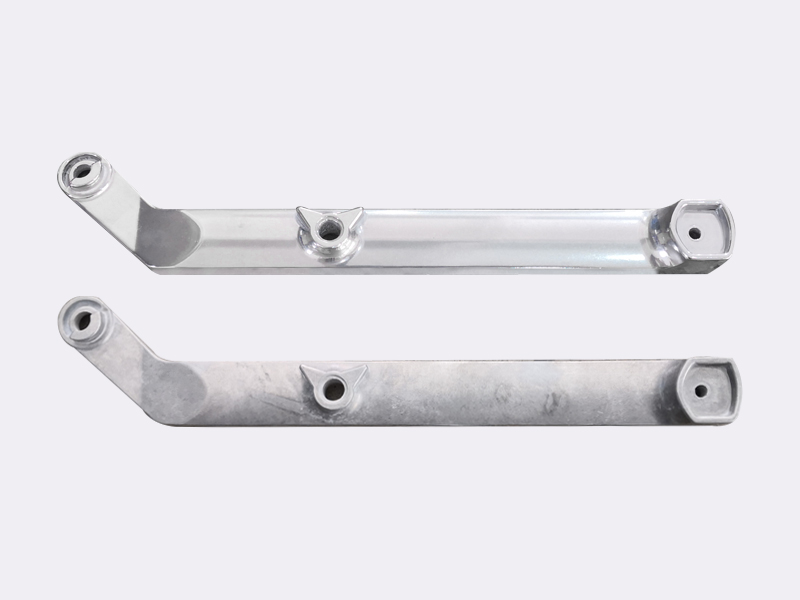
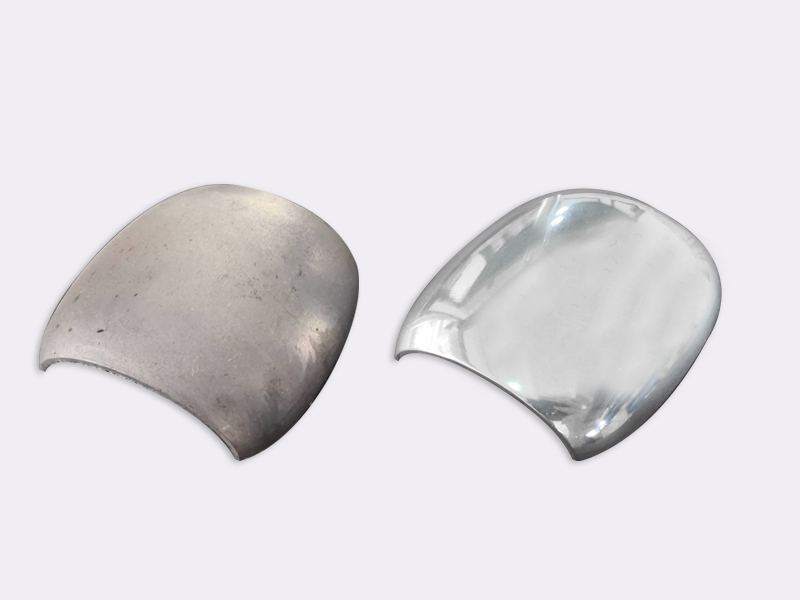
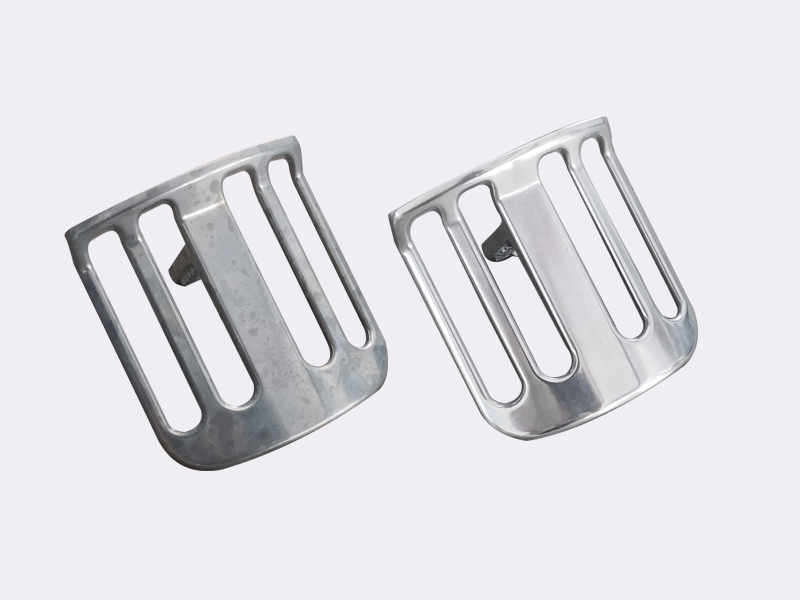
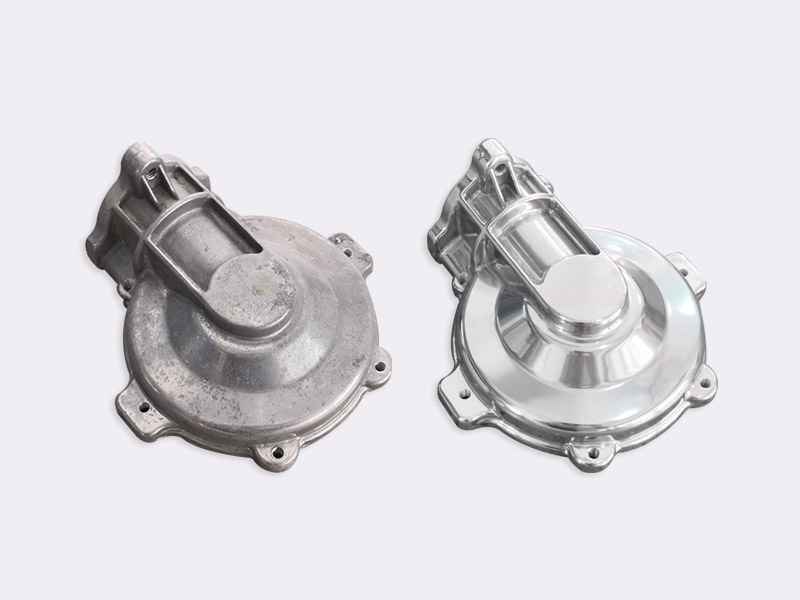
Choosing between a vibratory finishing machine and a centrifugal barrel finishing machine is one of the most consequential decisions in mass finishing process design — and the right answer depends entirely on your part geometry, material, production volume, and required surface quality. Both technologies use tumbling media and liquid compound to deburr, smooth, and polish metal and non-metal components, but they operate on fundamentally different physical principles and deliver very different results.
How Each Process Works
Vibratory Finishing
A vibratory finishing machine uses an eccentric-weighted motor to generate high-frequency oscillating vibration — typically between 900 and 3,600 cycles per minute — throughout the processing bowl or tub. This vibration sets the entire mass of parts and media into a slow, rolling, toroidal circulation pattern, creating millions of low-energy abrasive contacts per minute between media and workpiece surfaces.
The process runs continuously and is highly scalable: round vibratory bowls suit smaller-to-medium batch production, while linear tub finishers accommodate long parts or high-volume continuous-flow processing. Media-to-parts ratios typically range from 3:1 to 8:1 by volume, with higher ratios protecting delicate components from part-on-part contact.
Centrifugal Barrel Finishing
A centrifugal barrel finishing machine mounts multiple sealed barrels on a rotating turret. The turret spins, generating centrifugal force — typically 5G to 12G — while each barrel counter-rotates simultaneously. This dual-rotation creates an intense sliding and rolling action inside the barrel that subjects parts and media to pressures far beyond those achievable in vibratory systems.
Because each barrel is a closed, sealed chamber, operators can run different parts with different media simultaneously across multiple barrels, enabling flexible small-batch production. Carriers can also be partitioned to isolate individual parts and prevent cross-contact.
Side-by-Side Comparison
| Feature | Vibratory Finishing | Centrifugal Barrel Finishing |
|---|---|---|
| Processing Speed | Baseline reference | 4–5× faster than vibratory |
| G-Force / Energy Level | Low (gravity-driven) | High (5G–12G centrifugal force) |
| Part-on-Part Contact Risk | Managed with media ratio & dividers | Low; barrels can be partitioned |
| Internal Recesses & Holes | Excellent penetration | Limited penetration in deep recesses |
| Ideal Batch Size | Large continuous-flow batches | Small-to-medium flexible batches |
| Surface Finish Quality | Smooth, uniform, excellent on complex parts | Isotropic / mirror finish achievable |
| Fragile / Delicate Parts | Very safe; gentle consistent action | Moderate; partitioning reduces risk |
| 3D Printed Parts | Effective but slow on rough AM surfaces | Preferred; fast on rough AM surfaces |
| Noise Level | Moderate (requires noise management) | Quieter operation |
| Equipment Cost | Moderate | Higher initial investment |
| Operator Involvement | Semi-automated; easy loading/unloading | More manual loading/unloading required |
When Vibratory Finishing Is the Right Choice
Vibratory finishing is the most widely deployed mass finishing technology in manufacturing globally, and for good reason — it excels in scenarios where throughput, versatility, and gentle consistent action are the primary requirements.
Choose vibratory finishing when:
- You are processing large, continuous production volumes where cost-per-part is the dominant metric
- Parts have complex internal geometries, deep recesses, blind holes, or undercuts where media must penetrate freely
- You are finishing fragile, thin-walled, or delicate components — jewelry, decorative hardware, electronic connectors — where even moderate impact forces carry risk
- Your application requires even, uniform surface treatment across irregularly shaped parts with varied surface orientations
- The process involves ceramics, polymers, or lightweight components that cannot withstand high G-force environments
- Budget constraints favor lower equipment acquisition and operating costs
Common vibratory finishing materials include stainless steel, aluminum, brass, zinc die castings, copper, titanium, and hard plastics. In the jewelry sector, vibratory finishing is the standard method for polishing gold, silver, and platinum components at scale.
When Centrifugal Barrel Finishing Is the Right Choice
Centrifugal barrel finishing — also known as isotropic finishing or harperizing — is the preferred method when time-to-finish, surface quality, and small-batch flexibility are critical. The dramatically higher G-forces compress cycle times from hours to minutes, making it the go-to technology for high-value parts in demanding industries.
Choose centrifugal barrel finishing when:
- You need to reduce cycle times by 4–5×versus vibratory, particularly for just-in-time or prototype production
- You are processing high-value precision components in aerospace, medical, or automotive where surface integrity directly impacts part performance and longevity
- Parts require a true isotropic surface finish — a non-directional, uniformly smooth texture that eliminates machining lines and micro-peaks in all directions
- You are post-processing additive manufactured (3D printed) metal or polymer components with high initial surface roughness
- Your production involves small, flexible batches of different part types that can be run simultaneously in separate barrel chambers
- You are targeting Ra values and surface stress conditions beyond what vibratory finishing can achieve — including residual compressive stress induction that extends component fatigue life
Studies show centrifugal barrel-finished springs demonstrate a fatigue lifespan of 400,000 cycles versus 250,000 cycles for vibratory-finished equivalents — a 60% improvement in service life.
Surface Finish & Material Removal: A Technical Perspective
The core technical difference between the two processes lies in contact pressure and material removal mechanism. Vibratory finishing generates a lapping-type action where media and parts move as a unified mass, producing consistent flat-surface finishing and excellent results in holes and recesses. Centrifugal barrel finishing, by contrast, generates a high-pressure sliding action driven by centrifugal force up to 12G, achieving aggressive peaks-and-valley removal that rapidly reduces surface roughness Ra and eliminates machining marks, grinding lines, and tensile residual stresses.
The isotropic surface pattern produced by centrifugal barrel finishing is particularly valued in tribological applications — bearing surfaces, gear teeth, and hydraulic components — where directional surface texture would create undesirable friction and wear behavior. Vibratory finishing, while capable of producing excellent finishes, tends to preserve a mild surface directionality that may be acceptable for most industrial parts but is insufficient for extreme-precision tribological surfaces.
Media Compatibility
Both processes use the same fundamental categories of tumbling media, but selection criteria differ due to the different energy levels involved:
- Ceramic media — most common for deburring and pre-grinding in both processes; aluminum oxide and silicon carbide bonded into various shapes (cylinders, triangles, cones, spheres); higher density variants are preferred for centrifugal barrel applications
- Plastic media — lower density, less aggressive; used for pre-polishing aluminum, zinc, and soft alloys in vibratory finishing; also used in centrifugal barrel intermediate stages
- Steel media — used for burnishing and surface hardening in vibratory finishing; produces bright, reflective finishes on hard metals
- Organic media (walnut shell, corn cob) — dry polishing media for final high-gloss finishing stages in both processes; particularly effective as a final step after centrifugal barrel pre-polishing
- Porcelain / ceramic burnishing media — used in vibratory cleaning and brightening operations; leaves no residue or contamination on parts
The critical difference: centrifugal barrel processes often demand denser, harder media to withstand the high G-forces without premature wear, while vibratory processes offer more flexibility in media density and shape selection.
Industry Applications at a Glance
Aerospace
Both processes serve aerospace manufacturing, but centrifugal barrel finishing is preferred for turbine blades, structural titanium components, and engine parts requiring isotropic surface finish and residual stress improvement. Vibratory finishing handles fasteners, brackets, and sheet metal components at high volume.
Medical & Dental
Centrifugal barrel finishing is the standard for orthopedic implants (hip stems, knee components, spinal hardware) made from titanium alloy (Ti-6Al-4V) and cobalt-chrome, meeting ISO 13485 and FDA biocompatibility surface requirements. Dental implants and instruments benefit from both methods depending on geometry and batch size.
Automotive
Transmission gears, camshafts, crankshafts, and bearing races undergo centrifugal barrel finishing for isotropic surface improvement that reduces friction and extends drivetrain service life. Vibratory finishing handles high-volume stamped, cast, and machined components throughout the production line.
Additive Manufacturing
Centrifugal barrel finishing has emerged as the preferred post-processing method for metal and polymer AM parts due to its ability to rapidly reduce the characteristically high surface roughness (Ra > 20 µm) of 3D-printed components to functional surface quality — a task that would require prohibitively long vibratory cycles.
Jewelry & Decorative Hardware
Vibratory finishing remains the dominant method for gold, silver, platinum, and brass jewelry due to its gentle action, excellent internal surface access, and easy scalability for high-volume decorative parts production.
How to Make the Final Decision
If you’re still unsure which process fits your application, evaluate these four key criteria in order:
- Cycle time requirement — If time-to-finish is critical and you cannot accommodate multi-hour vibratory cycles, centrifugal barrel wins by default
- Part geometry — Deep holes, slots, and internal features favor vibratory; external surfaces and complex 3D geometries favor centrifugal barrel
- Surface finish specification — Standard deburring and smoothing: vibratory. Isotropic surface, Ra reduction beyond 0.2 µm, or tribological requirements: centrifugal barrel
- Production volume and batch flexibility — Continuous high-volume production: vibratory. Small-batch, mixed-part, or flexible manufacturing: centrifugal barrel
The ideal finishing line often combines both technologies in sequence: a vibratory pre-treatment stage for high-volume initial deburring followed by a centrifugal barrel polishing stage for final isotropic surface refinement on high-value components.
Mass Polishing: Your Partner for Both Technologies
At Mass Polishing, we supply, configure, and commission both vibratory finishing machines and centrifugal barrel finishing systems — along with the full range of ceramic, plastic, steel, and organic tumbling media required to complete your process. Our engineering team conducts hands-on process trials to validate the right machine type, media selection, compound chemistry, and cycle parameters for your specific part material and finish target—before you commit to capital investment.
Whether you are deburring high-volume automotive stampings or achieving isotropic mirror finishes on orthopedic implants, contact Mass Polishing for a customized process recommendation and sample finishing trial.